•
•
•
•
•
•
•
•
•
•
•
•
•
•
•
•
•
•
•
•
•
•
•
•
•
•
•
•
•
•
•
•
•


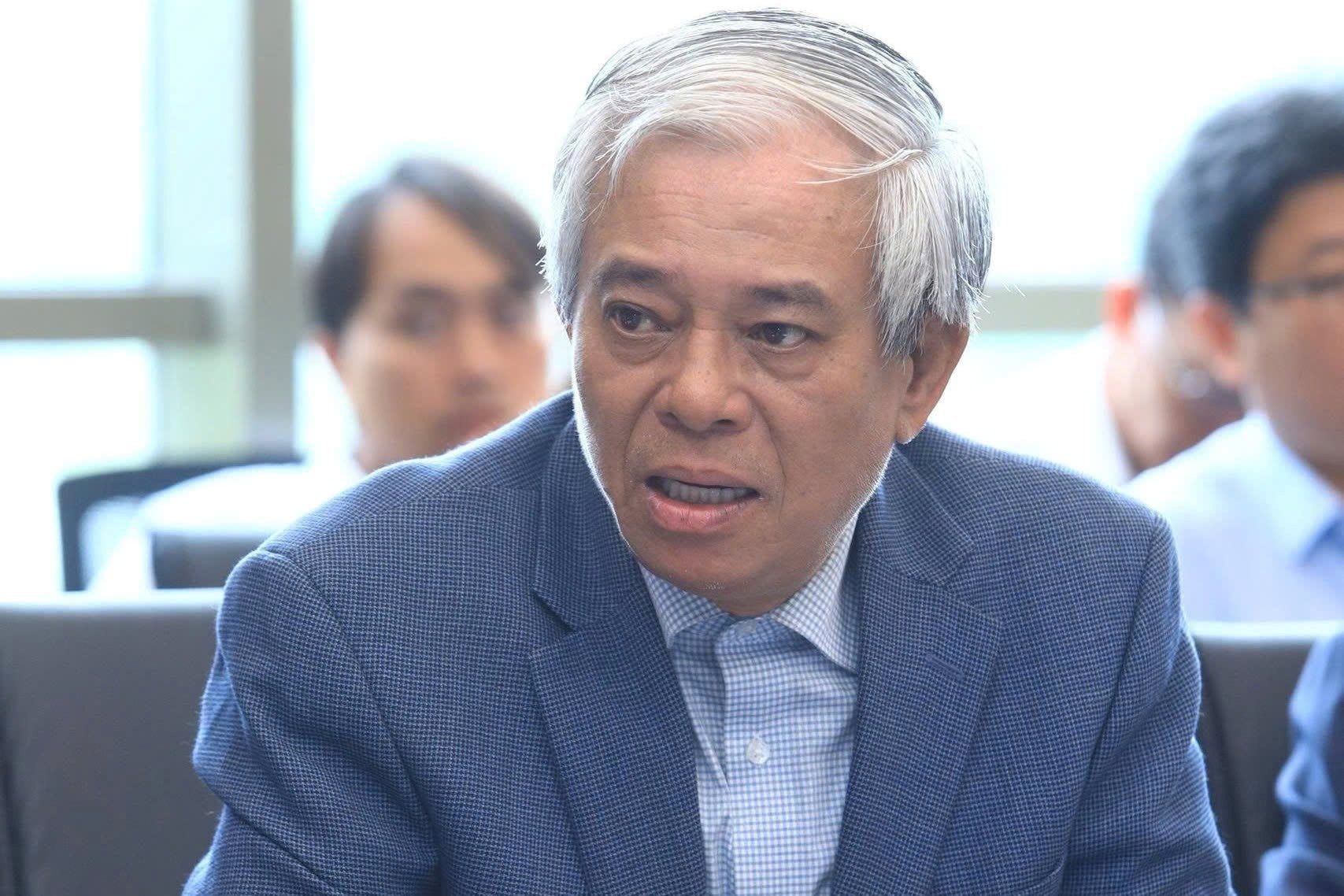
On May 8, the National Innovation Center (NIC) under the Ministry of Finance, in collaboration with EXCEL Services Corporation, organized the Vietnam–U.S. Innovation Forum on developing advanced energy for strategic technologies at NIC Hoa Lac.
Speaking at the event, Vo Xuan Hoai, NIC’s Deputy Director, said the forum is designed to strengthen connections across the innovation ecosystem—linking regulators, enterprises, and international partners—to promote research and development (R&D), technology transfer, and human resource development. The goal is to build an energy foundation suited to Vietnam’s strategic technology sectors.
Hoai emphasized that strategic technology sectors rely on large-scale, stable, and sustainable energy infrastructure, making advanced energy solutions important for the economy’s long-term competitiveness.
NIC has already engaged with EXCEL Services, focusing on research and deployment of ultra-reliable power generation centers in Hanoi, Da Nang, and Ho Chi Minh City to support demanding fields including semiconductors, artificial intelligence (AI), and aerospace.
From a business perspective, Dan Ludwig, Vice President of EXCEL Services, said Vietnam needs highly stable energy to support the global supply chain for components, systems, and IT/AI services. He also noted that Boeing depends on high-tech zones to manufacture components under stringent quality requirements.
Ludwig said the proposed technical solution involves small and modular reactors combined with smart microgrid integration. The model is intended to generate power locally, meet domestic demand, and reduce investment pressure on the national transmission system.
“Our mission is not to compete with EVN or Petrovietnam. Developing local power generation will ease EVN’s financial burden, especially for large-scale investments in the transmission and distribution system across the country,” Ludwig said.
James Voss, Vice President of EXCEL Services Corporation, added that the company is researching and developing next-generation energy solutions with high reliability, including modular small reactors and integrated energy systems, to meet continuous operation needs in high-tech sectors.
EXCEL leadership stressed potential cooperation with Vietnam to deploy solutions tailored to practical conditions and to gradually transfer technology and know-how.
The forum noted that energy cooperation between Vietnam and the United States is not simply a device-purchase story, highlighting the importance of building trust with partners in technology transfer and workforce training.
Pham Quang Vinh, former Deputy Minister of Foreign Affairs and former Vietnamese ambassador to the United States, emphasized that Vietnam–U.S. cooperation should help build an innovation ecosystem and advance energy development, particularly as both countries prioritize high technology, innovation, and sustainable development.
He said that to unlock export barriers for advanced technologies (including U.S. D1–D3 regulations), Vietnam needs to build strategic trust with partners. He also argued that technology transfer must be accompanied by training of human resources, stating that training is a form of technology transfer.
Vinh outlined a roadmap for Vietnam to own core technologies from the U.S. through joint ventures, adding that without joint ventures and collaboration, technology transfer would be difficult and that transfers done for free are “very hard.” He also said Vietnam should participate in partner supply chains.
He projected that FDI inflows will soon be of higher quality, focusing on science and technology and energy stability—new strategic priority areas for Vietnam.
According to Vinh, EXCEL Services’ role in this pathway is multi-faceted: beyond technical consulting, American partners can help Vietnam connect with an international network of policy-management experts and provide training for operating staff, enabling Vietnam to obtain equipment and the capacity to safely and securely operate and manage next-generation energy facilities.
The forum included representatives from ministries, technology and energy groups, research institutions, universities, and investment organizations from Vietnam and abroad. Participants reached broad consensus on the pivotal role of advanced energy for the sustainable growth of strategic technology sectors. They said that beyond technology and human resources, a synchronized electricity grid and flexible policy mechanisms are foundational to anticipate future needs, especially as electricity demand rises from semiconductors, data centers, AI, and high-tech manufacturing.
On nuclear power, Nguyen The Huu, Deputy Director of the Electricity Department at the Ministry of Industry and Trade, outlined directions for electricity infrastructure development and policy to support strategic technology sectors, arguing that nuclear power requires readiness across institutions, technical infrastructure, and management capacity.
Phan Viet Cuong, Deputy Director of the Vietnam Atomic Energy Institute under the Ministry of Science and Technology, said that in nuclear energy development, research localization and technology transfer are long-term strategies to build national autonomy in the field.
Participants discussed potential cooperation programs in training and developing human resources in energy and engineering to form experts able to participate in large-scale technology projects. They said collaboration among the State, enterprises, and research and training institutions remains key to promoting innovation and strengthening domestic capabilities.
Before the United States, Russia and South Korea had already cooperated with Vietnam on nuclear power. Specifically, on March 23, 2026, during Prime Minister Pham Minh Chinh’s visit to Russia, Vietnam and Russia signed an intergovernmental agreement on cooperation to build the first nuclear power plant in Vietnam. The Ninh Thuan 1 project is expected to include two units with total capacity around 2,400 MW, using the VVER-1200 reactor technology developed by Russia.
By April 22, 2026, Vietnam’s General Secretary and President witnessed two memoranda of understanding on nuclear cooperation between Petrovietnam and KEPCO, and a financial cooperation memorandum among Petrovietnam, KEPCO, Korea Eximbank (KEXIM), and KSURE.

Premium gym chains are entering a “golden era” that is ending or already in decline, as rising operating costs collide with shifting consumer preferences toward more flexible, community-based ways to exercise. Long-term memberships are shrinking, margins are pressured by higher rents and facility expenses, and competition from smaller, more personalized…