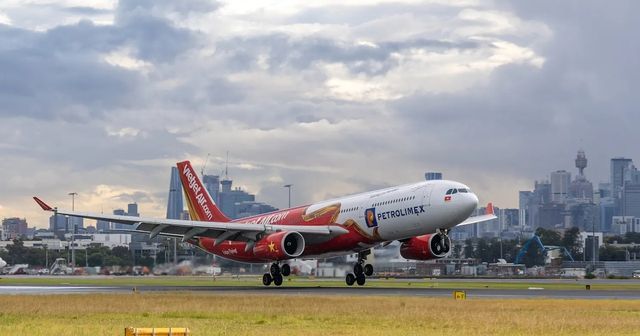
VietJet Air is pursuing plans to enter the Australian domestic aviation market and could begin operating routes linking Sydney, Melbourne, and Brisbane as early as the first half of 2027. The Vietnamese budget carrier is filing for an Air Operator Certificate (AOC) from the Australian Civil Aviation Safety Authority (CASA). If approved, VietJet would establish an Australian subsidiary with legal status and start with a fleet of 10 Boeing 737 MAX 8 aircraft, leveraging new takeoff and landing slots opened at Sydney Airport to serve routes within Australia’s “golden triangle.”
The move signals VietJet’s objective to compete in Australia’s domestic market by obtaining regulatory clearance to operate as an Australian-registered carrier. The plan includes creating an Australian subsidiary and launching services with an initial fleet of 10 Boeing 737 MAX 8 aircraft, contingent on CASA approval.
Industry observers note that VietJet could commence domestic services within six to nine months if regulators grant the AOC. However, others say the timeline is ambitious and could realistically shift to early or mid-2027. Melbourne Airport officials signaled support, with CEO Lorie Argus stating the airport is prepared to welcome VietJet and that there is “room” from an infrastructure perspective to accommodate the carrier.
“We certainly have room. From an infrastructure perspective, we are always ready to accommodate VietJet.”
The airline plans to use newly available slots at Sydney Airport to operate the Sydney–Melbourne–Brisbane triangle, potentially adding a new option for Australians traveling within the eastern states. The development comes in the context of ongoing competitive dynamics in the Australian market, where several carriers have faced difficulties in maintaining market share.
Industry observers also note historic context: VietJet would become the first international carrier to compete directly on Australia’s domestic market since Tiger Airways (a Singapore Airlines subsidiary) entered in November 2007. More recently, Bonza and Rex Airlines have faced shutdowns or insolvencies.
The entry of VietJet could alter market dynamics in Australia’s domestic aviation sector. Aviation expert Peter Harbison described the potential move as having a “huge impact” and could help lower fares. He noted that VietJet is a well-established airline with strong financial resources and international experience in the Australian market, suggesting the shift could be transformative if regulators approve the plan.
Observers emphasize that success hinges on regulatory approval and timely integration into the domestic market. If authorized, VietJet’s Australian subsidiary would bring a new source of competition to the established Qantas and Virgin duopoly, potentially reshaping pricing and route choices on key domestic corridors.