•
•
•
•
•
•
•
•
•
•
•
•
•
•
•
•
•
•
•
•
•
•
•
•
•
•
•
•
•
•
•
•
•


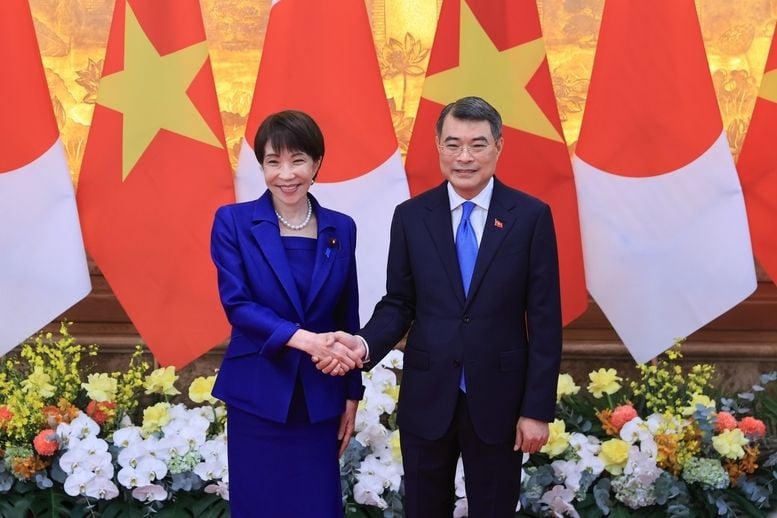
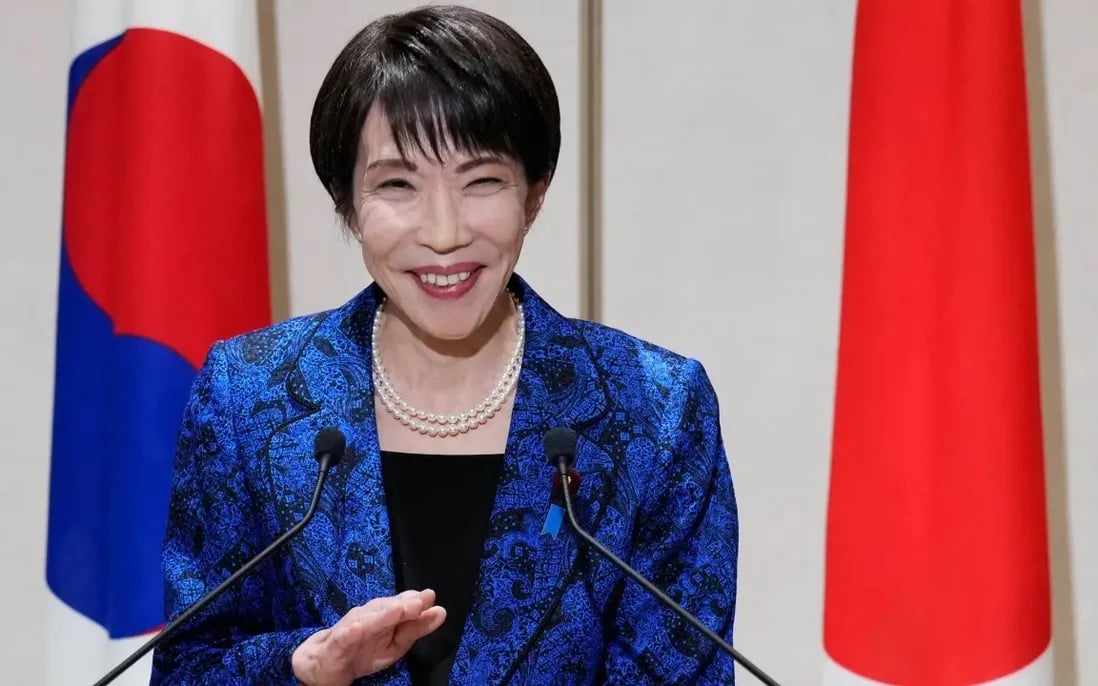
On May 2, after the official welcoming ceremony, Prime Minister Le Minh Hung and Japanese Prime Minister Takaichi Sanae, along with their high-level delegations, held talks at the Government Palace. Welcoming PM Takaichi Sanae’s official visit to Vietnam, PM Le Minh Hung said Japan chose Vietnam as its first stop in Asia after Takaichi Sanae’s reelection, reflecting Japan’s high interest in Vietnam in its regional foreign policy. He also highlighted the good, comprehensive, and substantive development of Vietnam–Japan relations, noting strong political trust, deep economic cooperation, and growing people-to-people exchanges.
PM Takaichi praised Vietnam’s achievements and rising international position, and affirmed Japan’s readiness to continue supporting Vietnam in strengthening economic self-reliance and resilience. The two leaders agreed to coordinate closely to elevate bilateral ties to a higher level across all areas of mutual concern.
PM Le Minh Hung expressed confidence that the visit would create new momentum to advance and deepen the Comprehensive Strategic Partnership between the two countries, making it deeper, broader, more substantive, and more effective in areas of mutual interest—especially economy, trade, investment, ODA, digital transformation, green transition, science and technology, food security, and sustainable energy.
The leaders agreed to deepen economic cooperation as a main pillar of the bilateral relationship through stronger trade, investment, and ODA, contributing to secure economic and energy security and sustainable agricultural development. They set targets for Japan’s investment in Vietnam to reach USD 5 billion per year and for bilateral trade to reach USD 60 billion by 2030.
Discussions included opening markets for Vietnam’s dal-green pomelo and Japan’s grapes, implementing ODA projects on climate-change adaptation, and advancing cooperation under Japan’s regional initiatives such as AZEC and POWER ASIA.
On energy, the two sides discussed cooperation on projects including natural gas and nuclear energy. Japan pledged to help arrange crude oil supply for the Nghi Son Refinery. Japan also committed to continue supporting Vietnam in implementing the One Million Hectares of low-emission rice program in the Mekong Delta.
PM Hung also emphasized Vietnam’s efforts to improve the investment environment, simplify administrative procedures, strengthen the private sector, and develop the FDI landscape.
Recognizing the role of Japanese banks and financial institutions in Vietnam, PM Hung proposed establishing a mechanism to promote M&A among SMEs. He also encouraged Japanese firms to invest in high-tech projects, increase localization, and support Vietnamese firms in participating in Japanese government projects.
On science and technology, the two prime ministers agreed to restart the Vietnam–Japan Joint Committee on Scientific and Technological cooperation in 2026 and to organize joint public-private high-tech events.
They also underscored the importance of linking human resources and promoting cooperation in labor, local governance, people-to-people exchanges, culture, and tourism. The leaders agreed to host the second Vietnam–Japan Local Cooperation Forum in 2026.
Following the talks, six cooperation documents covering rural development, infrastructure, low-carbon, technology, and space were exchanged.
PM Hung also highlighted the importance of Vietnam–Japan collaboration in regional and international forums, including ASEAN, the United Nations, and subregional mechanisms. The two leaders reaffirmed the importance of resolving disputes in the South China Sea by peaceful means in accordance with international law, notably UNCLOS.
PM Hung invited PM Takaichi Sanae to attend the APEC 2027 Summit in Phu Quoc. Vietnam will participate in GREEN EXPO 2027 in Yokohama. Japan pledged close cooperation to ensure the success of the APEC Year in Vietnam.
Premium gym chains are entering a “golden era” that is ending or already in decline, as rising operating costs collide with shifting consumer preferences toward more flexible, community-based ways to exercise. Long-term memberships are shrinking, margins are pressured by higher rents and facility expenses, and competition from smaller, more personalized…