•
•
•
•
•
•
•
•
•
•
•
•
•
•
•
•
•
•
•
•
•
•
•
•
•
•
•
•
•
•
•
•
•


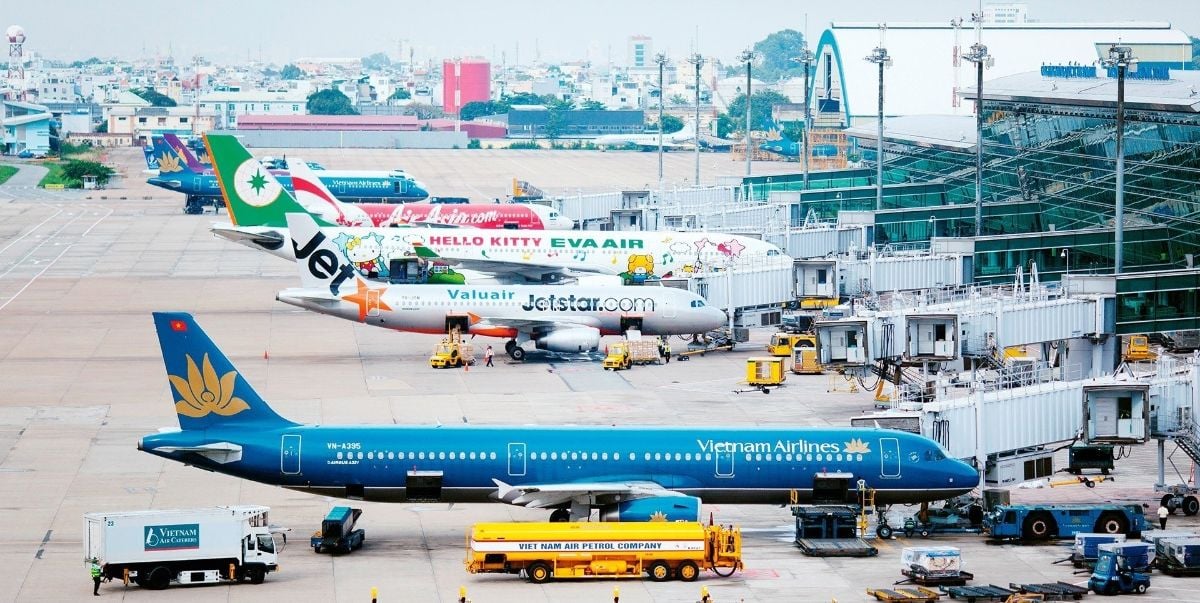
The Ministry of Construction is studying amendments to Vietnam’s national airport system plan for the 2021–2030 period, with a vision to 2050. The current plan covers 30 airports, including 14 international and 16 domestic airports. By 2050, the network is planned to expand to 33 airports, comprising 14 international and 19 domestic airports.
The Ministry said there are 12 potential locations that should be further studied for possible inclusion in the plan. The Prime Minister has directed provincial authorities to develop airport plans, assess demand, operating conditions, and feasibility, and mobilize maximum off-budget capital for investment through public-private partnership (PPP). Provincial submissions are to be sent to the Ministry of Construction for consideration, along with reporting to the Prime Minister on whether to add the sites to the plan and proceed with investment when conditions permit.
In addition, following directives from the Politburo, Party leadership, and the Government, Gia Bình International Airport and Tho Chu International Airport have been added to the plan using streamlined procedures.
In assessing the overall scale of Vietnam’s airport network, the Ministry noted that the current number of airports is comparable to regional peers: Thailand has 39 airports, Malaysia 38, Myanmar 32, while Japan has 97 and Korea 15.
Under the proposed plan, by 2030 more than 95% of the population would have access to an airport within 100 km. The Ministry said this is higher than the global average of around 75% and aligns with regional benchmarks, including Japan (99%), Korea (100%), Malaysia (98.13%), the Philippines (93.62%), and Thailand (88%).
For international airports, the plan to 2030 includes 15 international airports out of 31 total international airports, which the Ministry said is comparable to Korea and higher than regional peers such as Thailand (10/39), Malaysia (7/38), and Japan (29/97).
The Ministry proposed additional studies for new airports, including Ninh Binh, Hung Yen, and a second airport for the Hanoi region. It also proposed reassessing the scale of Con Dao Airport and the role of Hai Phong Airport.
For Mang Den, Van Phong, and Quang Tri airports, the Ministry recommended not merging their adjustments into the overarching plan to avoid delays in planning and investment proposed by local authorities and investors.
On May 7, Deputy Prime Minister Pham Gia Tuc chaired a meeting to report on progress and the framework for revising the nationwide airport plan 2021–2030 with a view to 2050. The Deputy Prime Minister emphasized that the airport plan should be strategic, coherent, integrated, and set within a long-term horizon to 2050, possibly extending to 100 years, to avoid repeated adjustments.
The plan, he said, must connect with other modes of transport, the national master plan, regional plans, and sector plans.
Regarding proposals for Mang Den and Van Phong airports, the Deputy Prime Minister asked the Ministry of Construction to study them in the context of regional development, including connectivity with road transportation, interregional routes, and the development potential of each area.
He also said airport investment should be carefully evaluated for attractiveness to both domestic and foreign funding, including dual-use considerations. The study should cover overall connectivity with regional airports and interregional transport systems.
The Deputy Prime Minister noted that even if private investment is used for airport construction, operating efficiency must be assessed. If investment is spread too thin, localities may still have airports but with inefficient operations and wasted resources.
Beyond passenger transport, the Deputy Prime Minister said emphasis should be placed on developing air freight, linked to tourism and services, and synchronized with supporting infrastructure.
The Ministry of Construction said it will incorporate feedback from ministries and agencies, continue studying and refining the comprehensive airport system plan, and report to competent authorities in Q2 2026 as required by Party conclusions. It will also coordinate with relevant ministries, agencies, and localities to complete the report for the Prime Minister.
Premium gym chains are entering a “golden era” that is ending or already in decline, as rising operating costs collide with shifting consumer preferences toward more flexible, community-based ways to exercise. Long-term memberships are shrinking, margins are pressured by higher rents and facility expenses, and competition from smaller, more personalized…