•
•
•
•
•
•
•
•
•
•
•
•
•
•
•
•
•
•
•
•
•
•
•
•
•
•
•
•
•
•
•
•
•


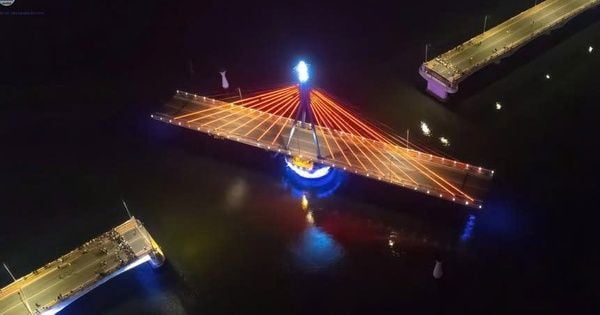
Da Nang engineers designed and constructed the Sông Hàn Bridge, the first rotating cable-stayed bridge in Vietnam, capable of rotating 90 degrees to allow ships to pass and thus replace the city’s long-standing ferry piers. A year after Da Nang became a centrally administered city in 1997, Da Nang began construction of the Sông Hàn Bridge — a project that marked a milestone in the city’s infrastructure development. Construction started on September 2, 1998 and the bridge was inaugurated on March 29, 2000. It is the first rotating bridge designed and built by Vietnamese engineers and remains the only domestic project to achieve this. The bridge is 487.7 meters long, 12.9 meters wide, with 11 spans, each 33 meters long, using a reinforced concrete deck with prestressed steel. Two cable-stayed spans have a total length of 122.7 meters, while the main girders and towers are steel with a reinforced concrete deck. The bridge connects the end of Le Duẩn Street in Hai Châu District to the opposite bank in Sơn Trà District at the end of Phạm Văn Đồng Street, spanning 45 meters to Mỹ Khê Beach and linking with the coastal road from Bãi Bụt to Ngũ Hành Sơn, extending toward Hội An and potentially reaching Cửa Đại near Chu Lai and Dung Quất in the future. Notably, the bridge can rotate 90 degrees to serve water traffic. To catch moments of rotation, visitors can follow a fixed operating schedule. On weekdays (Monday–Friday), traffic stops around 0:45, rotates at 1:00, and returns to its original position between 2:00–4:00, depending on vessel traffic. On Saturdays and Sundays, times are earlier, with the bridge stopping at 22:45, rotating at 23:00, and returning to the original position around 0:00. Since its opening, the distance between Hai Châu and Sơn Trà has virtually disappeared; it takes about 3 minutes by car or 10 minutes on foot to cross, enabling rapid development of the eastern riverbank and coastal districts. From this connectivity, economic and service activities have grown rapidly. Five years after the bridge began operations (2000–2005), the urban landscape of Sơn Trà and Ngũ Hành Sơn had transformed significantly, living standards improved, and poverty was largely eliminated. Da Nang’s urban space also expanded east and south, creating a new growth axis for the city. With improving infrastructure, the city extended toward the sea, forming new development spaces and attracting investment. As a result, the services sector became a pillar and a growth driver. In recent years, Da Nang’s economy has shown clear revival and growth. By 2025, the city’s GRDP is estimated to rise 9.18%, the highest in 2021–2025, ranking 9th among 34 localities and 2nd among the 6 centrally governed cities. The per capita GRDP at current prices in 2025 is projected to exceed 110 million VND per person, about 4,287 USD, ranking 10th nationwide. Entering 2026, growth is expected to continue. In Q1, operational and actual performance indicators indicate the economy accelerating. The city targets GRDP growth of over 11%, with services up 11.5–12.5%, industry and construction 12.5–13.5%, and agriculture 3–3.5%.




Premium gym chains are entering a “golden era” that is ending or already in decline, as rising operating costs collide with shifting consumer preferences toward more flexible, community-based ways to exercise. Long-term memberships are shrinking, margins are pressured by higher rents and facility expenses, and competition from smaller, more personalized…