•
•
•
•
•
•
•
•
•
•
•
•
•
•
•
•
•
•
•
•
•
•
•
•
•
•
•
•
•
•
•
•
•


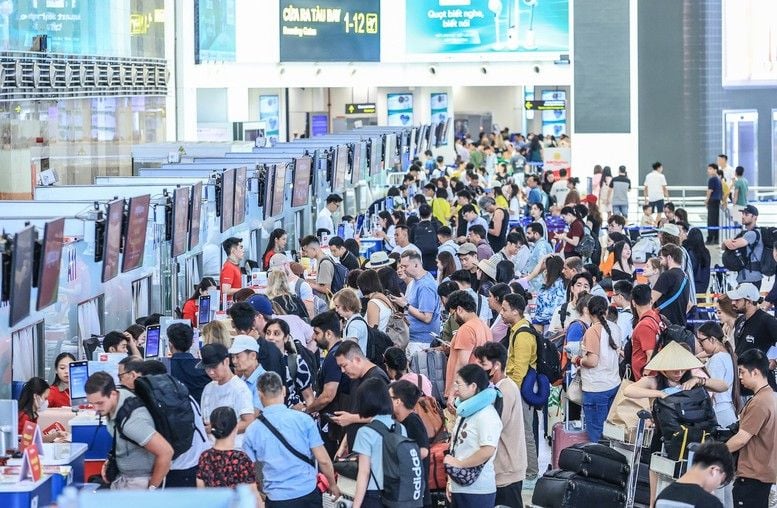
Passenger traffic rose 18% and air cargo grew 17% in the first four months of 2026, according to the Civil Aviation Authority of Vietnam. In four months, total passenger throughput at airports exceeded 46 million, up nearly 18% year-on-year.
International passengers reached about 19 million (up more than 22%), while domestic passengers exceeded 27 million (up 15%).
Air cargo throughput through airports in four months reached 616 thousand tonnes, up 17% year-on-year.
Vietnamese airlines carried nearly 21 million passengers, up 12% year-on-year. Of these, international passengers accounted for about 7 million (up more than 6%) and domestic passengers about 14 million (up 15%).
Domestic airlines’ cargo volume reached more than 155 thousand tonnes, up more than 3% year-on-year.
Aviation safety remained a priority. The Civil Aviation Authority of Vietnam said that in the first four months the aviation sector’s aircraft and operations did not record any accidents (level A), serious incidents (level B), or high-severity incidents (level C).
For airport management, airports recorded four safety-related incidents (level D) and one level C incident.
In flight operations management, four UAV/UAS-related events occurred at Da Nang International Airport and Cat Bi, significantly affecting operations. The authority reported UAV threats to flight safety to the Ministry of Construction and organized a meeting with relevant agencies to assess UAV activity and propose coordination measures.
The authority also completed a draft guidance for coordinating and handling information about UAV/UAS operations at airports for issuance.
To prevent incidents caused by unmanned aircraft at airports, the Vietnam Airports Corporation (ACV) issued directives to strengthen safety operations and limit the impact of lasers and unmanned aircraft on civil aviation.
Airports were urged to implement full procedures for disseminating flight-status information and to continue coordinating with provincial/city authorities to strengthen inspections, supervision, and public awareness of compliance with aviation-safety regulations.






Premium gym chains are entering a “golden era” that is ending or already in decline, as rising operating costs collide with shifting consumer preferences toward more flexible, community-based ways to exercise. Long-term memberships are shrinking, margins are pressured by higher rents and facility expenses, and competition from smaller, more personalized…