•
•
•
•
•
•
•
•
•
•
•
•
•
•
•
•
•
•
•
•
•
•
•
•
•
•
•
•
•
•
•
•
•


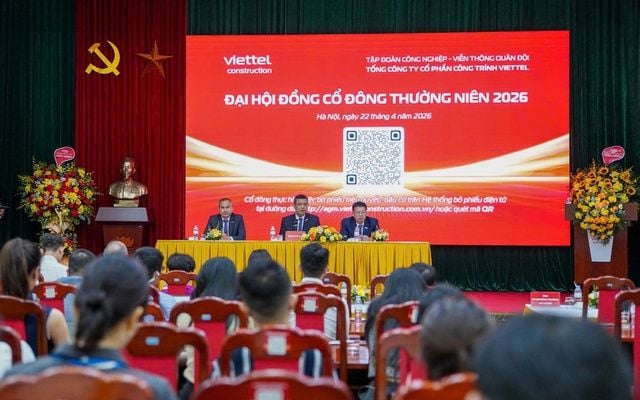
Viettel Construction has set record-high targets for 2026 and outlined a multi-sector growth strategy that includes expanding into social housing, accelerating investment in renewable energy, and strengthening its position in Vietnam’s construction–infrastructure sector.
At the company’s 2026 Annual General Meeting on April 22, Viettel Construction approved business targets and discussed the drivers behind its next phase of growth.
Under the approved plan, 2026 consolidated revenue is targeted at over 15,653 billion VND, up more than 11% year-on-year. Net profit after tax is expected to reach 622 billion VND, up about 4% and the highest level the company has set since operations began.
For context, Viettel Construction reported 2025 consolidated revenue of 14,058 billion VND, up 11%, while net profit after tax reached 600 billion VND, up 11.4% compared with 2024.
According to Mr. Pham Dinh Truong, the company’s growth drivers for the next phase are based on four main pillars: telecoms infrastructure operation, construction, solutions and technical services, and investment in rental infrastructure.
The operating and exploitation segment is expected to remain a foundation for growth, with steady expansion of about 3–5% annually. Viettel Construction also plans to expand into international markets where Viettel Group invests, including Myanmar and Dominica.
Within the construction business, Viettel Construction identified B2C civil construction as a key area. For turnkey housing in Vietnam, the company aims to become a market leader.
It plans to deploy around 10,000 houses per year by 2030 and expand the housing service ecosystem, including interiors, energy solutions, and smart technologies.
In the B2B construction segment, Viettel Construction said it will continue strengthening general contracting capabilities to participate in large-scale projects and national key works.
Truong said: “The scale of Vietnam's construction market remains very large, from public to private investment. The important thing is that the company has enough capacity to execute and the ability to manage the market.”
A notable focus at this year’s meeting is Viettel Construction’s plan to participate in social housing and housing for the armed forces under the parent brand.
Mr. Do Man Hung said the company will take part in developing social housing and housing for the armed forces under the national program to develop 1 million housing units.
Viettel Construction aims to deploy about 50,000 housing units, equivalent to roughly 5% of the program’s total scale.
Hung emphasized the company’s intent to bring social housing projects under the Viettel brand and to address concerns about quality in the segment, stating that the goal is not only to build houses but also to change perceptions of social housing quality.
Beyond construction and housing, Viettel Construction identified renewable energy as a strategic new area. The company said it is focusing on solar power, particularly for households and businesses, with the goal of becoming the market leader in domestic residential solar.
Company leadership cited long-term growth potential driven by energy transition trends and demand for clean power.
Alongside expansion, Viettel Construction said it will maintain strict cash flow and receivables control in its construction operations.
Truong said the company’s guiding principles are “get paid” and “be efficient.” In a volatile construction market, it will prioritize projects with high safety, tight payment progress controls, and use technology to manage the construction process, materials, and cash flow.
In addition to the business plan, the AGM approved the 2025 dividend payout with a total rate of 27%, including 15% in cash and 12% in shares.
For the 2026–2030 strategy, Viettel Construction targets average revenue growth of nearly 16% per year and about 12% profit per year.
From a company originally tied to telecoms construction, Viettel Construction said it is gradually expanding its role across infrastructure, construction, and the technology ecosystem. The company’s plans to accelerate in areas such as social housing, renewable energy, rental infrastructure, and technical services reflect its long-term ambition to become a leading provider of infrastructure and construction solutions in Vietnam.







Premium gym chains are entering a “golden era” that is ending or already in decline, as rising operating costs collide with shifting consumer preferences toward more flexible, community-based ways to exercise. Long-term memberships are shrinking, margins are pressured by higher rents and facility expenses, and competition from smaller, more personalized…




