•
•
•
•
•
•
•
•
•
•
•
•
•
•
•
•
•
•
•
•
•
•
•
•
•
•
•
•
•
•
•
•
•


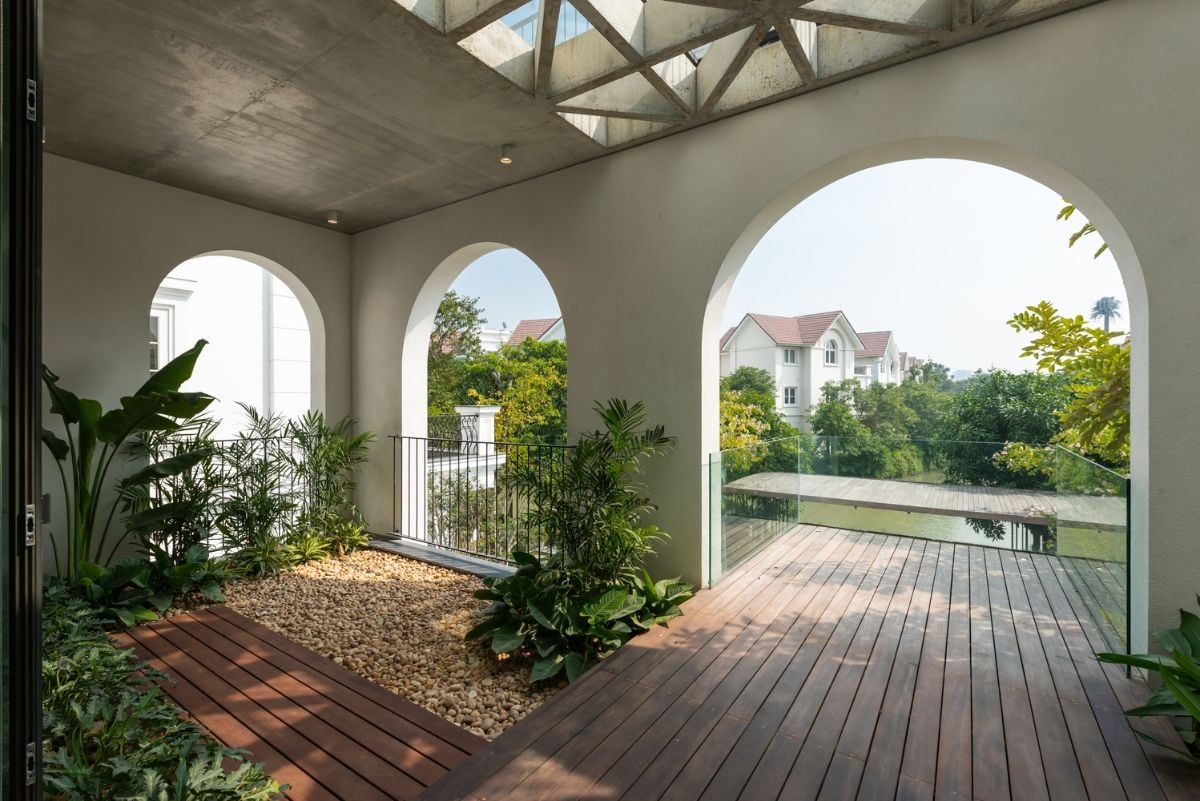
Waterfront villas redesigned for tropical living are increasingly using microclimate design and integration with nature to improve residential livability. In such settings, proximity to large, calm bodies of water is described as providing mental calm and a sense of well-being. In sustainable architecture trends, water is treated not only as decoration or for feng shui, but as a core technical solution to regulate microclimate.
One cited mechanism is that riverside homes or villas with indoor pools can keep indoor temperatures about 2 to 3 degrees Celsius cooler than outside, attributed to natural evaporation. On lake or calm river banks, where water surfaces reflect the surrounding environment, homes are designed to deliver comfort and a deeper connection to the setting. Design guidance for river- and lakefront properties emphasizes open spaces and maximizing water views, including the use of gardens, large glass facades, and minimalist or resort-style layouts to support cooler microclimates and a sense of peace.
Balconies and terraces are also positioned as functional buffers: they are intended to provide relaxation space while minimizing rain exposure and reducing the direct impact of humidity and local climate. However, the article notes that river and lake adjacent zones often have weak geology, requiring thorough surveys, solid foundations, and appropriate wall and floor materials.
Villa AD8 is located in the Vinhomes Riverside Long Bien complex in Hanoi. The original design featured a neoclassical style on a long, narrow plot, with a floor plan split evenly and symmetrically. The article says the initial layout did not fully suit tropical living or take advantage of the rear river bend location.
After renovation by Nemo Studio, the villa added verandas, expanded rear spaces, and introduced a central atrium to create major changes. Public spaces on the first floor and the main bedrooms on floors 2 and 3 are now described as more spacious, with comfortable views toward the garden and the river.
The renovation also repositions the atrium and corridors as key elements of tropical living. The article describes the experience of wind, rain, and nature as more memorable for the owner when seated on the veranda. Greenery, shrubs, and stones are arranged from the first-floor core to higher levels and near bathrooms and wash areas.
Sliding systems and operable openings in the atrium core are described as enabling ventilation and the movement of cool air. Concrete and wooden louver systems are used to allow light to pass through, creating changing light-and-shadow patterns over time while reducing heat and increasing privacy.
The article adds that Villa AD8 was praised by WorldArchitect, noting that it moved from a neoclassical building to a contemporary home while delivering a tropical interior atmosphere with unexpectedly open spaces. It also highlights the flexible layout and natural elements as a notable example of sustainable architecture in Vietnam.
BT5 Villa is located in Lakeside Splendora, a villa complex in Hanoi surrounded by lakes and natural scenery, described as suitable for modern family life. The project is said to draw inspiration from the owner, described as passionate about architecture, with the goal of creating a comfortable living space that also reflects the owner’s personality.
The interior is described as minimalist, with an emphasis on optimizing acoustic experience through high-quality materials and multi-layer walls. The ceiling includes a starry sky effect as an artistic focal point, supported by RGB LED lighting around it that can be customized in color and intensity to create different lighting scenarios.
APDI architects are cited as noting that the villa is designed to maximize natural light through large glass windows, with the claim that 100 percent of spaces receive daylight and natural ventilation. Evening lighting is described as carefully planned using high-standard fixtures and adjustable lighting scenarios for different activities.
The article also describes the design of hallways and stairs as helping the house “breathe” and reinforcing a tropical living approach. It reiterates that acoustic performance is supported by sound insulation through high-quality materials and multi-layer walls, while the starry sky ceiling effect is complemented by adjustable RGB LED lighting to create dynamic scenes.
Across both projects, the article frames waterfront tropical design as a combination of microclimate management and spatial planning. Cooling effects are linked to water-based evaporation, while architectural strategies—such as verandas, spacious terraces, operable openings, and louver systems—are presented as ways to manage heat, humidity, and privacy. At the same time, the article emphasizes that waterfront sites may require additional attention to geology, including surveys and foundation planning, along with suitable materials for walls and floors.

Premium gym chains are entering a “golden era” that is ending or already in decline, as rising operating costs collide with shifting consumer preferences toward more flexible, community-based ways to exercise. Long-term memberships are shrinking, margins are pressured by higher rents and facility expenses, and competition from smaller, more personalized…