•
•
•
•
•
•
•
•
•
•
•
•
•
•
•
•
•
•
•
•
•
•
•
•
•
•
•
•
•
•
•
•
•


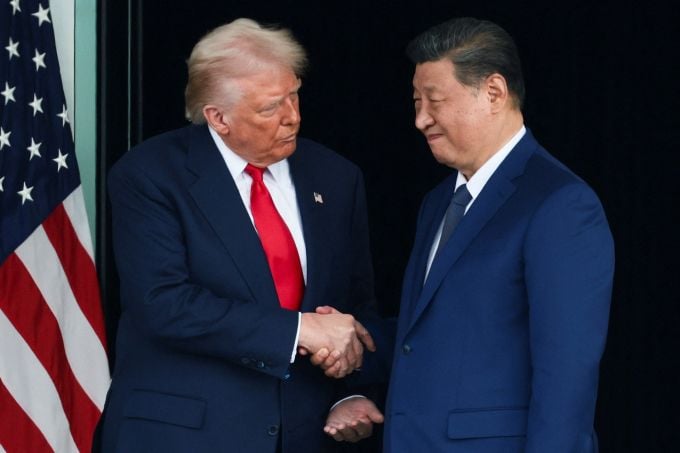
Investors expect no breakthrough on a major economic accord, and will instead be watching AI developments at the U.S.-China summit. On May 12, China confirmed that U.S. President Donald Trump will visit from May 13 to May 15. This will be his first trip to China in his second term. According to the plan, Trump will hold talks with President Xi Jinping on the morning of May 14; on May 15, Trump and Xi will attend a tea ceremony and have a working lunch before Trump returns to Washington. "Many business leaders" including Nvidia, Apple, Qualcomm, Citigroup and Boeing are expected to attend, raising hopes for potential accords in finance, agriculture, energy and aerospace. But observers say a major agreement is unlikely. Instead, markets will focus on AI-related developments. Zeng Wanping, a fund manager at Beijing Monolith Fund Management in Beijing, is most concerned about whether the U.S. will allow Nvidia's more advanced chips to be sold in China. That would pressure domestic manufacturers. "The thing to watch is AI. It is the market’s biggest focal point; nothing else matters," he said. The official Shanghai Composite Index trades near an 11-year high, while China’s exports continue to rise thanks to AI-related orders. At year-end last year, the U.S.-China trade truce was extended for a year after talks between the two leaders in Korea. Issues related to trade and export controls, including rare earths and U.S. restrictions on technology with China, could also be on the agenda. HSBC economists say there is little chance of a major breakthrough on export controls. The meeting could yield incremental steps to ease frictions between the world’s two largest economies. Meanwhile, in the first four months of the year, China’s trade surplus with the U.S. widened to $87.7 billion. Fund managers are not worried Trump will launch another round of tariffs against Beijing. Leah Fahy, a senior China economist at Capital Economics, notes that China has more levers. "Higher tariffs do not deter the robust growth in China's exports seen last year, and Beijing has shown that it is willing to wait for U.S. pressure to ease," she said. Tensions have driven Beijing to invest in domestic technology. Recently, the Iran conflict added a catalyst, pushing China to bolster its supply chain. "China has achieved significant progress in technology, built a new economy, expanded its global influence, and increased its position in the global strategic competition," said Wen Xunneng, founder and CEO of Zhu Liu Asset Management. Seeing opportunities, foreign funds are shifting portfolios toward Chinese firms benefiting from the country’s AI self-sufficiency strategy. "The landscape has shifted. China currently has less to discuss with Trump," said Yang Tingwu, deputy CEO at Tongheng Investment. He believes the Middle East conflict has weakened the U.S. president’s position. Wen Xunneng of Zhu Liu Asset Management expects U.S.-China relations to stabilize at least until Xi’s reciprocal visit to the U.S. as planned. "After Xi’s visit to the U.S., the two countries could move to the next phase of competition, but for now it remains relatively calm," he said. Additionally, some investors expect China to push for a mediating role in the Middle East, which could positively affect the global economy. "I hope Trump can persuade Xi to pressure Iran to reopen the Hormuz Strait and resume oil flows," said Jack Ablin, Chief Investment Officer at Cresset Wealth Advisors. As of early this month, Trump stated that the Middle East conflict would be a topic of discussion and expressed confidence that he and Xi have enough shared interests to coordinate. "He has been very constructive on this. Frankly, China imports about 60% of its oil through Hormuz. I think he has shown respect. We have not seen any challenge from China," Trump said. Phiên An (according to Reuters, CNBC)

Premium gym chains are entering a “golden era” that is ending or already in decline, as rising operating costs collide with shifting consumer preferences toward more flexible, community-based ways to exercise. Long-term memberships are shrinking, margins are pressured by higher rents and facility expenses, and competition from smaller, more personalized…