•
•
•
•
•
•
•
•
•
•
•
•
•
•
•
•
•
•
•
•
•
•
•
•
•
•
•
•
•
•
•
•
•


In mid-April 2026, QMH Computer Company, an affiliate of Quanta Group, at Mỹ Thuận Industrial Park in Ninh Bình was ramping up production and continuously shipping laptop batches to meet order schedules. In 2025, the plant’s laptop output surged by 517.1%, and in Q1 2026 it rose by 233.3% year-on-year. The project is also contributing to a shift in the labor structure, moving workers from craft roles into high-technical manufacturing.
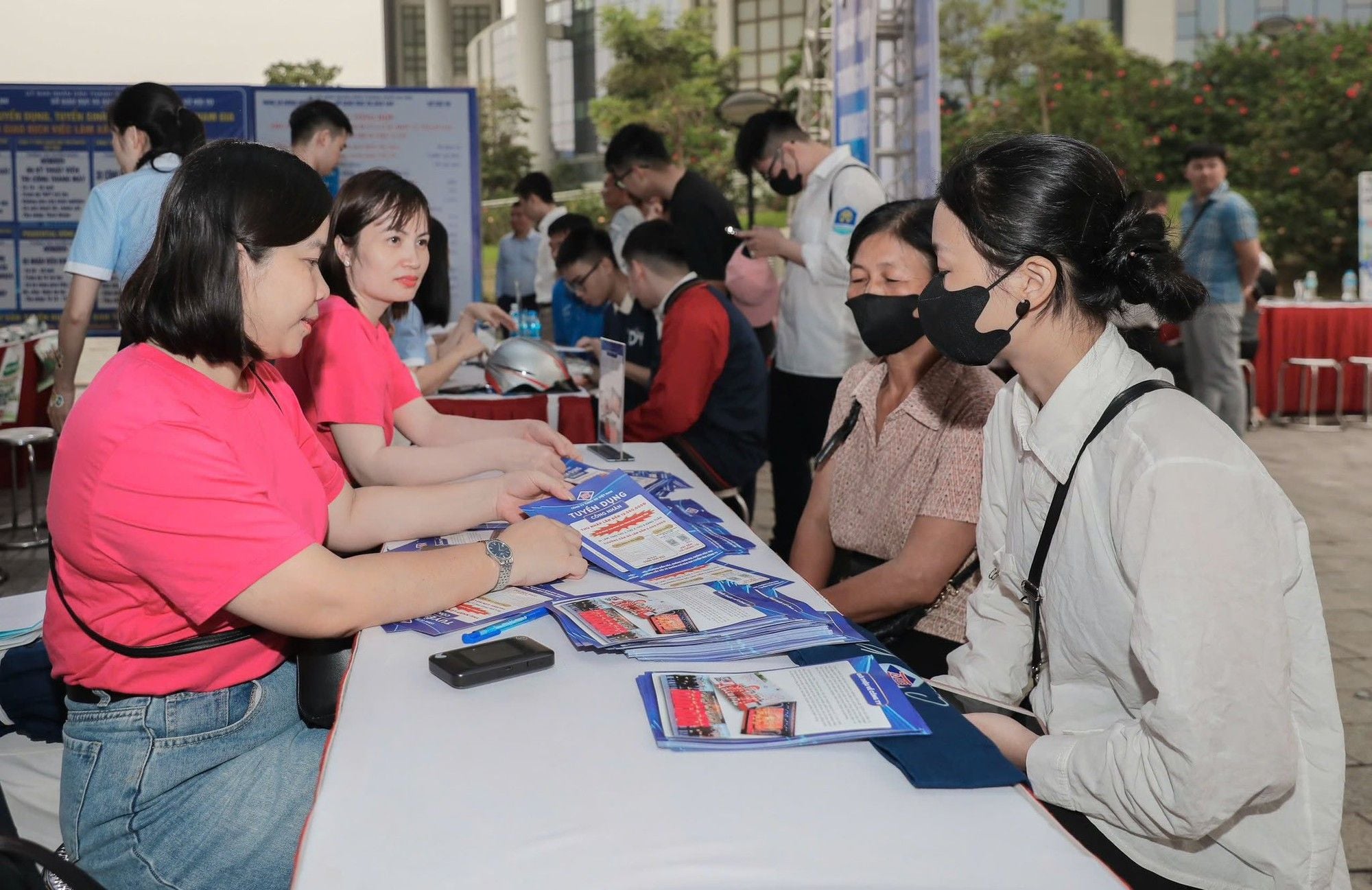
The company has accelerated recruitment as well. An April intake added about 1,000 technical workers, with monthly salaries reported in the range of 9–14 million VND.
The current expansion wave in Ninh Bình is linked to the project approval process carried out about two years earlier, when the $120 million Quanta laptop project was licensed quickly.
On April 4–5, 2023, Mỹ Thuận Industrial Park (at the time part of Nam Định, now Ninh Bình) hosted Quanta Computer Inc., which signed an agreement to develop a laptop production project. As Quanta’s first Vietnam foothold, the location required rapid administrative processing to retain the investor.
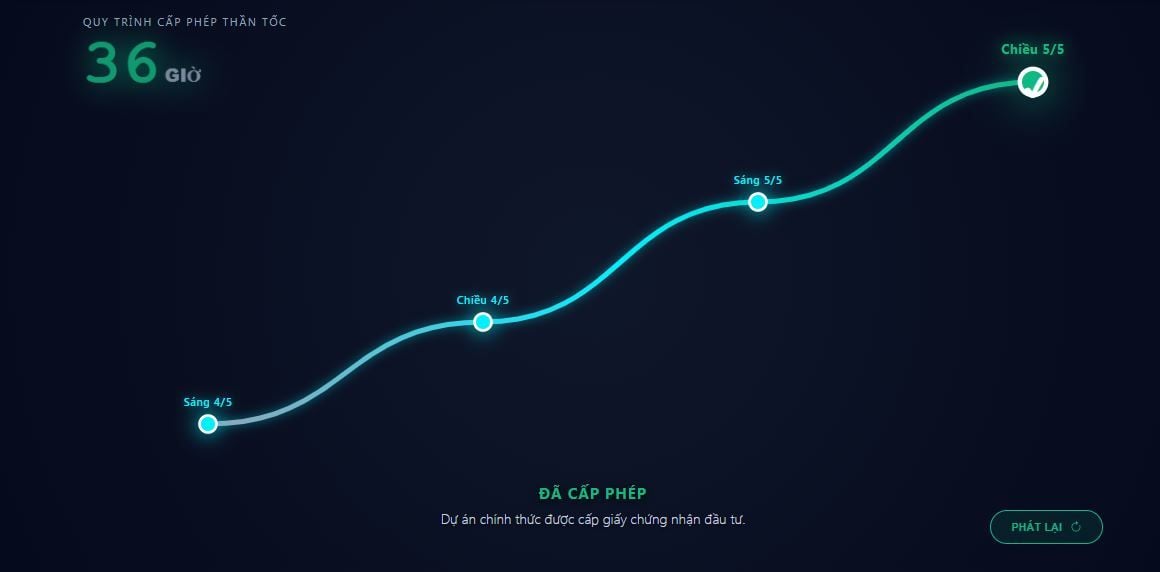
According to the account provided, the licensing process took about 36 hours. On the morning of May 4, 2023, the company submitted its dossier. By that day, relevant agencies completed reports and agreed on the policy. By the afternoon of May 5, the investment registration certificate for the $120 million project—reported as more than 2,829 billion VND—had been signed.
Beyond Quanta’s project, Ninh Bình has seen a broader investment expansion. By the end of March 2026, the province’s industrial parks had attracted 1,135 secondary projects, including 550 FDI projects and 585 domestic projects, with registered capital of $10.6 billion and 135,735 billion VND.
Disbursement rates in many projects were reported as high. Japanese companies accounted for 112 projects with total capital of $1.473 billion, with a disbursement rate of about 95%. The capital inflow is described as helping form a large-scale manufacturing ecosystem and providing growth momentum for the local economy.
The recent arrival of major investors in Ninh Bình is also attributed to alignment between infrastructure and governance following the merger of three localities. Nguyen Hoang Anh, Head of the Management Board of the provincial Industrial Zones and Industrial Parks, said the post-merger advantage includes a relatively complete connectivity system, including the North–South Expressway, the Ninh Bình–Hai Phong corridor, rail, and an inland waterways network nearly 265 km long.
Infrastructure projects under implementation include an eight-lane coastal road with total investment of around 9.1 trillion VND, and the Phú Thứ interchange at about 1.4 trillion VND, aimed at improving connections from industrial parks to the seaport.
The improved connectivity is also expected to support land readiness for new projects. Under the 2021–2030 plan, Ninh Bình is expected to develop about 12,144 hectares of industrial land.
Among ongoing projects, Hai Long (VSIP) Industrial Park covers 180 hectares with total investment over 2.2 trillion VND and is oriented toward a low-carbon emission industrial model.
Authorities also point to governance as a factor in investor appeal. The locality maintains a regular dialogue mechanism with enterprises to identify and address issues promptly, drawing on experience in expediting investment procedures.
At a conference on March 30, enterprises highlighted challenges including labor shortages—especially skilled labor—and limited housing and commuting facilities for workers. They also cited the need to ensure stable electricity supply for continuous production, along with timely investment in infrastructure and worker housing. These concerns were acknowledged and forwarded to relevant agencies for action.
Governance changes are reflected in economic indicators. By the end of 2025, enterprises in industrial parks reported revenue of about 461.834 trillion VND, contributing nearly 22,000 billion VND to the state budget. The scale is described as strengthening the local economy and supporting competition for new investment, particularly in high-tech sectors.
At a conference with import–export enterprises on April 21, Trần Huy Tuấn, Secretary of the Ninh Bình Provincial Party Committee, stated that from July 1, 2025, the province would operate a two-tier government model amid ongoing challenges, while economic indicators remained positive.
In 2025, GRDP rose 10.65%, ranking third nationwide. In Q1 2026, growth reached 11.63%, ranking second. The industrial production index (IIP) rose 28.74%, with processing and manufacturing up 29.05%. The province attracted 328 new projects, including 84 FDI projects.
Trade performance was also strong. Total import–export turnover in 2025 reached about USD 57 billion, up 57% from the previous year, with a trade surplus of USD 2.44 billion. In Q1 2026, turnover reached USD 14.7 billion, up 51.8% year-on-year.
These results are presented as showing growth momentum shifting toward industry, exports, and international integration, with the business sector—especially FDI and export enterprises—playing a key role.
The Secretary reiterated that Ninh Bình will continue to accompany and support investors promptly, transparently, fairly, and without discrimination. The province’s stated view is that “Business is the development center; FDI, exports, and logistics are the strategic growth engines,” aiming to build a safe, attractive, competitive investment environment so Ninh Bình can become a trusted destination contributing to national development.
The article also describes Ninh Bình’s economic scale of 342,812 billion VND as the result of a linked economic structure after the merger of Ha Nam, Nam Định, and Ninh Bình. The merger is said to enable reorganizing development space based on distinctive strengths: Phủ Lý as a high-tech industrial base and northern logistics gateway; Hoa Lư as a heritage urban core; and Nam Định as a driver of the coastal economy.
The streamlined two-tier local government model is described as helping eliminate intermediary steps and allowing more autonomous allocation of resources for cross-regional projects. In 2025, the first year under the new setup, Ninh Bình reported a trade surplus of USD 2.44 billion and ranked seventh nationwide in budget revenue with 78,369 billion VND, achieving two-digit growth of 10.65% and laying groundwork for the next phase.

Premium gym chains are entering a “golden era” that is ending or already in decline, as rising operating costs collide with shifting consumer preferences toward more flexible, community-based ways to exercise. Long-term memberships are shrinking, margins are pressured by higher rents and facility expenses, and competition from smaller, more personalized…