•
•
•
•
•
•
•
•
•
•
•
•
•
•
•
•
•
•
•
•
•
•
•
•
•
•
•
•
•
•
•
•
•


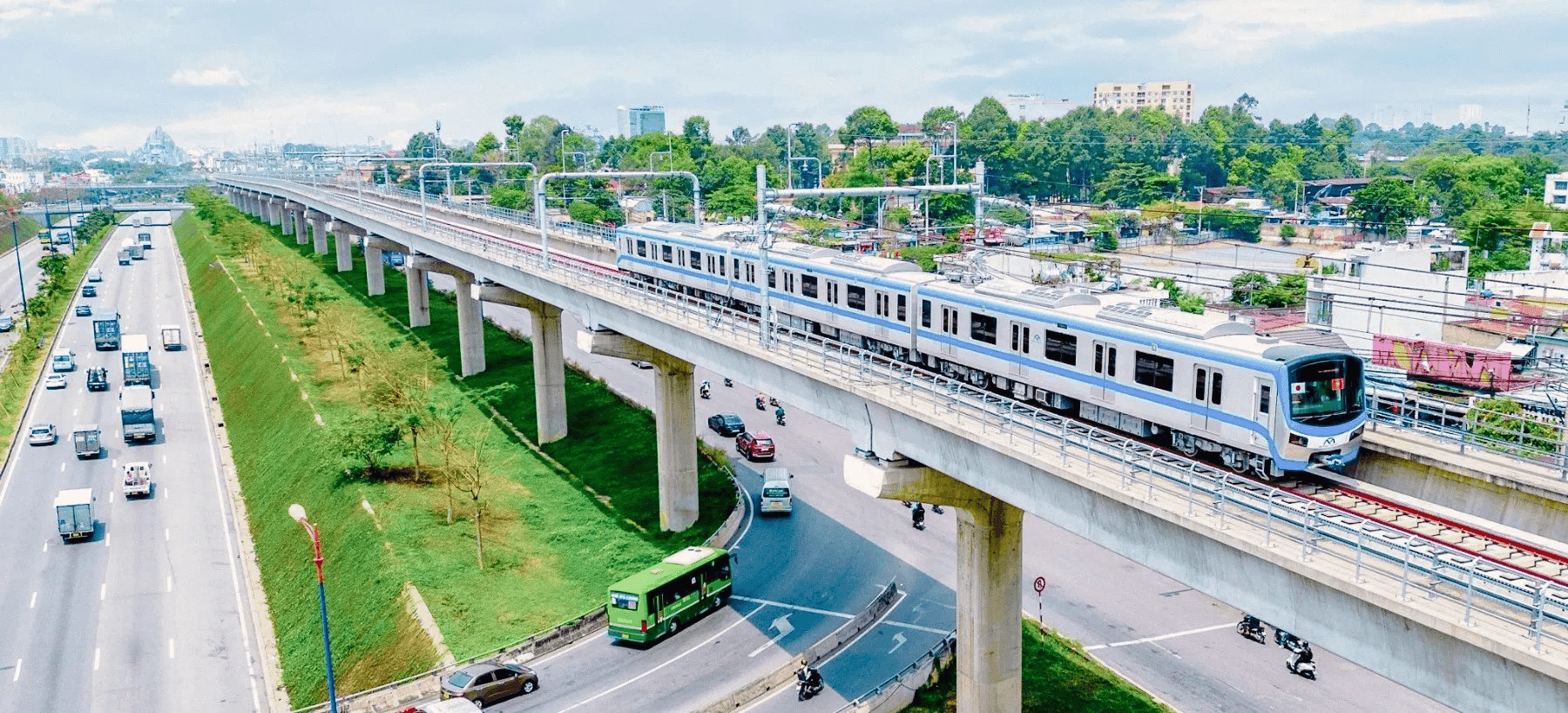
A metro line connecting Da Nang International Airport, Hoi An, Tam Ky, and Chu Lai is expected to begin construction in February 2027, after investment approval procedures and the selection of investors are completed.
In February 2026, Dai Quang Minh, a subsidiary within THACO’s ecosystem, submitted a document to the Da Nang People’s Committee and the Finance Department requesting approval for Dai Quang Minh to prepare the project dossier. Da Nang’s Finance Department approved Dai Quang Minh to prepare the project proposal.
THACO said that after the Da Nang People’s Committee approves the investment project and the investor selection results, construction of the metro line is planned to start in February 2027.
The Da Nang metro is planned to have a length of more than 103 km, starting at Terminal T1 (Da Nang Airport) and ending at Chu Lai Airport.
Phase 1 is planned to cover 30.2 km with 14 stations, linking Da Nang Airport to Hoi An. Phase 2 covers 73.6 km with 10 stations, linking Hoi An to Chu Lai Airport.
The project’s total investment is about 265,972 billion dong.
Late last year, during a meeting with NACO, a firm with experience in planning and design of international airports in the Netherlands, Da Nang’s leadership introduced the investment project, including the upgrade of Chu Lai International Airport—one of the region’s key projects in the coming period.
In the future, the metro line is expected to connect the two international airports in Da Nang City: Da Nang and Chu Lai.
Under the 2045 orientation, Da Nang will form 16 metro corridors combining MRT and LRT with a total length of nearly 240 km. These corridors are intended to connect areas including Liên Chiểu (the seaport), the free-trade zone, Da Nang International Airport, the city center, industrial zones, and extend to Hoi An, Tam Ky, and Chu Lai Airport.
The first corridor will be the Da Nang Airport – Hoi An – Tam Ky – Chu Lai corridor. The second corridor will prioritize studying a high-speed rail path from the high-speed rail station to the central urban rail station, aiming to connect the national high-speed rail corridor to the city center. The implementation timeline for this corridor will follow the progress of the national high-speed rail project through Da Nang.

Premium gym chains are entering a “golden era” that is ending or already in decline, as rising operating costs collide with shifting consumer preferences toward more flexible, community-based ways to exercise. Long-term memberships are shrinking, margins are pressured by higher rents and facility expenses, and competition from smaller, more personalized…