•
•
•
•
•
•
•
•
•
•
•
•
•
•
•
•
•
•
•
•
•
•
•
•
•
•
•
•
•
•
•
•
•


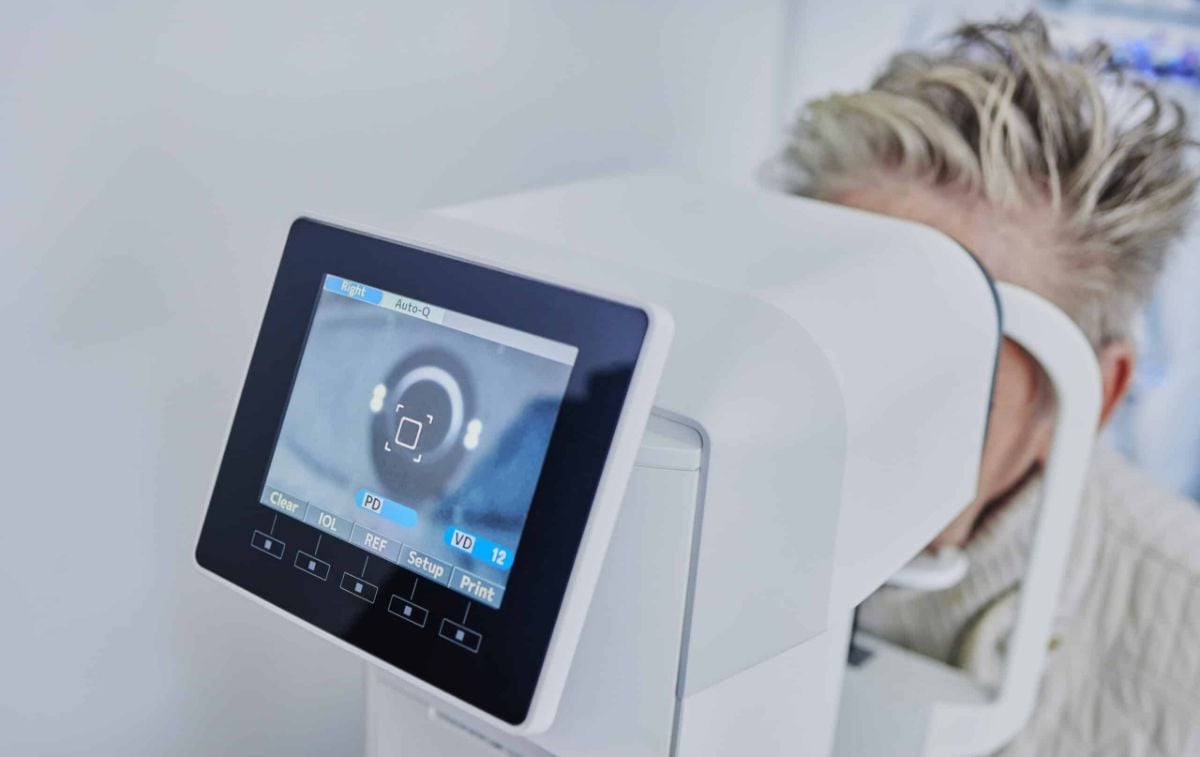
AI applications in ophthalmology are increasingly reshaping diagnostic and treatment practices in Vietnam. As technology gradually changes how care is delivered, ophthalmology hospitals are expanding access to advanced devices and systems to examine, diagnose, and treat patients more effectively.
Speaking at the 2025 Ophthalmology Conference in Hanoi, Prof. Dr. Tran Van Thuan, Deputy Minister of Health, said Vietnam has been recognized by the World Health Organization for eliminating trachoma. He noted that each year, hundreds of thousands of patients are examined and treated using modern techniques including phacoemulsification, vitrectomy, corneal transplants, laser treatment for refractive errors, diabetic retinopathy management, and pediatric eye care.
The deputy minister said the sector is at a “moment to lead digital transformation,” applying artificial intelligence, building a network of subspecialties, and disseminating effective eye-care models to underserved regions. He emphasized that hospitals should pursue comprehensive digital transformation, from electronic medical records and specialty data to AI integration in image-based diagnostics, risk stratification, and personalized treatment.
The Quảng Ninh Province Geriatrics and Rehabilitation Hospital has invested in advanced diagnostic equipment, including an OCT (optical coherence tomography) system integrated with AI. The hospital said OCT scanning provides high-resolution retinal imaging, helping clinicians assess retinal structure and microvasculature, including retinal and scleral blood flow status.
To expand the use of the AI-integrated OCT system, the hospital launched the scientific initiative “AI-assisted image analysis for screening retinal diseases in Quảng Ninh.” The solution uses a Center–Satellite model connecting primary care with the Geriatrics Hospital – Rehabilitation Center.
Under the model, eye images are captured at commune-level stations and lower-tier hospitals, then transmitted to the central hospital for AI analysis. The system provides suggested management steps or referrals.
Initial results reported by the hospital include:
The hospital said routine eye checks are particularly important for older adults and patients with diabetes or hypertension, supporting earlier detection and reducing the risk of severe complications.
Earlier, a student project led to the VISTA initiative—an AI-assisted vision-simulation system—implemented at VISI Ophthalmology Hospital in Soc Trang. The project was developed in response to a challenge in ophthalmology facilities: patients may struggle to visualize the extent of their vision loss even after detailed explanations.
VISTA allows patients to “see” their condition through real-life scenarios such as night driving, reading small text, or viewing environments with low light.
Technically, VISTA combines Computer Vision and Deep Learning by processing video frames in real time in line with the eye’s optical mechanism. For refractive errors, the algorithm uses a diopter-based simulation to blur vision according to myopia or hyperopia. For cataracts, AI reduces contrast, lowers color saturation, and introduces grain to recreate clinical haziness.
BSCKII. Nguyễn Hữu Đức, Director of Clinical Operations at VISI Soc Trang Eye Hospital, said the project has practical impact by helping patients engage with their treatment plans. The Studio Care experience space—an integrated vision-experience area—was handed over and has been operating at the hospital since February 2026.
VISTA is also being refined to model more complex diseases, including glaucoma (optic neuropathy) and age-related macular degeneration.
Saigon Ophthalmology Hospital reported pioneering the synchronous deployment of Phaco Non‑Blade using the Ziemer LDV Z8 (Switzerland) AI-enabled system in cataract surgery. The hospital said the technology eliminates the mechanical phaco blade and replaces it with laser precision to within 1/1000th of a millimeter, while AI personalizes treatment parameters.
According to the hospital, surgeries are smoother and safer, described as nearly painless, and recovery is shortened to 1–2 days.
Eight months after implementation, Saigon Ophthalmology Hospital reported more than 3,000 AI-assisted Phaco Non‑Blade surgeries. The hospital’s director said mastering the technology involves not only operating equipment but also the full workflow, from AI-assisted diagnostic planning to the specialist team’s expertise.
Emphasis on early screening is also reflected in a new initiative by the National Endocrinology Hospital. Since October 2025, the hospital has launched a project to enhance comprehensive eye care for the public, expected to run through June 2027.
The project targets 10,000–12,000 people with diabetes for retinal imaging and AI-assisted screening for diabetic retinopathy and other eye diseases. It also includes training for 30 doctors, nurses, and technicians in retinal image capture and AI-based diagnostics, along with advanced training on retinal disease treatment for endocrinology patients.
The hospital said screening campaigns will be organized across hospital and provincial sites to broaden access to high-quality eye care.
Prof. Dr. Phan Hoàng Hiệp, Director of the National Endocrinology Hospital, said the project helps complete a holistic eye-care model for endocrine patients. He added that it elevates clinical expertise and enables the use of modern diagnostic, monitoring, and treatment technologies, expanding access to high-quality eye care for the population.

Premium gym chains are entering a “golden era” that is ending or already in decline, as rising operating costs collide with shifting consumer preferences toward more flexible, community-based ways to exercise. Long-term memberships are shrinking, margins are pressured by higher rents and facility expenses, and competition from smaller, more personalized…