•
•
•
•
•
•
•
•
•
•
•
•
•
•
•
•
•
•
•
•
•
•
•
•
•
•
•
•
•
•
•
•
•


Despite substantial investments in cybersecurity infrastructure, many organizations remain vulnerable in the AI era, where the difference between safety and breach can be a single misstep. Experts say the core risk is no longer only technical—it is the human factor and the ability to use security tools effectively.
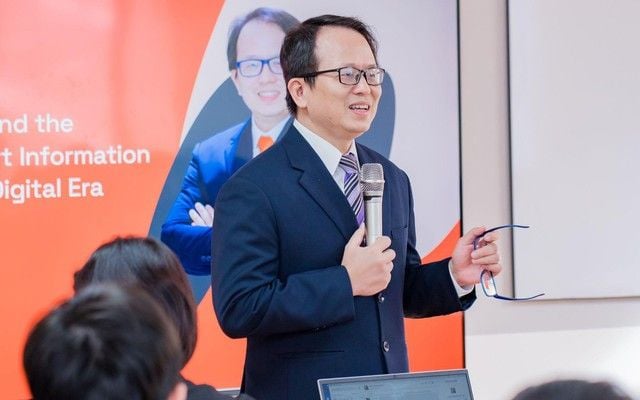
Dr. David Hoang, head of the International Training Institute at FPT, said it is not a question of whether an organization will be hacked, but when. He noted that even organizations with large security budgets can still face multi-million-dollar losses when attackers exploit the weakest link.
Le An, a representative of the ISC2 Vietnam security experts community, said the biggest vulnerability often lies in people and processes rather than technology. Many firms purchase SIEM and EDR tools but lack the capability to exploit them effectively, resulting in “security theater”—systems that appear secure but do not provide real defensive value.
He added that simple actions, such as one employee clicking a phishing email or using a weak password, can be enough to compromise an entire system.
Hoang pointed to the Coupang data breach of 2025 as an example of how access control failures can lead to large-scale impact. The incident affected tens of millions of users after an internal account’s access was not revoked following an employee’s departure.
He also argued that without a zero trust mindset—treating every access as potentially risky—technology investments may not translate into meaningful protection.
Beyond immediate operational weaknesses, experts highlighted a structural problem in Vietnam’s cybersecurity workforce: shortages in both headcount and hands-on skills.
Vietnam Security Summit 2025 estimates only about 30 specialized training centers and roughly 2,000 graduates per year. That implies a potential shortfall of around 700,000 security professionals within three years to support the digital economy.
A Kaspersky report found that 57% of Vietnamese organizations are currently short of cybersecurity personnel, the highest figure in the region.
Experts said the issue is not just the number of graduates. The real bottleneck is practical capability, as many curricula remain theory-heavy and do not keep pace with fast-evolving technologies such as AI, cloud, and zero trust. They warned that if training is not rebalanced toward practical work, organizations may struggle to respond effectively to urgent incidents.
The most concerning gap, according to the content, is the disconnect between academia and industry, leaving only about 10% of graduates ready for the job. As attacks become more sophisticated, a workforce that knows concepts but cannot act has limited defensive value.
The content warns that if changes are not made, Vietnam could face national security risks from ransomware and supply-chain attacks in the next 3–5 years, and may lose its edge as a regional technology hub.
In response to talent bottlenecks, education approaches are moving toward practical, hands-on learning. The Finland Metropolia Vietnam program—collaborating among FPT University, FPT Corporation, and Metropolia University of Applied Sciences (Finland)—emphasizes industry-aligned training.
The Intelligent Information Technology program focuses on practical work, with students participating in eight to nine projects. Courses are built around real-world problems, requiring students to demonstrate capability through project portfolios, GitHub repositories, and ongoing practice on hands-on platforms such as HackTheBox and TryHackMe.
The approach is intended to help students gain experience alongside campus learning and pursue international certifications such as CompTIA Security+ and ISC2 Certified in Cybersecurity, combining an international credential with a portfolio for job competitiveness.
For 2026, Finland Metropolia Vietnam is enrolling two majors: Smart Information Technology and Business – Logistics & International Business.
To support young talents, the program offers a scholarship fund of 30 billion VND to provide access to Finnish-standard education in Vietnam, aimed at helping students develop global thinking, innovation, and adaptability in the digital era.
More information is available via the program’s Fanpage and Website. Hotline: 0775 329 184.

Premium gym chains are entering a “golden era” that is ending or already in decline, as rising operating costs collide with shifting consumer preferences toward more flexible, community-based ways to exercise. Long-term memberships are shrinking, margins are pressured by higher rents and facility expenses, and competition from smaller, more personalized…