•
•
•
•
•
•
•
•
•
•
•
•
•
•
•
•
•
•
•
•
•
•
•
•
•
•
•
•
•
•
•
•
•
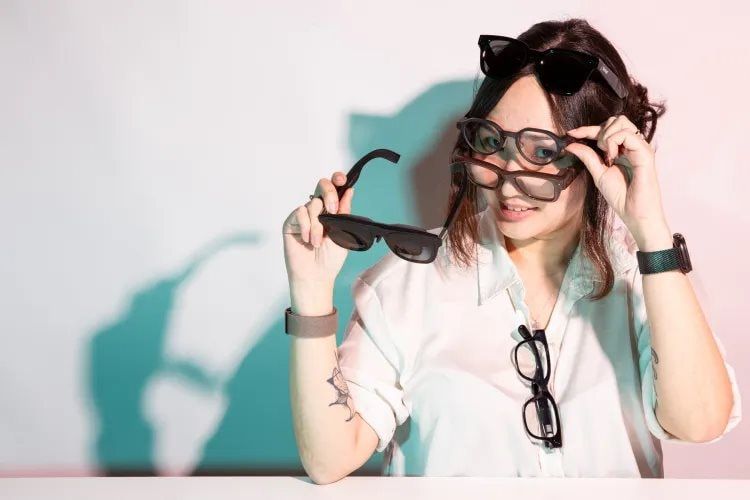
Despite being marketed as the smartphone era’s successor, AI glasses have not become an indispensable device for users.
In the wave of wearable devices that integrate artificial intelligence, smart glasses are marketed as the next step after smartphones: compact, stylish, with cameras, virtual assistants, and a host of “future” features. These glasses are expected to change how people interact with the world, but after a year of trying a range of devices—from Ray-Ban Meta Smart Glasses and Even Realities’ G2 to Rokid, Xreal, and Lucyd—one reality becomes clear: the technology is ready, but the reason to wear them all day isn’t yet.
The smart glasses market today can be seen as the most mature stage to date. Designs are increasingly refined, prices are more accessible, wearing comfort has improved, and many AI features are integrated into the devices.
Users can listen to audiobooks, read messages, and navigate to a cafe without pulling out their phone. Some models also allow gesture control and first-person video capture, and they can display information directly in front of the eye that others cannot notice.
That experience can feel like stepping out of a spy movie, with the appeal of controlling an “invisible screen” or filming without anyone noticing. Some models are also positioned as fashion-forward, designed to attract attention in real life.
However, the secrecy factor creates privacy concerns. Wearing a device with a camera on the face can make both the user and people around them uncomfortable. In public spaces such as restrooms, concerts, or courts where cameras are banned, the presence of smart glasses becomes especially sensitive.
The strongest selling point of smart glasses today is AI. Tech companies promise that AI will help users be “smarter,” “more creative,” and “more productive” in daily life.
In practice, these features remain limited. Basic tasks such as controlling music, checking weather, or receiving notifications work fairly well. But advanced features—such as object recognition, content suggestions, translation, or assistive dialogue—often fall short of expectations.
There are also reliability issues. In some cases, AI fails repeatedly to recognize a car or becomes useless without an internet connection. Translation and real-time captions require a quiet environment, which is rare in everyday life.
Even concepts shown at product showcases—such as book recommendations from a shelf, playlist generation from wall art, or recipe suggestions from a few ingredients—are often viewed as unnatural and difficult to apply in daily routines.
Battery life and stability are additional constraints. Many AI features consume more power, Bluetooth connectivity can be unstable, and setup can be complicated, leading to interruptions.
As a result, rather than functioning as a personal assistant, smart glasses sometimes end up operating as an upgraded pair of earphones. They can be useful in specific scenarios, but not enough to replace other devices.
Vision-related limitations also remain. Not all models support advanced prescriptions, and users may need to choose between regular glasses, contact lenses, or smart glasses each day.
Repairs are another challenge. Because smart glasses embed electronics in the frame, repairs are difficult and costly compared with traditional eyewear.
Taken together, these barriers suggest that smart glasses have not reached the ubiquity of smartphones. They are not suitable for everyone or every setting, and their accessory ecosystem remains limited.
Still, the potential of smart glasses has not been dismissed entirely. In specific situations—such as travel, capturing moments, professional work support, or multilingual communication—the devices can demonstrate clear value.
The central question remains whether those benefits are large enough to justify wearing glasses all day, every day. The concern is that tech companies may be trying to “force” AI into glasses without fully addressing what users want from a wearable device on the face.
When the core use case is not clear, improvements in hardware or software struggle to produce a breakthrough. Smart glasses may have reached a strong point in design and technology, but the paradox is that they do not fail because they are too bad; they fail because they are not essential enough.
Until a convincing reason for users to wear them all day is found, smart glasses—no matter how advanced—are likely to remain a niche product rather than the future of personal technology.
Source: The Verge
Coinbase has launched a High Yield USDC vault within its in-app DeFi lending offering, adding a second lending option that provides exposure to a wider range of collateral assets. The product is powered by Morpho infrastructure and uses vault allocations curated by Steakhouse Financial.