•
•
•
•
•
•
•
•
•
•
•
•
•
•
•
•
•
•
•
•
•
•
•
•
•
•
•
•
•
•
•
•
•


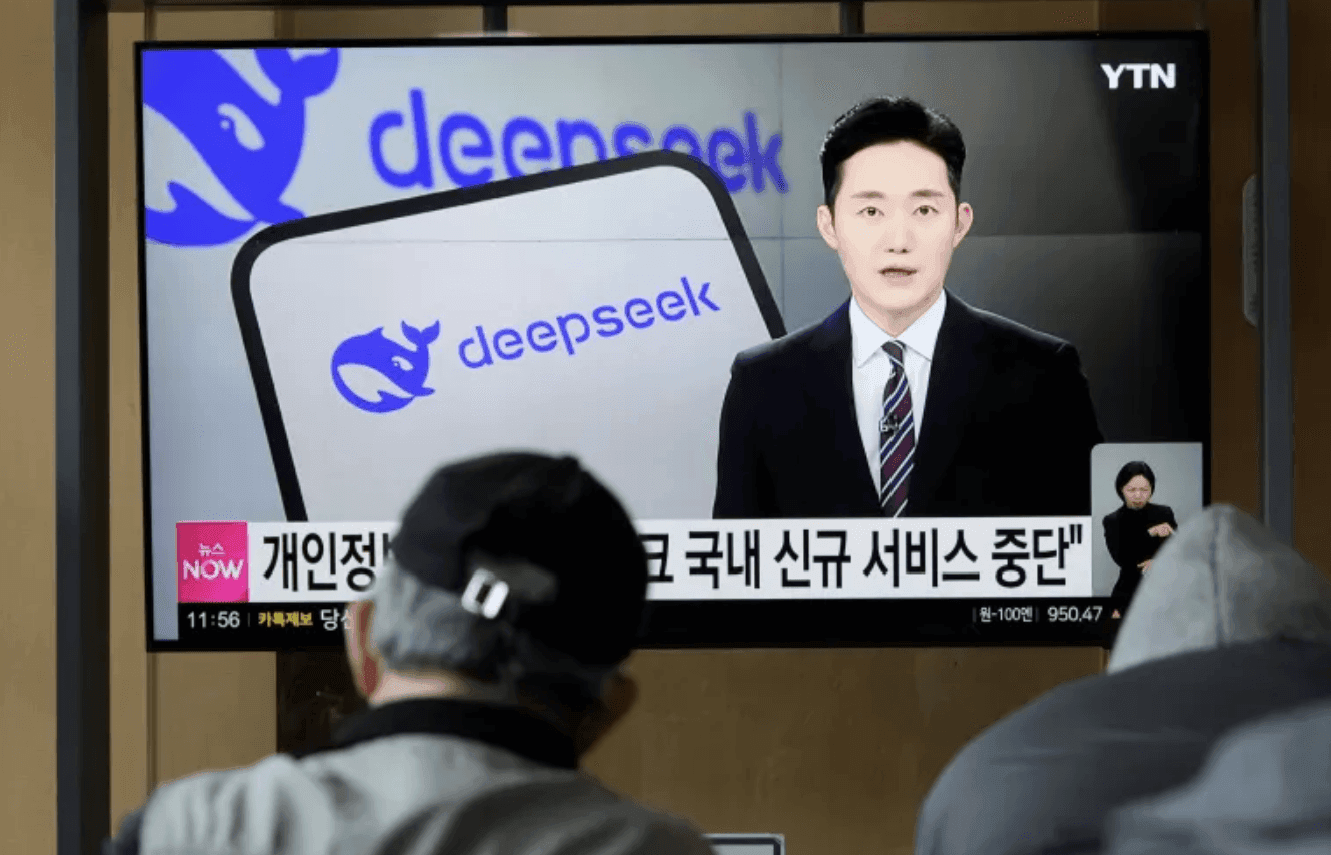
AI has become a central battleground in the competition for technological advantage between the United States and China. On April 24, the Hangzhou-based startup DeepSeek unveiled updated versions of its AI chatbot, DeepSeek-V4-Pro and DeepSeek-V4-Flash, as the pace of model releases continues to accelerate on both sides of the Pacific.
DeepSeek said its DeepSeek-V4-Pro surpasses all open-source models in mathematics and programming, and ranks only behind Google’s Gemini 3.1-Pro in world knowledge. The company also described the products as open-source, allowing developers to freely use and modify the source code.
DeepSeek added that the performance of the “pro” version is only “slightly worse” than OpenAI’s GPT-5.4 and Gemini 3.1-Pro, suggesting its development trajectory is about 3–6 months behind leading models.
Earlier, according to CNBC, OpenAI announced GPT-5.5 on April 23. The company said GPT-5.5 improves code-writing capabilities, uses computing resources more efficiently, and performs better on advanced research tasks.
The announcement came less than two months after the rollout of GPT-5.4, underscoring the speed of development across the sector.
OpenAI President Greg Brockman said the distinctive feature of GPT-5.5 is its ability to do more with less guidance—handling unclear problems and autonomously determining next steps. He argued this could shape how humans work with computers in the future.
The developments reflect how AI has become a key strategic area in U.S.-China technology competition. A 2026 Stanford University AI Index report cited in the article says Silicon Valley still holds a slight edge in developing the most advanced AI models, while Chinese firms have narrowed the gap in AI performance relative to American rivals.
According to the report, the U.S. leads in producing many top models and patents with substantial impact. China leads in the number of research publications, patents, and the number of installed industrial robots.
The AI race is also raising tensions in U.S.-China relations. On April 24, Beijing rejected White House accusations that Chinese entities are involved in an “industrial-scale” effort to steal U.S. AI technology. A White House spokesperson described the claim as defamatory toward China’s AI achievements.
Earlier, Michael Kratsios, director of the White House Office of Science and Technology Policy, filed similar accusations and pledged countermeasures. In February, Anthropic (U.S.) charged three Chinese firms—DeepSeek, Moonshot AI, and MiniMax—with illicitly exploiting ChatGPT-like capabilities and said it amounted to IP theft.
Alongside model competition, the article points to rising pressure on tech employment as companies accelerate AI investments. Meta announced on April 23 that it would lay off about 8,000 employees, or 10% of its workforce, and pause hiring for around 6,000 roles. Bloomberg attributed the move to efficiency gains and freeing resources for new investments.
Meta, the parent company of Instagram and Facebook, said it continues to push AI infrastructure spending and recruit top AI talent. The group aims to double its AI-related spending in 2026 to roughly $135 billion, up from $72 billion last year.
Microsoft is also expected to offer early retirement with severance to more than 8,000 employees as part of a U.S. workforce restructuring. AP reported the program would begin in early May and cover roughly 8,750 people, about 7% of the U.S. workforce.
The article notes that Microsoft previously reduced costs through multiple rounds of layoffs. By June 2025, the company employed about 228,000 people, including 125,000 in the U.S. Like Meta, Microsoft is expanding investment in data centers to provide computing power for cloud customers and to run AI-generative models.
Taken together, the new model releases, policy disputes, and workforce shifts illustrate AI’s growing role as a strategic battleground in the U.S.-China technology race, even as both sides intensify investment and talent deployment to gain an edge in the next generation of computing.

Premium gym chains are entering a “golden era” that is ending or already in decline, as rising operating costs collide with shifting consumer preferences toward more flexible, community-based ways to exercise. Long-term memberships are shrinking, margins are pressured by higher rents and facility expenses, and competition from smaller, more personalized…