•
•
•
•
•
•
•
•
•
•
•
•
•
•
•
•
•
•
•
•
•
•
•
•
•
•
•
•
•
•
•
•
•


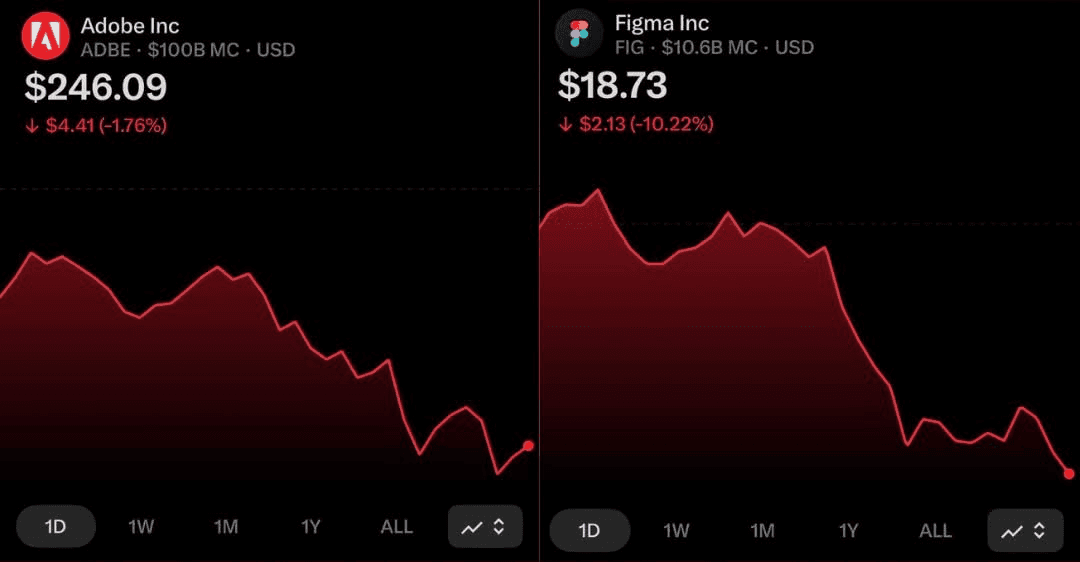
Despite ongoing skepticism about the quality of Claude Design’s output, the impact of the new tool on the traditional software industry is undeniable.
Anthropic has officially launched Claude Design, a tool that lets users create a website, slide decks, or interface designs by describing their idea in words. The service is designed to require no design knowledge, and users do not need specialized software such as Figma or Adobe. Instead, they enter a request and the system generates a complete draft.
On launch day, the market reacted quickly. Figma’s stock briefly fell by more than 10% during Claude Design’s unveiling. By the end of the session, the decline narrowed to about 6.89%, but it still represented a significant drop for the company. Adobe also fell by more than 1%, with a smaller decline that nonetheless signaled investor sensitivity to the news.
The launch and key features had been forecast a few days earlier in a report by The Information, when the market reacted very negatively. Even though the information was no longer surprising, stocks of design software firms remained notably affected.
Claude Design is built around a different workflow from traditional design software. Users describe what they want, and the system produces an initial design. After that, the editing process takes place in chat, using back-and-forth exchanges and direct adjustments to elements such as color, layout, or spacing—making the experience more conversational than technical.
Claude Design also generates images and is integrated with Anthropic’s broader ecosystem. Once a design is complete, the system can package it and transfer it to Claude Code to turn it into a real product with a single prompt. The aim is to support the full path from idea to product within the same system, rather than switching between multiple tools.
Users still have other export options, including sharing via internal links, saving to folders, and exporting to Canva, PDF, and standalone HTML files.
The tool’s accessibility is cited as a key reason for the market’s strong response. Traditional platforms such as Figma and Adobe assume a professional designer will participate. Claude Design, by contrast, targets people without a design background—such as founders, product managers, or marketers—potentially lowering entry barriers to design work.
Brilliant, a technology education platform known for interactive lessons, is cited as an early example. According to Brilliant, the most complex pages previously required more than 20 commands to reproduce on other tools, while Claude Design required only 2 commands. Brilliant also said its team converted static sketches into interactive prototypes that could be shared and tested with users without code review, then handed the work over entirely—including design intent—to Claude Code for deployment.
Some users and observers argue that the market reaction may be exaggerated. They say the product currently functions more like a “quick mock-up,” useful for ideation rather than a full replacement for professional design workflows. Traditional tools such as Figma are still viewed as having advantages in ecosystem, polish, and established workflows for professional teams.
Anthropic’s Claude Design reflects a broader ambition beyond launching an AI model: building an ecosystem intended to move users from initial idea to final product within a single platform. In that context, the declines in Figma and Adobe stock may reflect not only product quality concerns, but also how markets interpret a wider trend—AI that increasingly reshapes how creative products are created from the outset.





Premium gym chains are entering a “golden era” that is ending or already in decline, as rising operating costs collide with shifting consumer preferences toward more flexible, community-based ways to exercise. Long-term memberships are shrinking, margins are pressured by higher rents and facility expenses, and competition from smaller, more personalized…