•
•
•
•
•
•
•
•
•
•
•
•
•
•
•
•
•
•
•
•
•
•
•
•
•
•
•
•
•
•
•
•
•


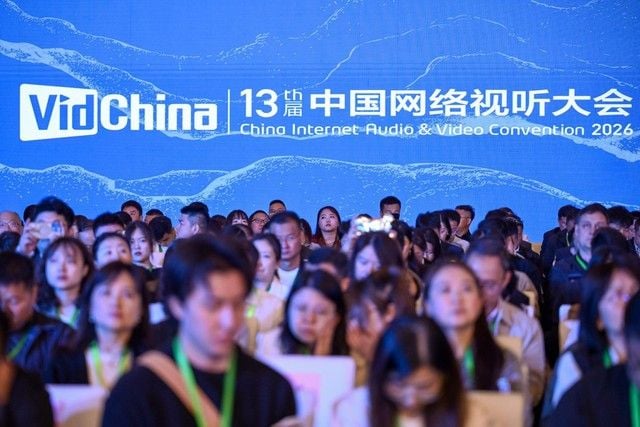
In 2025, AI drama began to flood Chinese short-video platforms. According to industry assessments documented at the 13th Radio and Television Conference, AI drama production costs are significantly cheaper than live-action films, raising real concerns about the future of the traditional production chain. Then, on April 15, 2026, at the Chengdu conference, Douyin Group (ByteDance) announced investing 500 million yuan (about 1,930 billion dong) to do the opposite: invest in real-person short drama. Douyin is not alone in this decision. On the same day, Tencent Video, Kuaishou, Mango TV, and more than 10 provinces across China simultaneously announced similar policies, according to The Paper. A rare consensus signal across the world's largest content industry. What is Chinese short drama and why AI drama is alarming to the entire industry Short drama is a vertical film format lasting 1 to 5 minutes per episode, designed for mobile viewing, typically with 30 to 100 episodes per series. This genre exploded in China around 2022–2023 and quickly became one of the fastest-growing areas of the digital entertainment sector. Its growth rate is nearly unprecedented in modern entertainment history. According to the 2024 China Short Drama Industry Report, produced by the Shenzhen Broadcasting Group, the Communication University of China, and the China Television Production Association, the market size reached 368 million yuan in 2021. By 2023, it jumped to 37.39 billion yuan. In 2024, for the first time in history, short drama revenue surpassed nationwide cinema with 50.5 billion yuan, compared with 42.5 billion yuan for cinema. In 2025, according to iMedia Research, the market reached 67.79 billion yuan, up 34.4% year on year, with 664 million users, accounting for 70.2% of China's internet population. The industry generated over 2 million direct and indirect jobs nationwide. As AI image and video generation becomes powerful enough to produce visual content at lower cost, AI drama emerged and raised real concerns: if everyone could create short films with AI, what place would actors and directors have? That question puts the entire traditional production chain at risk. According to tvoao.com, AI drama can cut production costs by up to 90% and shorten the production time of an episode from days to hours. The emotional realism of real people cannot be fully produced by algorithms. Douyin Group is implementing this investment through its sub-platform Hongguo Short Drama, now one of China’s largest short drama platforms. At the conference, the head of Hongguo stated: “The value of real-person short drama lies in its rooting in life, touching the heart, enabling viewers in a few short minutes to see themselves, understand others, and feel life. This is something algorithms and digital technology cannot completely replace.” “Only when stakeholders actively support real-person creation can the short drama industry develop sustainably and go far,” the speaker added. The 500 million yuan package is deployed in three concrete directions. First is a content-creation fund focusing on real-person short drama with realistic themes, encouraging innovation in theme selection, storytelling, and production. Second is a more transparent revenue-sharing model through the Short Drama Creator Center, launched on April 14, 2026, with additional rewards for projects with artistic value and positive themes. Third is a direct-connection service between producers, investors, and creators, helping reduce financial risk for independent production teams. Why this is a notable example for Vietnamese producers China is not the only market wrestling with this question. In Vietnam, short videos on TikTok and Reels are growing rapidly, and many local producers have begun applying AI in short-video production. The question of the role of actors, screenwriters, and directors in the AI era remains unresolved. Douyin Group’s decision and the broader Chinese short drama industry send a clear message: the convergence of money, policy, and public statements from industry leaders shows that even in the world’s strongest AI application market, audiences still pay for emotion rather than pixels. AI is not losing this story. Tencent Video continues to invest in AI alongside real people. But the lesson from China's short drama industry is that cheap and fast alone are not enough to keep viewers to the final episode. Source: The Paper / Sina Finance
Premium gym chains are entering a “golden era” that is ending or already in decline, as rising operating costs collide with shifting consumer preferences toward more flexible, community-based ways to exercise. Long-term memberships are shrinking, margins are pressured by higher rents and facility expenses, and competition from smaller, more personalized…