•
•
•
•
•
•
•
•
•
•
•
•
•
•
•
•
•
•
•
•
•
•
•
•
•
•
•
•
•
•
•
•
•



At the HumanX conference in San Francisco, thousands of tech experts gathered at the Moscone Center to discuss how artificial intelligence is reshaping the business landscape. Amid conversations about chatbots and automation tools, “Claude” from Anthropic repeatedly came up as a standout option among business leaders.
Discussions with vendors at the exhibition suggested Claude was the most preferred tool in day-to-day business use. One vendor said his team uses Claude regularly and expressed the view that ChatGPT and OpenAI are “going down,” a sentiment that some in the industry appear to be adopting.
Despite the competitive chatter, the article points to revenue performance as a reason to avoid assuming a sharp decline. A Wall Street Journal analysis cited in the coverage ranks both OpenAI and Anthropic among the “fastest-growing enterprises in the history of technology,” indicating that OpenAI’s momentum has not disappeared so much as shifted in a market with more comparable rivals.
In that framing, OpenAI’s “decline” is portrayed less as a collapse in growth and more as a change in relative positioning, as other providers—such as Anthropic—have reached similar levels of capability and adoption.
To support its position, OpenAI announced a new subscription package priced at $100 per month. The plan is designed to provide users with access to Codex, the company’s coding-assistance tool, with substantially higher access levels.
The move is described as an effort to broaden Codex’s user base and compete directly with Anthropic’s Claude Code.
In a separate discussion with Bloomberg journalist Rachel Metz, OpenAI enterprise technology chief Srinivas Narayanan emphasized the speed of technological change. He said, “We are living in an extraordinary moment, when every month, even every day, there is something new to look forward to.”
On automated programming, Narayanan added that while people have used coding-assistance tools for about a year, “only in recent months has the entire field changed.”
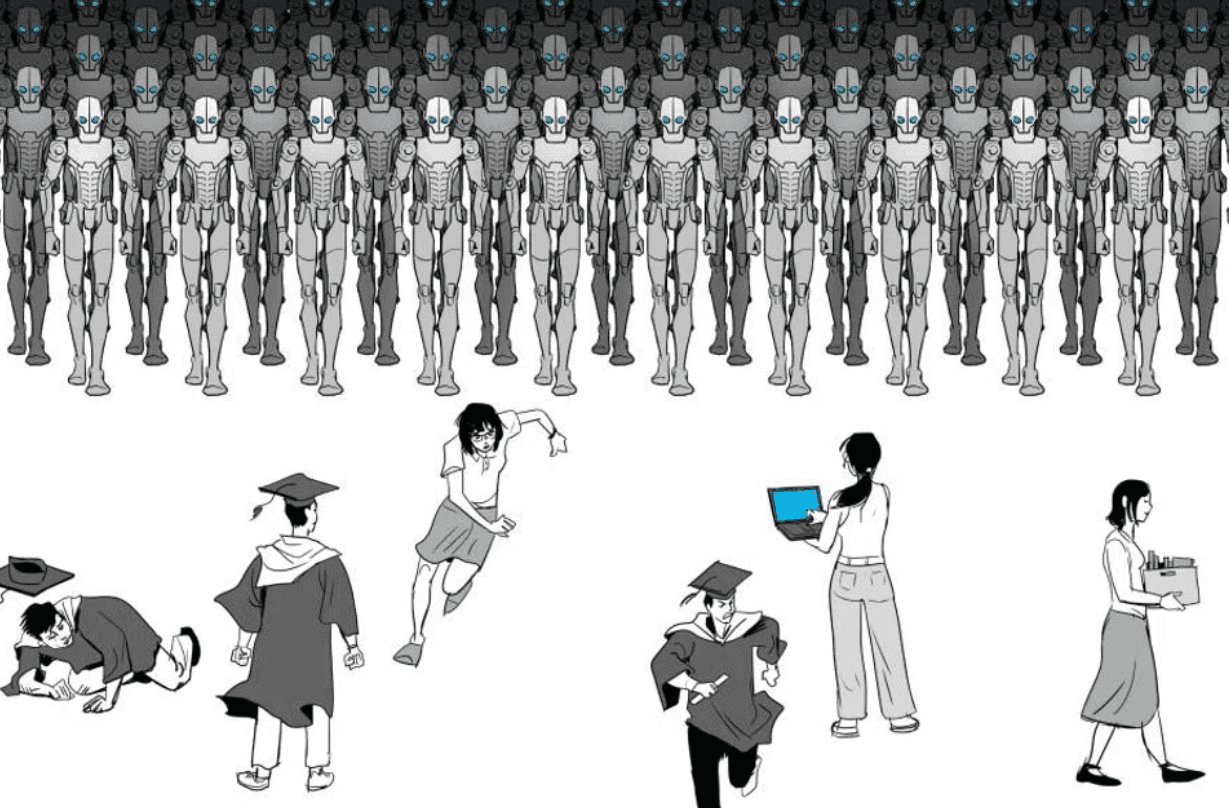
The coverage argues that while AI-driven creative applications have not yet produced a clear breakthrough, AI-powered workflow automation is increasingly becoming the industry’s focal point. It also notes that companies are delegating tasks to “autonomous assistants” at a pace that exceeds many forecasts, and that the future remains open-ended.





Premium gym chains are entering a “golden era” that is ending or already in decline, as rising operating costs collide with shifting consumer preferences toward more flexible, community-based ways to exercise. Long-term memberships are shrinking, margins are pressured by higher rents and facility expenses, and competition from smaller, more personalized…