•
•
•
•
•
•
•
•
•
•
•
•
•
•
•
•
•
•
•
•
•
•
•
•
•
•
•
•
•
•
•
•
•


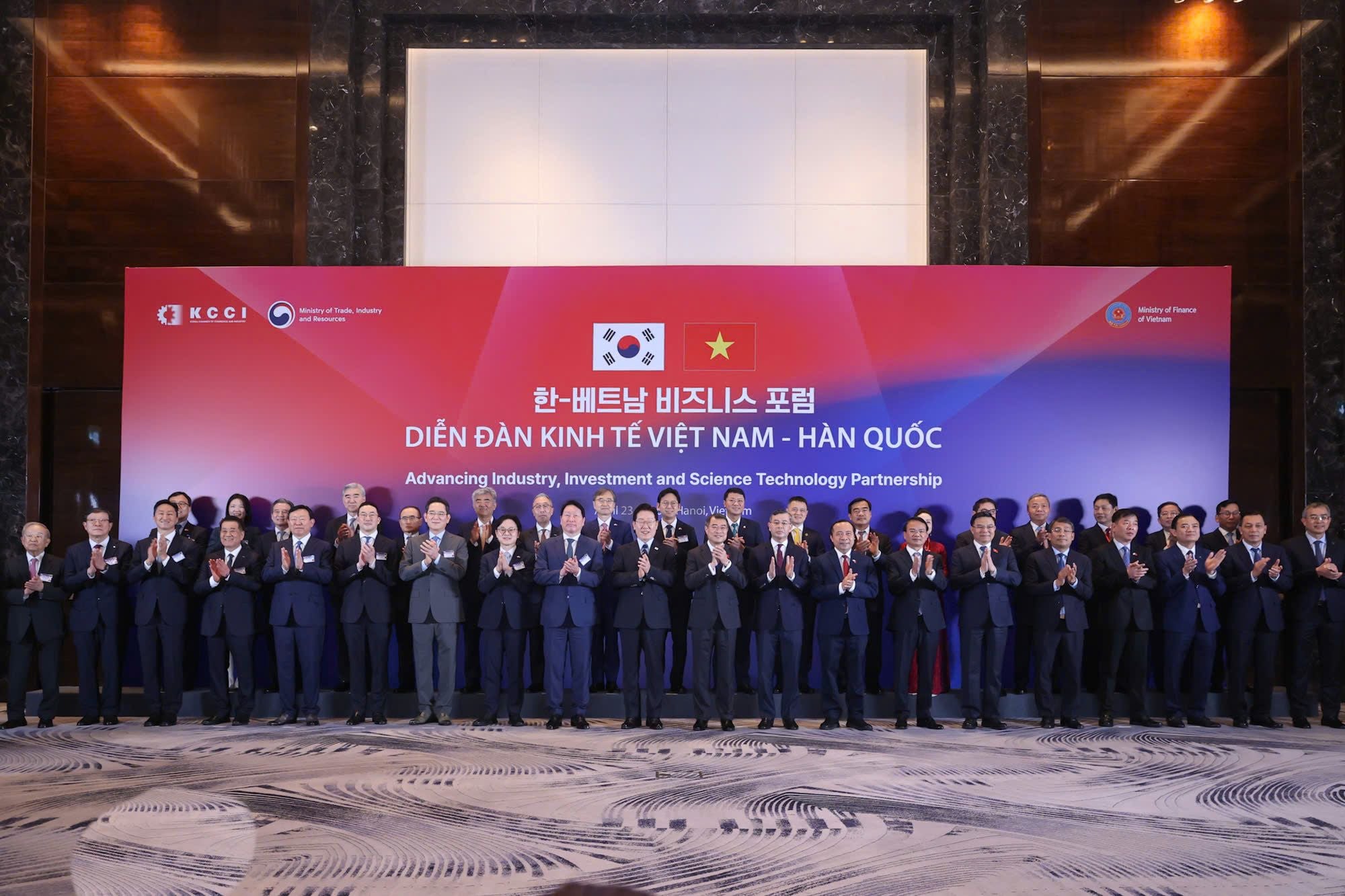
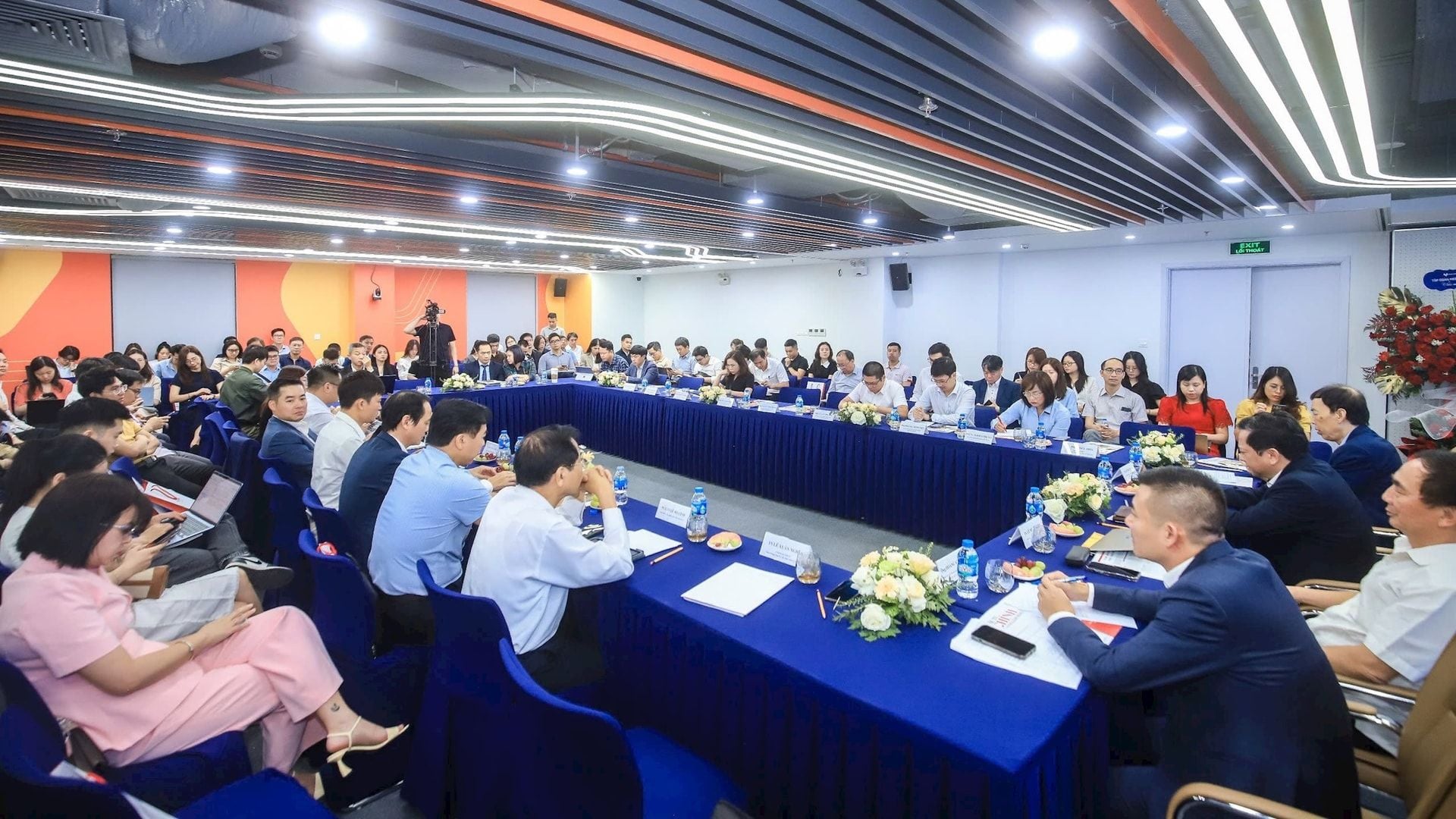
Taking place during the state visit to Vietnam by South Korean President Lee Jae Myung from April 21 to 24, the roundtable and the Vietnam–Korea Economic Forum this year continued the momentum in bilateral relations after nearly 35 years since diplomatic ties were established in 1992.
Since the milestone upgrade to a Comprehensive Strategic Partnership in December 2022, Vietnam–Korea cooperation has expanded beyond trade and investment into science and technology, innovation, digital transformation and supply chains. The two countries are now among each other’s three largest trading partners. Korea is also Vietnam’s largest investor, with more than 10,000 active enterprises.
At the roundtable, CMC Group Chairman Nguyen Trung Chính said Korea has remained a key market for CMC for more than 20 years. He argued that the Vietnam–Korea relationship has the conditions to enter a new phase, where the two countries are not only trading partners but strategic technology partners.
Chính said future cooperation should go beyond trade and investment toward joint transfer, development and mastery of strategic technologies including AI, semiconductors and cybersecurity. He also emphasized placing enterprises at the center of the collaboration ecosystem, leading innovation and connecting the value chain from research and development to commercialization.
At the Vietnam–Korea Economic Forum, Vietnamese Prime Minister Le Minh Hung said that amid global supply chain restructuring, intensified technology competition and a green growth imperative, the economic partnership should move to a higher-quality phase. He said the two countries should not stop at investment and simple trade, but jointly create industrial and technology ecosystems for the future.
The Prime Minister proposed three directions: building next-generation industrial and technology ecosystems; restructuring supply chains toward flexibility, sustainability and high value; and promoting knowledge links and innovation through closer ties among enterprises, researchers and universities in both countries.
President Lee Jae Myung also proposed expanding cooperation in future industries such as AI, semiconductors and digital technology, strengthening energy and supply chain collaboration, and promoting science and technology cooperation through joint research, resource sharing and longer-term planning.
Nguyen Trung Chính highlighted the development of a new space for cooperation around AI infrastructure and computing power, the data economy, AI platforms and models, and AI applications in governance and across sectors of the economy. He cited three foundational conditions: skilled human resources; AI governance based on trust and ethics; and a financial-institutional framework suitable for cooperation.
Chính said these are prerequisites for Vietnam–Korea technology cooperation to move from opportunity exchange to substantive, large-scale programs with real impact. He also stated that CMC is accelerating its “Accelerate your AI-X” strategy to become a global AI-enabled transformation company, built on three technology pillars: AI infrastructure, security and AI solutions. In parallel, he said CMC’s “Go Global” strategy will broaden its international presence and export CMC-made capabilities, products and services worldwide.
Chính said Korea is not only an important market but also a strategic base for expanding technology, services and international business for CMC. He introduced plans to develop a hyperscale data center in Ho Chi Minh City with capacity up to 150 MW, with an estimated investment of 1–2 billion USD. He also said CMC will continue strengthening core capabilities in AI, semiconductors and cybersecurity.
During the event, CMC Global signed a strategic cooperation agreement with FuriosaAI Company Limited to jointly develop AI application software, advance mutual business opportunities, and expand markets in Vietnam and Korea.
The MoU with FuriosaAI was described as a milestone in CMC’s ongoing cooperation with major Korean clients and partners including Samsung SDS, LGU+, SK Telink, Korea Telecom, LG, CJ, Naver, SK Broadband, and Amkor Technology, among others. The collaboration is expected to help CMC expand its presence in Korea and build capacity to deploy and standardize services, while developing deeper technology partnerships.
Against the backdrop of deepening Vietnam–Korea ties, the proposals at the roundtable and the forum reflected expectations for a new phase of cooperation in which enterprises from both sides jointly build technology capacity, expand markets and create long-term value.




Premium gym chains are entering a “golden era” that is ending or already in decline, as rising operating costs collide with shifting consumer preferences toward more flexible, community-based ways to exercise. Long-term memberships are shrinking, margins are pressured by higher rents and facility expenses, and competition from smaller, more personalized…