•
•
•
•
•
•
•
•
•
•
•
•
•
•
•
•
•
•
•
•
•
•
•
•
•
•
•
•
•
•
•
•
•


In recent days along roads in Vietnam’s Mekong Delta, orchardists have been seen carrying durians to the roadside and piling them up, waiting for consumers to “rescue” them. The measure reflects a sharp drop in export prices for the Ri6 durian variety, which have fallen to record lows.
Ri6 durian fruit is currently priced at 20,000–40,000 dong per kilogram, depending on type. The level is significantly lower than production costs, leaving many orchard owners with losses. Some growers are forced to sell individual fruits retail to recover part of their investment.
Ms. Tran Thi Thuy, from Phong Dien commune in Can Tho City, said her family harvested about 10 tons this season but buyers did not purchase. She attributed the situation to slower durian exports to China, with companies limiting purchases and traders stopping trading.
To sell, her family has brought durians to the street, selling a few hundred kilograms per day. Growers are also segmenting the arils and pricing them at around 150,000 dong per kilogram to attract buyers. “Lower prices help sales, but this is only a temporary measure and cannot resolve the large volumes of fruit,” she said.
Observers say the current demand and price situation is linked to a period of rapid development. In 2022, after Vietnam and China signed a phytosanitary protocol for durian exports, durian quickly became a “star” crop. High prices and open markets encouraged a durian-growing boom across the Mekong Delta, with many farmers shifting to durian cultivation and even clearing other crops.
However, the lack of controls in development allowed supply to grow faster than demand.
Vo Tan Loi, Chairman of the Dong Thap Durian Association, said the province’s durian area has risen to 34,000 hectares, with output exceeding 500,000 tons per year. Yet the share of formal, legal exports is only about 10%, with most sales relying on domestic markets or informal cross-border exports.
Production costs for durian are currently about 35,000 dong per kilogram. Profitable prices are estimated to need at least 40,000–50,000 dong per kilogram. At current prices, many orchard owners incur losses of 5,000–10,000 dong per kilogram, and losses can be higher when long-term investment costs are included.
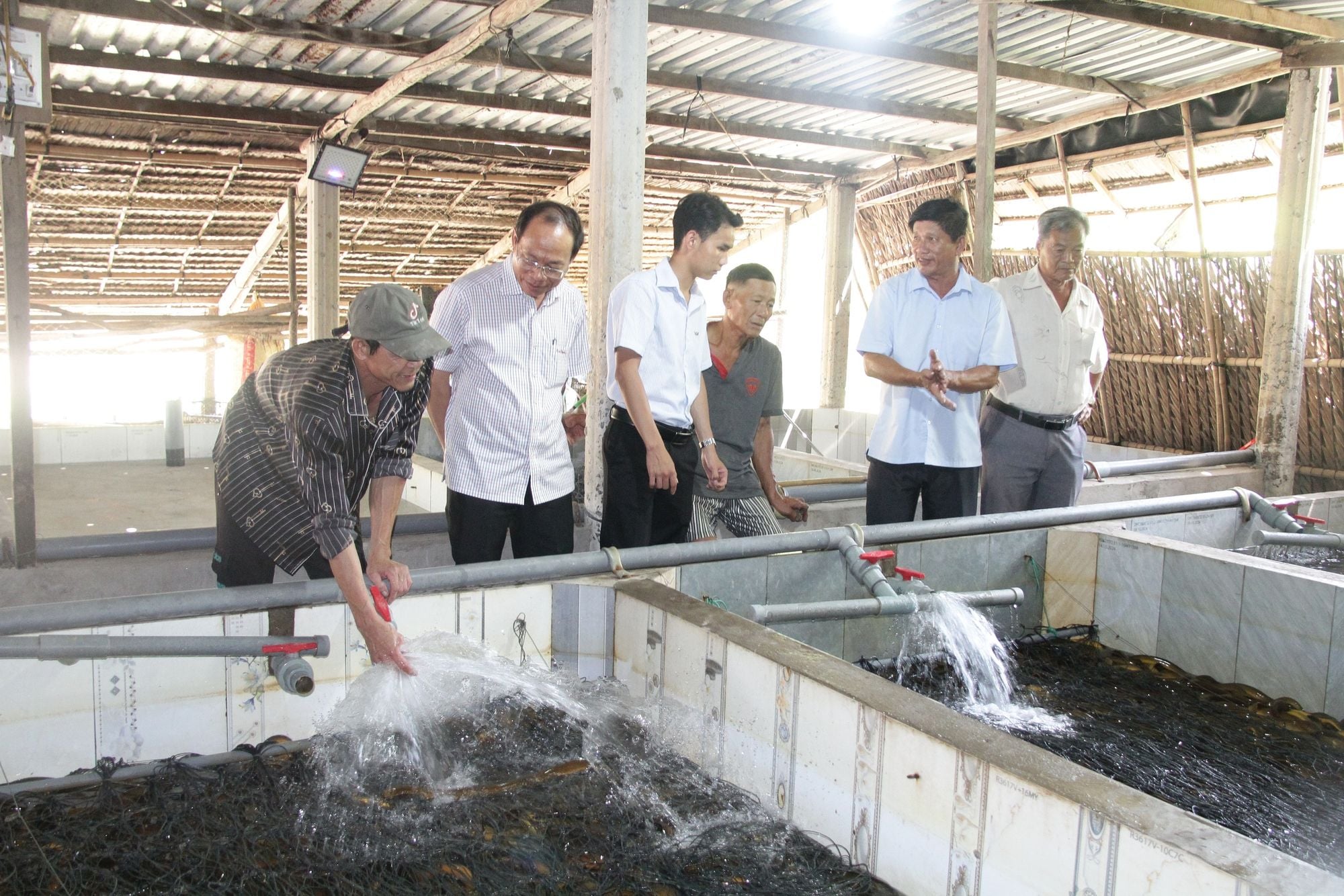
Durian is not the only case. Similar dynamics are playing out across the Mekong Delta. After COVID-19, the mud-free eel farming model expanded rapidly in multiple localities. At times, prices for market-size eels reached 90,000–100,000 dong per kilogram, generating high profits—about 400 million dong per year for an area of 100 m².
But rapid, unplanned spread saturated the market. According to farmer organizations in Can Tho City and Ca Mau province, about 4,100 tons of eels are awaiting harvest with no outlets. Prices have fallen to 36,000–43,000 dong per kilogram, while production costs exceed 65,000 dong per kilogram, resulting in heavy losses and leaving producers hoping for a “rescue.”
Mr. Nguyen Van Su, President of the Can Tho City Farmers’ Association, said the core issue is that mud-free eel farming expanded too quickly, spontaneously, and without planning. He noted that near-term profits drew many investors, causing supply to outpace demand.
The association said it is reviewing the situation, coordinating with other sectors to identify outlets, connect with buyers, and support farmers in selling through multiple channels. It also said it will organize production more methodically, emphasizing standardized cultivation processes and closer links between producers and buyers.
Other fruits in the Mekong Delta, including green-skinned oranges and Thai jackfruit, have also seen prices fall. These crops were previously planted in large volumes after market signals, before stable outlets were secured.
Recently, Mr. Nguyen Phuoc Thien, Vice Chairman of the Dong Thap Provincial People’s Committee, instructed the Department of Agriculture and Environment to develop a structured plan for durian, jackfruit, and other crops in the region rather than allowing spontaneous production as before.
The agricultural sector was asked to urgently survey growing areas, monitor metal contamination risks (cadmium), establish soil sampling plans, and provide timely technical remedies for growers.
Premium gym chains are entering a “golden era” that is ending or already in decline, as rising operating costs collide with shifting consumer preferences toward more flexible, community-based ways to exercise. Long-term memberships are shrinking, margins are pressured by higher rents and facility expenses, and competition from smaller, more personalized…