•
•
•
•
•
•
•
•
•
•
•
•
•
•
•
•
•
•
•
•
•
•
•
•
•
•
•
•
•
•
•
•
•
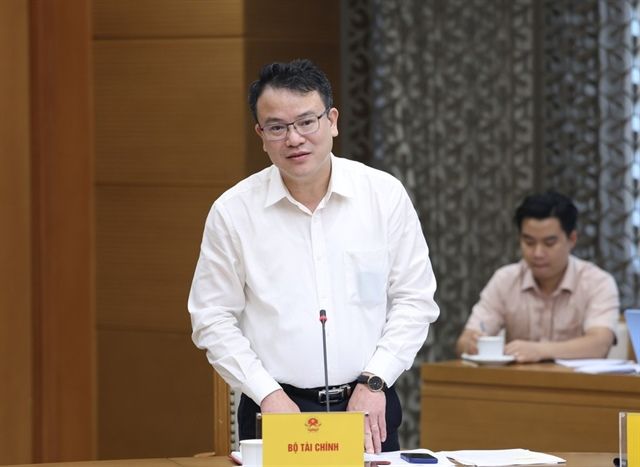
On the afternoon of May 7, Deputy Prime Minister Nguyen Van Thang chaired a meeting on assigning growth targets to localities and state-owned enterprises to implement Central Resolution 18 of the Party Central Committee and Government Resolution 109.
Deputy Minister of Finance Tran Quoc Phuong said that setting targets is one of the bases for the Government to monitor and evaluate localities, noting that results of local implementation are a crucial condition for achieving national targets.
The Ministry of Finance has reviewed and proposed 34 local indicators for the 2026-2030 period and for 2026, and has sent letters to localities requesting them to define targets so the Government can assign them.
The Deputy Minister added that, for now, the Ministry will submit targets to the Government with clear methodology. He said most localities have prepared calculations, including 27 targets for 2026-2030 and 25 targets for 2026.
According to the meeting discussion, some targets can be assigned immediately, including average annual GRDP growth; growth in agriculture-forestry-fisheries; growth in industry and construction; growth in services; growth of import-export value; and the number of operating enterprises in the locality by 2030.
At the meeting, opinions centered on targets whose calculation methods were not yet clear, along with proposals to adjust some targets to better match practical implementation.
Localities broadly agreed with the Government’s direction on target assignment, while requesting that target construction be based on concrete calculations and accompanied by clear guidance from ministries. There were also proposals for the Government to assign targets in one go and early, as some enterprises said longer-term targets would allow more proactive planning.
Some localities stated that achieving high growth would require large investment, while budget balance is limited, and therefore requested additional resources from the central government.
Concluding the meeting, Deputy Prime Minister Nguyen Van Thang emphasized that assigning growth targets to localities and state-owned enterprises is a very important task.
“To complete this, active participation and close coordination from ministries, localities, and state-owned corporations and groups are needed,” the Deputy PM said.
On assigning targets to localities, Thang agreed that targets should be set in one go and as early as possible.
For targets for groups of state-owned enterprises, Thang asked the Ministry of Finance to review the list to ensure alignment with Central Resolution 18 and Government Resolution 109.
Deputy Prime Minister Nguyen Van Thang affirmed that the Government will create favorable conditions for localities and enterprises to achieve their goals at the highest level, adding that higher targets require faster action.
The crypto bear market remained in force on Wednesday, with bitcoin slipping back toward the $60,000 area. Sharp pullbacks in gold and oil also weighed on the 2025 “debasement trade,” which had supported hard assets amid concerns about government debt and fiat currencies. Meanwhile, tech—particularly the AI boom—continued…