•
•
•
•
•
•
•
•
•
•
•
•
•
•
•
•
•
•
•
•
•
•
•
•
•
•
•
•
•
•
•
•
•


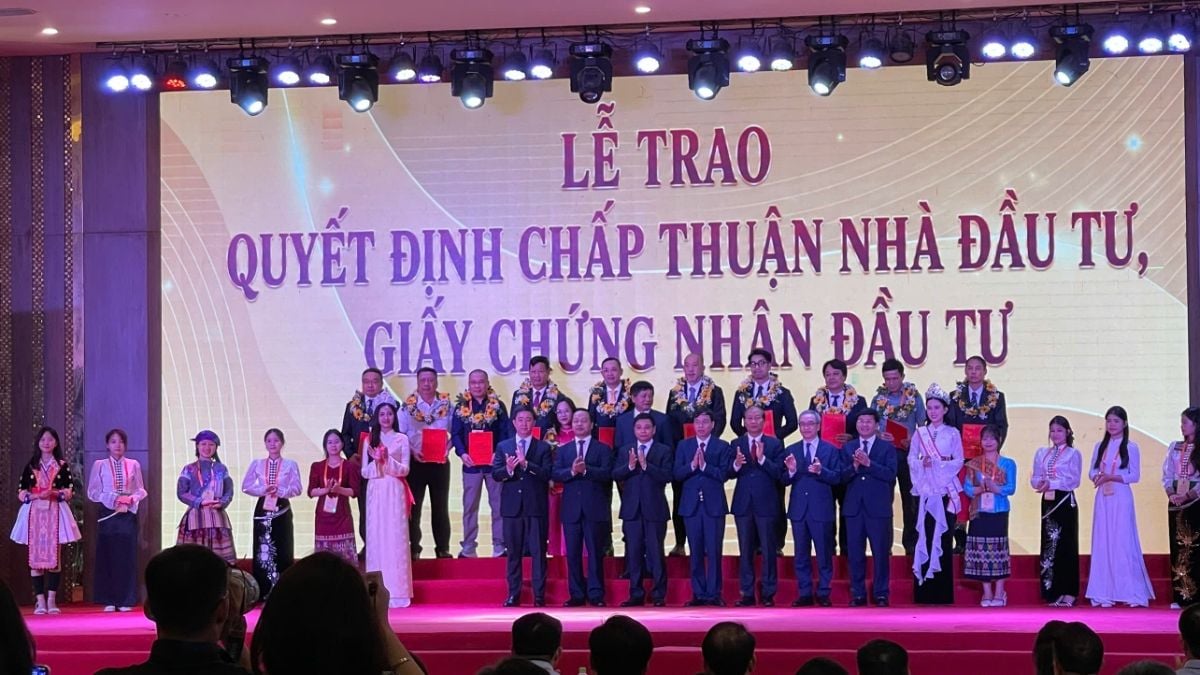
More than 750 delegates, entrepreneurs and investors from Vietnam and abroad attended the 2026 Investment Promotion Conference for Dien Bien Province. The event saw 22 investors sign investment cooperation agreements with total committed capital of over VND 209.370 trillion, while 11 investors received investment policy decisions with total capital of over VND 48.320 trillion.
Speaking at the conference, Lê Văn Lương, Deputy Secretary of the Provincial Party Committee and Chairman of the Provincial People’s Committee, said Dien Bien is a mountainous border province in Vietnam’s Northwest with strategic importance for national defense, security and border sovereignty. He said tourism is a key economic pillar, built around three main strands: historical-spiritual tourism, cultural tourism and resort tourism.
Large enterprises presented investment proposals aimed at accelerating capital attraction in Dien Bien, including projects in urban development, tourism services and renewable energy.
Le Khắc Hiệp, Vice Chairman of Vingroup, said the group has begun implementing several investment activities in Dien Bien, including a new urban area and tourism and sports services project in Dien Bien Phu Ward (Northwest area). The project covers 228 hectares with total investment of about VND 23.660 trillion.
VinEnergo proposed implementing the Dien Bien 1 solar power plant with a capacity of 300 MW, with total investment of about VND 5.371 trillion across more than 509 hectares in Dien Bien Phu Ward and the Na Son, Mường Làn and Pú Nhi communes. The province has approved an investment policy for the project, which aligns with the national power development plan for 2021–2030, with a vision to 2050. Once operational, the project is expected to add clean power to the national grid, reduce dependence on conventional energy, create jobs, increase state revenue and support infrastructure development in Dien Bien.
Sun Group Chairman Đặng Minh Trường said the visit of General Secretary Tô Lâm on January 31, 2026, and the investment cooperation signing between the province and Sun Group reflected confidence in Dien Bien’s tourism development direction. Just over three months later, Sun Group launched the Dien Bien Phu Culture-Historical Tourism Cable Car complex.
In 2025, Dien Bien welcomed 1.45 million visitors and tourism revenue reached VND 2,645 billion. Truong said the figure remains modest compared with the region’s global historical value potential, while noting that Vietnam recorded more than 21.2 million international visitors in 2025 and that Europe’s growth is notable.
He said Dien Bien has opportunities to expand historical and wartime heritage tourism, supported by tourism’s role as a fast employment driver that can stimulate infrastructure, budget and living standards. The province’s cultural values from the Thai, H’mông and Khơ Mú communities, together with the Dien Bien Phu battlefield, were cited as advantages for developing distinctive, world-class tourism products.
Sun Group urged the adoption of special incentives for large tourism projects, including tax breaks, land rent exemptions and streamlined investment procedures through a one-stop mechanism. It also called for resolving forest and national-defense land issues.
The company proposed accelerating transport infrastructure and promoting PPP models for heritage tourism and the cross-border economy linked to the Tây Trang and Pa Chi border gates.
Nguyễn Văn Khoa, CEO of FPT, said the rationale for investing in Dien Bien is not that the area is easy, but that it needs technology. He cited Dien Bien’s position as the province with the lowest GRDP in the country (about VND 16,263 billion), with around 70% of agricultural land on slopes that complicate mechanization, raise labor costs and limit productivity.
FPT has piloted drone applications in agriculture in Dien Bien. According to the presentation, drones can shorten spraying time from 4 hours to 10 minutes per hectare, improve sowing efficiency, enable fertilizer distribution over 40–64 hectares per day, and reduce logistics costs by roughly 40%.
Simulation results covering more than 51,000 hectares of rice, coffee, macadamia and Shan Tuyết tea suggested drone use could reduce cultivation costs by 15–20%, save about 62 million cubic meters of water annually, and increase household incomes by 9–18 million VND per hectare per year. The company estimated this could contribute roughly VND 2,630 billion to Dien Bien’s GRDP annually.
Dương Công Minh, President of the Vietnam Macadamia Association, said Vietnam’s macadamia area exceeds 45,000 hectares and processing capacity is expanding. He added that Dien Bien’s highland geography, cool climate and abundant forest land make it suitable for macadamia cultivation, and that with investment, regional planning, processing partnerships and a branded “Dien Bien Macadamia,” the province could become a leading macadamia hub in Vietnam.
In closing remarks, Trần Tiến Dũng, Secretary of Dien Bien Province, affirmed the target of two-digit growth in the new phase and the ambition to become a green, smart and sustainable province by 2030, aligned with the “Dien Bien Phủ spirit.”
The province pledged to work with enterprises to shorten administrative procedures, strengthen anti-corruption and accelerate private sector development, while focusing on smart agriculture, cultural tourism, innovation and strategic infrastructure connectivity—especially the Dien Bien–Sơn La–Hà Nội expressway corridor.
Other items mentioned included Dien Bien’s selection for a controlled low-level economic test, the Sơn La–Dien Bien–Tây Trang expressway project (phase 1) under public investment, and the ongoing renewal of leadership and development strategies ahead of 2030.
Premium gym chains are entering a “golden era” that is ending or already in decline, as rising operating costs collide with shifting consumer preferences toward more flexible, community-based ways to exercise. Long-term memberships are shrinking, margins are pressured by higher rents and facility expenses, and competition from smaller, more personalized…