•
•
•
•
•
•
•
•
•
•
•
•
•
•
•
•
•
•
•
•
•
•
•
•
•
•
•
•
•
•
•
•
•


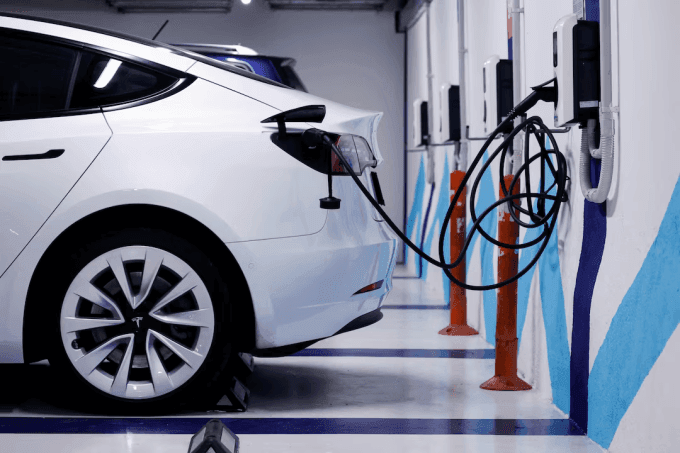
The European Union has allocated more than €200 billion (about $235 billion) to the electric-vehicle (EV) battery supply chain, EV production, and charging networks, aiming to shape the ecosystem and reduce dependence on China.
The funding is outlined in the report “Shaping the EV Economy”, published May 12 by the European Electric Mobility trade association (E-Mobility Europe) and the research firm New Automotive. The European Economic Area (EEA) covers 27 EU member states plus Iceland, Liechtenstein, and Norway.
According to the report, the €200 billion investment is allocated as follows: €109 billion for the battery supply chain, €60 billion for electric vehicles, and €23–46 billion for charging networks.
The initiative is intended to reduce reliance on China, which accounts for about 80% of global battery production, including batteries used outside of EVs.
In the battery sector, Europe is also moving toward self-sufficiency. New Automotive estimates that Europe already supplies batteries for about a third of EVs sold in the region and could meet the entire demand if battery plants operate at full capacity.
The report describes ongoing restructuring in Europe’s automotive manufacturing sector, including converting traditional car plants and building new EV production facilities. It also highlights efforts to expand battery manufacturing capacity to reduce costs and manage supply risks.
Germany is identified as the largest EV production hub in Europe, accounting for nearly a quarter of the total investment. The report characterizes Germany as a cornerstone of the regional value chain, supported by major original equipment manufacturers (OEMs) and battery suppliers.
E-Mobility Europe says the investments have supported more than 150,000 jobs, and that the figure could double if all projects are implemented.
Analysts cited in the report argue that policy must be consistent across the EV ecosystem—covering vehicles, batteries, and infrastructure—to scale together. They warn that incoherence could result in underutilized assets, higher costs, and delays for investors.
The report also notes that consistent policy helps firms forecast long-term demand, given that investors face multi-decade investment horizons and depend on a stable policy framework for viability.
E-Mobility Europe recommends maintaining investment signals for EVs through CO2 emission standards in transport and a policy platform to guide investment. The association also calls for targeted industrial policy and subsidies to scale battery production and strategic materials.
Late last year, the European Commission announced plans to drop the ban on selling gasoline cars from 2035, citing pressure from the regional auto industry. The report describes this as the biggest retreat in the EU’s green policies in recent years.
Bảo Bảo (via Reuters, E-Mobility Europe).
Premium gym chains are entering a “golden era” that is ending or already in decline, as rising operating costs collide with shifting consumer preferences toward more flexible, community-based ways to exercise. Long-term memberships are shrinking, margins are pressured by higher rents and facility expenses, and competition from smaller, more personalized…