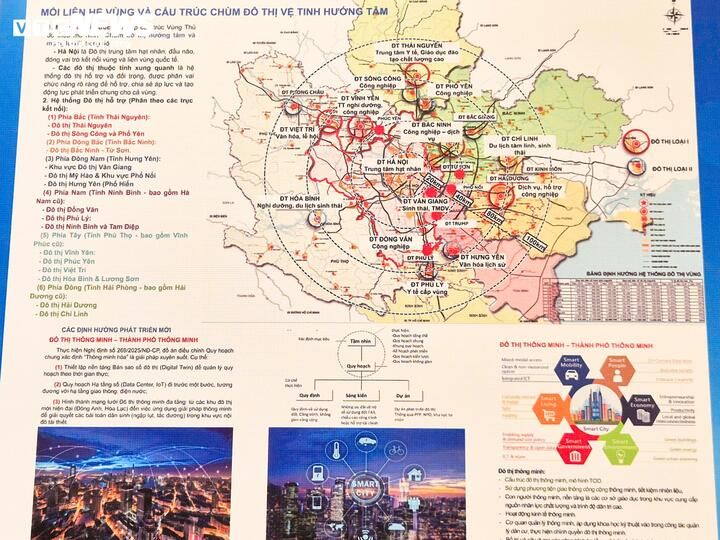
Hanoi is set to shift from a model of developing as an independent city to a “centripetal urban cluster” approach, where the capital plays a guiding central role while surrounding cities act as supporting poles. The plan aims to share population and infrastructure pressures and create growth momentum across the wider region.
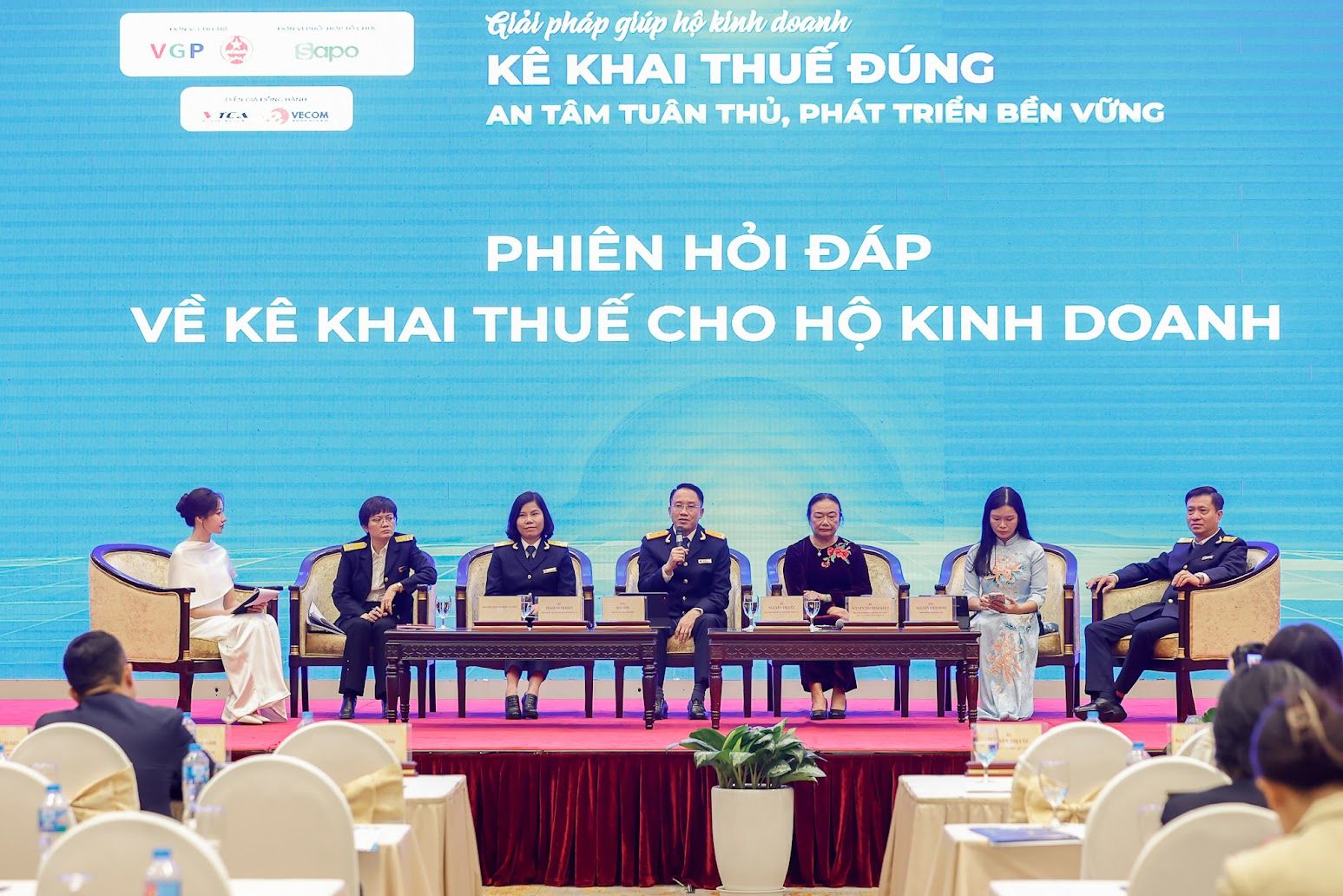
The direction was announced at the conference on publishing the 100-year vision planning and investment promotion held on the morning of June 29.
Under the proposed model, the region would strengthen inter-city linkages rather than concentrating all resources in the inner city. Each locality is expected to take on different development roles, helping form a tightly connected network of cities anchored by Hanoi.
North of Hanoi: Thai Nguyen is planned to become a center for high-quality healthcare and education-training in the midland and mountainous northern region, supporting Hanoi in medical care and training.
Northeast: Bac Ninh is expected to form a chain of industrial-service cities directly adjacent to Hanoi. The area will develop cultural industries, tourism, and logistics, while also allocating production space and housing for workers and experts serving the northern and eastern parts of the capital.
Northeast (continued): Hung Yen is planned to develop a chain of ecological, commercial, and high-quality service cities. Van Giang is designed to connect directly with Hanoi’s eastern growth pole through the Bac Hung Hai river corridor, creating a high-quality living space and helping reduce pressure on the inner city. My Hao and Pho Noi are set to remain key industrial and urban service centers along National Highway 5, supporting the East-West economic corridor.
South of Hanoi: Ninh Binh province’s Duy Tien urban area is planned to form a chain of urban-industrial cities linked with Hanoi’s Phu Xuyen area. Phu Ly urban area is expected to become a regional medical, educational, and gateway service center in the south, sharing pressures with hospitals and schools in the capital.
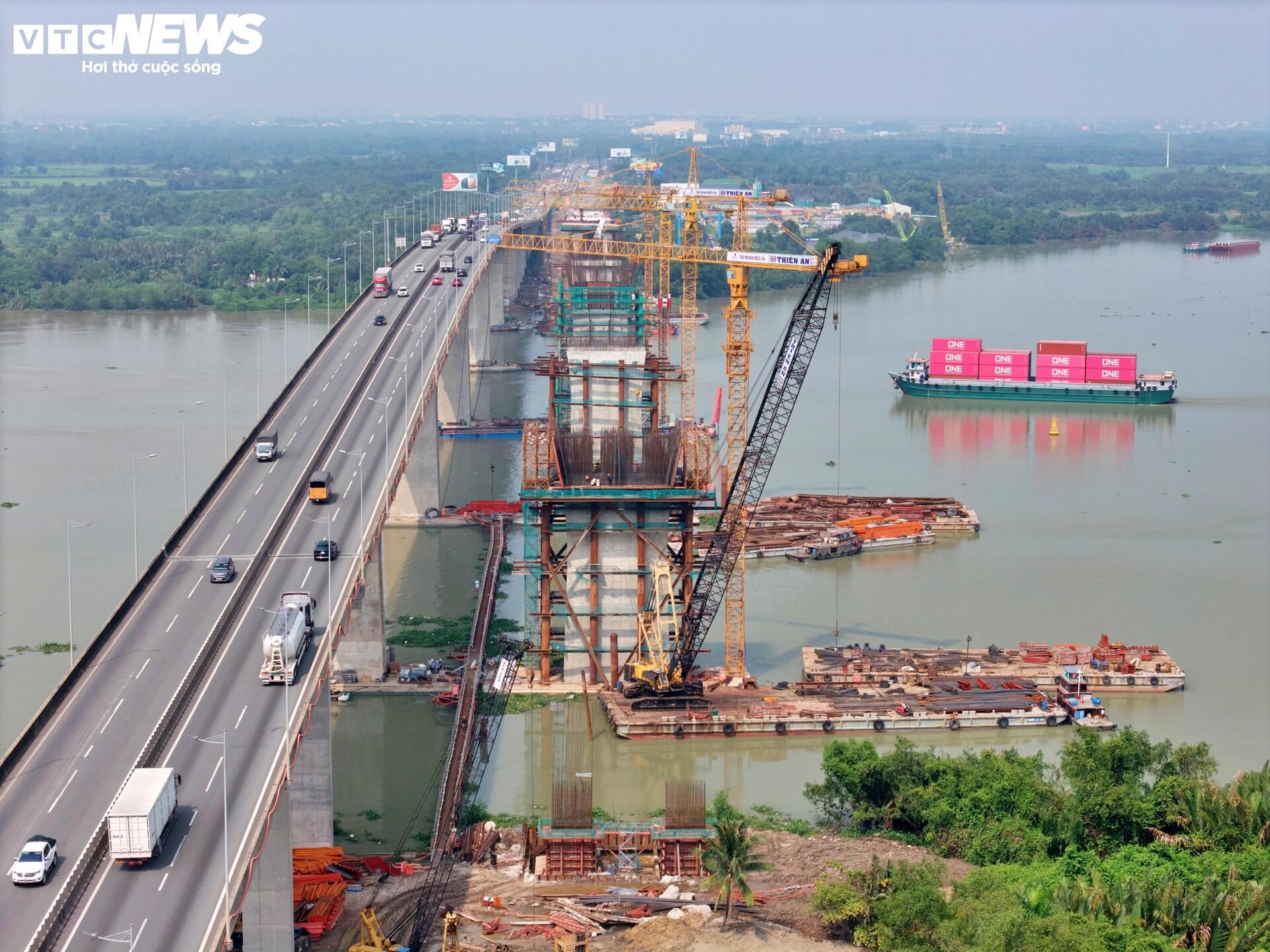
West of Hanoi: In Phu Tho province, Vinh Yen is planned as a resort and clean industry center. Phuc Yen is expected to serve as a gateway for automotive and motorcycle industries, directly connected to Me Linh and Soc Son. Viet Tri is set to continue its role as a festival city rooted in Hanoi’s northwest growth pole via the Van Lang bridge, forming a cultural and spiritual tourism complex at Hung Temple - Tan Vien Son.
East of Hanoi: Hai Phong is planned to become a strategic transshipment metropolis and an important service center supporting regional industry.
The centripetal urban cluster model is intended to reallocate development space, share functions between Hanoi and neighboring cities, and gradually reduce pressure on the inner city. At the same time, it is expected to generate growth momentum for the entire Capital Region.
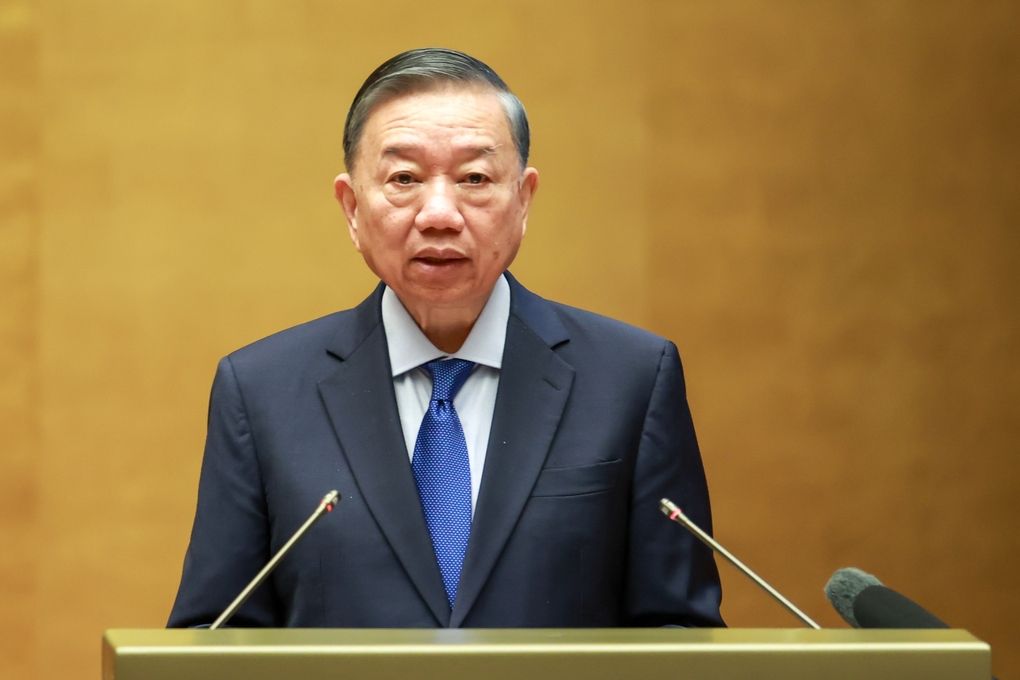
Speaking at the conference, Hanoi People’s Committee Chairman Vu Dai Thang said the capital’s 100-year vision planning sets long-term development directions and opens up new development space.
He said Hanoi will develop under a multi-centered, multi-polar, multi-tier model connected to a large-scale public transportation system. The plan also calls for effective use of elevated and underground spaces and digital space.
According to Vu Dai Thang, the approach represents a shift in development thinking—from growth by expansion to growth based on quality, efficiency, innovation, and competitiveness; and from exploiting existing advantages to proactively creating new advantages.
Hanoi will implement urban restructuring under the principle of “Active Renovation - Adaptive Reconstruction,” aiming to improve living environment quality, optimize land value, and preserve the capital’s identity.
Specifically, the capital is expected to restructure the central area and the water surface system, reconstructing the central area in close connection with the Red River axis to create a modern and dynamic urban appearance. The plan also includes reviving inner-city river systems (Ngu Hue, To Lich, Day, Tich...).
The city will also develop under the TOD (Transit-Oriented Development) model linked to the urban rail network. Hanoi plans to study and implement 18 urban rail lines with a total length of about 979 km in phases. In parallel, it will form about 5-10 national or regional TODs, 20-30 city TODs, and 120-150 district TODs around railway stations, creating new development momentum for the capital in coming decades.