•
•
•
•
•
•
•
•
•
•
•
•
•
•
•
•
•
•
•
•
•
•
•
•
•
•
•
•
•
•
•
•
•


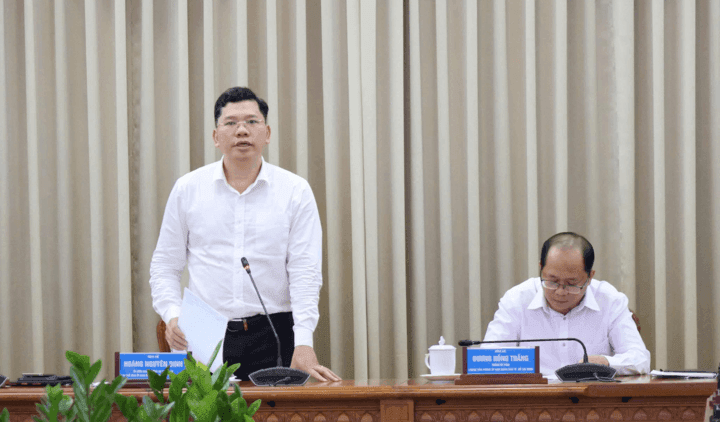
In the first four months, Ho Chi Minh City launched 10 strategic infrastructure projects with total investment of about 520,000 billion VND (nearly $20 billion), a major contributor to the city’s economic growth, according to Hoang Nguyen Dinh, Vice Chairman of the Ho Chi Minh City People’s Committee.
Dinh made the disclosure at the May 8 socioeconomic meeting, saying the results reflected a “very large effort” by departments, agencies and localities involved in project preparation and rollout.
Dinh said the city’s departments and agencies worked at a fast pace to kick off multiple large projects within a few months, including projects funded partly by private capital.
Among the projects started in the four-month period are:
Local authorities are accelerating investment procedures to ensure multiple key projects begin in early July. Dinh highlighted several projects with investment values in the tens of trillions of dong, including the Thu Thiem – Long Thanh railway line (more than 85,000 billion VND) and the Can Gio – Vung Tau sea-crossing bridge-tunnel (more than 92,600 billion VND).
He also cited the Ben Nhà Rong – Khanh Hoi cultural park (around 20,000 billion VND), the Ho Tram – Long Thanh urban expressway, and the Cat Lai – Phu Huu port interconnection (near 9,000 billion VND).
To maintain two-digit growth and meet a 1 quadrillion VND revenue target set by the General Secretary and President, Dinh urged accurate identification of growth drivers and the unlocking of land and public assets, alongside improvements in planning, housing and urban development.
In 2026, the city has a public investment disbursement target of 147,599 billion VND. Dinh said the 10 strategic projects started in the first four months accounted for 520,000 billion VND, with the growth driver mainly coming from the non-state sector.
Nguyễn Văn Được, Chairman of the City’s People’s Committee, set additional disbursement targets: in May, disbursement should exceed 20%; in Q2, 40–45%; in Q3, 70%; and for the year, 100%.
Disbursement results are to be used as a KPI for officials, linked to emulation, rewards and budget allocation.
Dược urged addressing existing bottlenecks, improving on-site inspections, and accelerating digital transformation in project progress management.
He also called for faster disbursement of major projects, including compensation for infrastructure in Hóc Môn, Metro Line 2 Phase 2, Phase 2 of the environmental sanitation project, and the Bien Hoa – Vung Tau expressway connection.
The Finance Department will build a KPI system and publicly report monthly disbursement progress, and replace weak units.






Premium gym chains are entering a “golden era” that is ending or already in decline, as rising operating costs collide with shifting consumer preferences toward more flexible, community-based ways to exercise. Long-term memberships are shrinking, margins are pressured by higher rents and facility expenses, and competition from smaller, more personalized…



