•
•
•
•
•
•
•
•
•
•
•
•
•
•
•
•
•
•
•
•
•
•
•
•
•
•
•
•
•
•
•
•
•


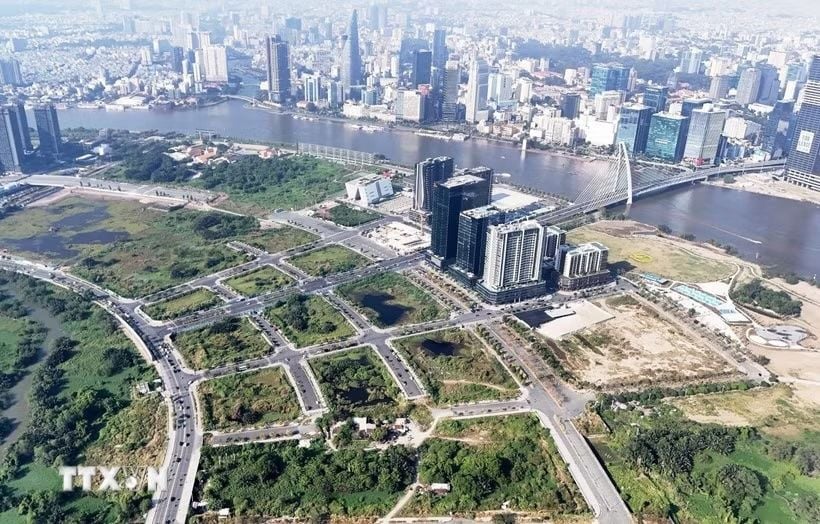
Ho Chi Minh City has outlined a plan to resolve all 838 legacy (backlog) projects. As of the latest update, 417 projects have had obstacles cleared, 393 projects have largely completed obstacle removal, and 28 projects, works and land plots have directives in place and are being dismantled.
By the end of April 2026, the city reported that it had completed removal or issued directives for 100% of the projects (838/838) within the scope of the Prime Minister’s Decree No. 112/CĐ-TTg on addressing backlog projects. The total investment of these backlog projects is over 206,000 billion VND, covering an area of more than 17,000 hectares.
According to the City Finance Department, the projects were enumerated after administrative units were rearranged. Of the 838 projects, 60 fall under central authority and 778 under the city.
The city also stated that it still has 421 projects, works and land plots that are basically to be resolved or are being resolved according to directives.
Mr. Hoang Vu Thanh, Director of the City Finance Department, said that in May and the following months the city will continue removing difficulties for the projects, accelerate disbursement of public investment, and develop infrastructure. The city will focus on post-clearing implementation, while enhancing progress supervision and strengthening coordination responsibility among departments, agencies, localities and enterprises to complete the remaining backlog projects.
To create momentum for the two-digit growth target in 2026, on May 5, 2026 the City People’s Committee issued a directive on urgent tasks to implement Conclusions 18-KL/TW and 27-KL/TW. The city identified removing obstacles for backlog projects as a key solution to unlock investment resources and spur growth.
The city requires departments and agencies, as well as communes/wards and special zones, to review, inspect and propose final handling for difficult backlog projects under Conclusion 24-KL/TW and National Assembly Resolution 29/2026/QH16 on special mechanisms for land handling to address violations before the 2024 Land Law takes effect.
The City People’s Committee also highlighted the need to address delays in land price appraisal and payment by investors. It directed that departments and 168 communes/wards/special zones speed up bidding for land use rights, appraise and approve land prices, and specify deadlines for each step to avoid delays in processing and to prevent loss of state assets. After land prices are approved, authorities are required to urge organizations/investors to fulfill financial obligations on time.
The city directed the Department of Agriculture and Environment to accelerate land price appraisal for problematic projects and for new projects, and stated it will take responsibility if delays occur.
In parallel, the Finance Department will work with the Department of Agriculture and Environment and the Department of Construction to advise on handling backlog projects, update project information in the Ministry of Finance system, and regularly hold land price appraisal council meetings to accelerate progress.
Premium gym chains are entering a “golden era” that is ending or already in decline, as rising operating costs collide with shifting consumer preferences toward more flexible, community-based ways to exercise. Long-term memberships are shrinking, margins are pressured by higher rents and facility expenses, and competition from smaller, more personalized…