•
•
•
•
•
•
•
•
•
•
•
•
•
•
•
•
•
•
•
•
•
•
•
•
•
•
•
•
•
•
•
•
•


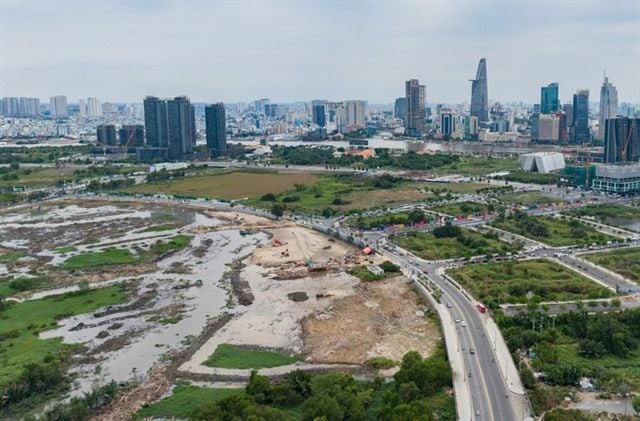
Ho Chi Minh City will implement a coordinated set of measures to unlock land resources, accelerate infrastructure investment, and prepare to start a series of key projects around April 30. Analysts expect these steps to provide a strong growth impulse, expand the city’s development space, and raise its competitive edge in the coming period.
On April 18, the City People’s Council approved the first batch of 33 plots to be used to pay for build-transfer (BT) infrastructure projects. The plots are located in central districts and the Thu Thiem New Urban Area, including sites previously affected by legal issues such as 8–12 Le Duan and 2–3–4 Hai Ba Trung.
According to the City People’s Committee, infrastructure capital needs are very large and concentrated in a short period, while the budget balance can cover only about 20% of total demand. Using land to settle BT projects is intended to ease near-term budget pressure while mobilizing private capital and limiting additional financial obligations.
Le Hoang Chau, chairman of the Ho Chi Minh City Real Estate Association, said establishing a large-scale land fund for BT projects is appropriate given the city’s circumstances. He noted that the mechanism can incentivize investor participation in infrastructure development and help address bottlenecks by enabling private capital to take part in upgrading infrastructure.
To mark Liberation Day (April 30, 1975 – April 30, 2026), Ho Chi Minh City plans to commence many projects simultaneously. The focus includes seven major BT projects with total investment of around 320 trillion dong.
The projects cover transportation, urban upgrading, and the development of new economic spaces, with the aim of strengthening regional connectivity, improving goods movement, and raising living standards. Among the highlighted plans is the Line 2 urban rail from Ben Thanh to Thu Thiem (and later Thu Thiem–Long Thanh airport), expected to begin before June 30. The city also plans large port projects, including the Can Gio International Transfer Port and Cai Mep Ha Port.
Dr. Huynh Thanh Dien, a development economics expert, said implementing major projects can provide short-term stimulus through public investment disbursement, create jobs, and spur related sectors. He also pointed to longer-term growth potential as the city restructures its economic space toward a multi-centered model to boost competitiveness and attract high-quality capital.
Launching the projects in unison is also described as having political and social significance, with positive spillover effects that can reinforce business confidence and investor sentiment.
One of the projects scheduled to start on April 30 is the Ho Chi Minh City Administrative Center in Thu Thiem. The complex includes a central square, conference and performing arts centers, and essential infrastructure, with total investment of nearly 30 trillion dong.
The project covers nearly 47 hectares in An Khanh Ward, Thu Thiem. It is planned to serve about 8,000 civil servants and receive 1,500–2,000 daily visitors from citizens and businesses. The central square can host up to about 270,000 people for political events and about 500,000 for cultural festivals.
The city said the administrative infrastructure, supported by land resource unlocking and infrastructure investment, is intended to back a digital government agenda, improve administrative efficiency, and reduce transaction costs for residents and enterprises.
Dr. Dien described the Thu Thiem Administrative Center as a strategic move aligned with modern urban development, designed to ensure the administrative apparatus can operate in a large city of more than 14 million people. He added that the project is expected to reduce pressure on the existing center and support a modern public-service–financial–commercial services ecosystem in the eastern part of the city.
By simultaneously unlocking land resources, boosting infrastructure, and advancing strategic projects, Ho Chi Minh City is signaling a commitment to build a sustainable development foundation. Experts said that if implemented coherently and effectively, the measures could provide a major impulse—helping the city maintain its role as a growth engine for the country and gradually move toward becoming a regional hub for finance, services, and innovation.
Premium gym chains are entering a “golden era” that is ending or already in decline, as rising operating costs collide with shifting consumer preferences toward more flexible, community-based ways to exercise. Long-term memberships are shrinking, margins are pressured by higher rents and facility expenses, and competition from smaller, more personalized…