•
•
•
•
•
•
•
•
•
•
•
•
•
•
•
•
•
•
•
•
•
•
•
•
•
•
•
•
•
•
•
•
•


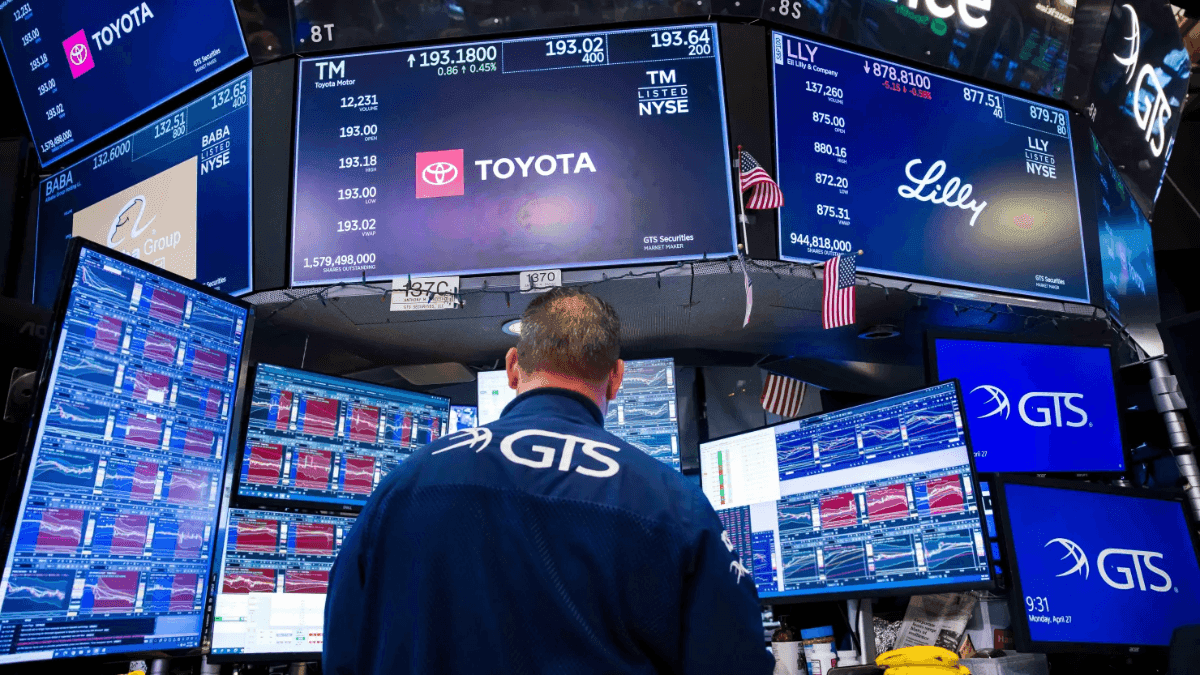
U.S. stocks edged lower on Tuesday as oil prices continued to climb and a negative update on OpenAI weighed on chip-related shares. Brent crude rose above $110 a barrel amid stalled U.S.-Iran talks and after the United Arab Emirates (UAE) announced it would withdraw from OPEC.
At the close, the S&P 500 fell 0.49% to 7,138.8. The Nasdaq slipped 0.9% to 24,663.8, while the Dow Jones declined 25.86 points, or 0.05%, to 49,141.93.
Energy prices moved higher as a U.S. official told Reuters that President Donald Trump was not satisfied with Iran’s proposal to reopen the Hormuz Strait. The development reduced hopes for a peaceful resolution that could reopen the sea lane used for global energy transport.
Brent crude rose 2.8%, closing at $111.26 per barrel. WTI closed above $99.93 per barrel.
Chip stocks fell broadly after a Wall Street Journal report said OpenAI’s revenue growth and new-user growth recently fell short of the company’s targets. The report also said OpenAI CFO Sarah Friar warned leadership that the company could lose the ability to meet computing-contract obligations in the future if revenue growth does not accelerate.
Among notable decliners, Nvidia fell more than 1%, Broadcom dropped over 4%, AMD fell more than 3%, and Oracle fell about 4%.
The rising oil trend increases the likelihood that major central banks will keep rates higher for longer to counter inflation. The Federal Reserve’s policy meeting began on Tuesday and will conclude on Wednesday afternoon U.S. time with a rate statement and a press conference by Fed Chair Jerome Powell.
Analysts expect the Fed to keep rates unchanged and maintain a wait-and-see stance. Other major central banks scheduled to meet this week include the European Central Bank and the Bank of England, both expected to hold rates.
Lipow Oil Associates president Andy Lipow told Reuters that even if the Gulf conflict ends soon, it would likely take months for the global energy market to return to normal. He cited the time needed to remove mines in the Hormuz Strait, ease tanker congestion, and gradually resume production and refining.
Lipow said the market could take at least 4–6 months to stabilize. He also suggested oil prices could remain elevated in the medium term due to lower inventories. He added that if the conflict ends now, oil could fall by about $10 per barrel.
Separately, the UAE announced it would withdraw from OPEC from May 1 and would no longer be part of OPEC+, the alliance led by Russia. Analysts expect the UAE exit to weaken the bloc’s influence on the oil market and could create downward pressure on prices over the longer run.
Analysts said the decline reflected profit-taking after the S&P 500 and Nasdaq recently hit new highs. They also pointed to investor caution ahead of major tech earnings this week, including Alphabet, Amazon, Meta Platforms, and Microsoft on Wednesday, and Apple on Thursday.
For the Dow, losses were tempered by Coca-Cola, which rose about 4% after reporting stronger-than-expected Q1 2026 results.




Premium gym chains are entering a “golden era” that is ending or already in decline, as rising operating costs collide with shifting consumer preferences toward more flexible, community-based ways to exercise. Long-term memberships are shrinking, margins are pressured by higher rents and facility expenses, and competition from smaller, more personalized…




