•
•
•
•
•
•
•
•
•
•
•
•
•
•
•
•
•
•
•
•
•
•
•
•
•
•
•
•
•
•
•
•
•



With a standard blood pressure monitor, people can detect hypertension early at home.
Hypertension has a four-year history in Ms. I.N., a Ukrainian national, who underwent examinations in Germany and in her home country but could not determine the cause. Despite using three anti-hypertensive drugs at maximum doses, her blood pressure remained difficult to control.
She arrived at Hong Ngoc General Hospital with bilateral leg pain, muscle weakness, and difficulty moving, even without a trauma history. Initial tests showed severe hypokalemia, which could threaten life if not treated promptly.
Doctors reviewed her history and noted that, over more than four years, she required a combination of three antihypertensive drugs at maximum doses, yet her blood pressure remained unstable. She also reported headaches and insomnia. Physicians said that in younger patients with hard-to-control blood pressure despite aggressive treatment, secondary causes should be considered.
Further investigations led to a diagnosis of Conn’s syndrome due to a right adrenal tumor. Dr. Doan Thi Hong Lien, Department of Endocrinology, explained that the endocrine disorder causes the adrenal glands to produce aldosterone in excess, increasing salt and water retention and enhancing potassium loss via the kidneys. The result is long-standing hypertension that is difficult to control and hypokalemia.
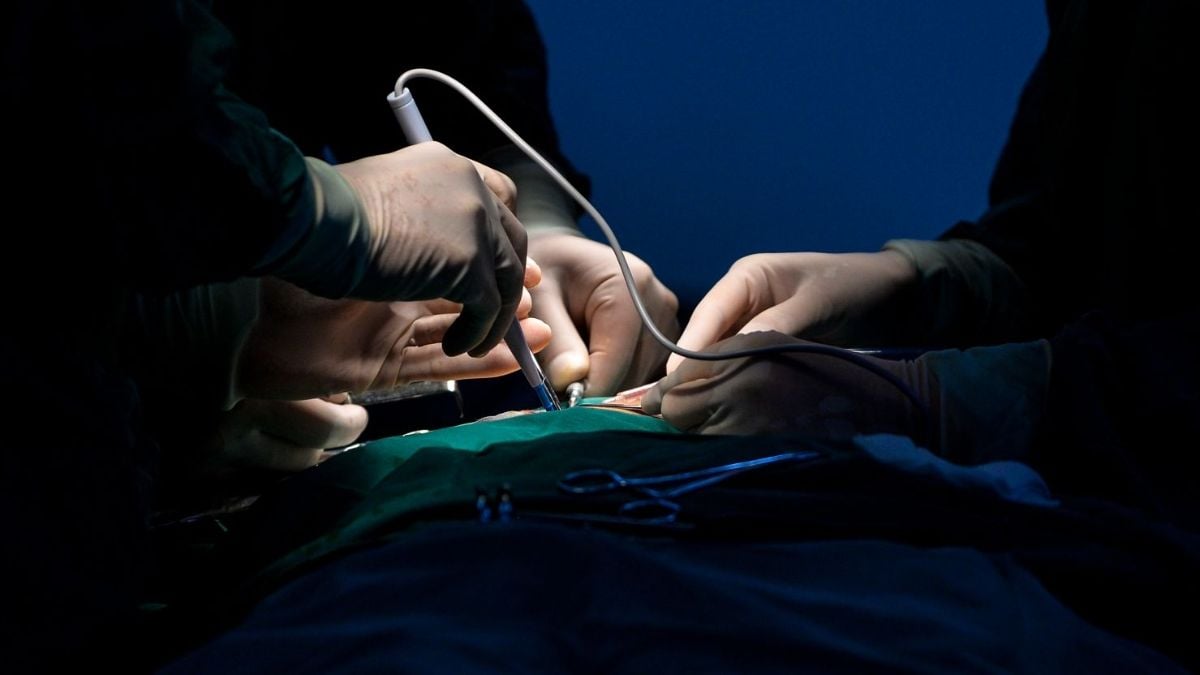
After the cause was identified, the patient received multi-disciplinary consultation and underwent laparoscopic removal of the entire right adrenal gland. Just one day after the operation, she could walk lightly, eat normally, and sleep better. Potassium levels returned to normal, muscle enzymes stabilized, and weakness disappeared. After surgery, she needed only one medication to maintain stable blood pressure.
Dr. Lien said the case highlights the importance of identifying the underlying cause in hypertension treatment. “If only symptom control is pursued while the root cause is overlooked, patients may require prolonged treatment with many drugs but the effectiveness remains limited,” she said.
In a separate case, Mr. Mad, 54, an Australian national, suddenly felt exhausted and short of breath while sitting at an airport awaiting a flight. He was admitted to Tam Anh General Hospital in Ho Chi Minh City with nearly 40°C fever, blood pressure of 170/115 mmHg, shortness of breath, and limb tremors.
Dr. Phong Luân, Senior Resident in Cardiology, said a blood lactate level of 9 mmol/L (normal below 2) indicated shock from reduced perfusion and dehydration. The physician diagnosed acute hypertensive crisis with shock.
Mr. Mad received oxygen support, fluids, antihypertensives, and ample hydration. Timely emergency care helped prevent damage to target organs such as the heart, brain, or kidneys, and he was discharged after three days.
World Health Organization data indicate that about 1.3–1.4 billion people worldwide have hypertension. However, around 44% of those with hypertension remain undiagnosed, and only about 20% manage to control their blood pressure effectively.
In Vietnam, adult hypertension prevalence is roughly 25–30%, equivalent to tens of millions of people. The disease is also shifting toward younger populations due to sedentary lifestyles, prolonged stress, high-salt diets, obesity, and high alcohol consumption. The prevalence among those aged 18 and over in Vietnam is about 26.2%, with the highest rate in the 50–69 age group at 51.9%.
Despite being one of the easiest diseases to detect, epidemiological surveys worldwide show many adults with hypertension have never been diagnosed or do not know they have the condition.
Cardiologists say a key reason is a complacent mindset: many people seek medical care only when symptoms such as chest pain, shortness of breath, heart failure, or even stroke occur. “This is unfortunate, because early detection can largely prevent complications,” a cardiologist noted.
The European Society of Cardiology and the International Society of Hypertension recommend periodic blood pressure measurement as a simple, effective, and inexpensive method to detect hypertension early. Experts emphasize that every adult should “remember their blood pressure as they remember their age,” because knowing one’s BP level enables early risk identification and timely treatment before complications occur.
Doctors note that errors in blood pressure measurement are very common in both the community and some healthcare facilities. Many people measure BP after walking, climbing stairs, or drinking coffee; others measure while talking, looking at their phone, or with legs crossed. In many cases, cuffs are wrapped incorrectly or the cuff size is inappropriate for the arm.
According to international guidelines, these mistakes can cause BP readings to be falsely high or low by a few mmHg to tens of mmHg, leading to misdiagnosis or inappropriate treatment. Experts advise taking multiple measurements at different times of the day and keeping a record to help clinicians assess the situation more accurately.
During the World Hypertension Day 2026 program, Prof. Pham Manh Hung, Director of the Cardiology Institute at Bach Mai Hospital (Việt Nam) and Vice President of the Vietnamese Society of Cardiology, said that most cases of uncontrolled hypertension require re-evaluating BP measurement and treatment adherence. “Some patients measure BP incorrectly, take medicines irregularly, skip medications, or eat too much salt, causing their BP to fluctuate. This is a very common cause,” he noted.
If patients fully adhere to treatment regimens, adopt reasonable lifestyle changes, and use multiple drugs according to the protocol but BP remains high for a long time, doctors said clinicians should consider secondary hypertension or resistant hypertension.
Cases suspected of secondary hypertension or resistant hypertension should be referred to specialized cardiovascular centers for comprehensive evaluation using specialized techniques. If secondary causes are ruled out, the patient is considered to have true resistant hypertension.
Premium gym chains are entering a “golden era” that is ending or already in decline, as rising operating costs collide with shifting consumer preferences toward more flexible, community-based ways to exercise. Long-term memberships are shrinking, margins are pressured by higher rents and facility expenses, and competition from smaller, more personalized…