•
•
•
•
•
•
•
•
•
•
•
•
•
•
•
•
•
•
•
•
•
•
•
•
•
•
•
•
•
•
•
•
•


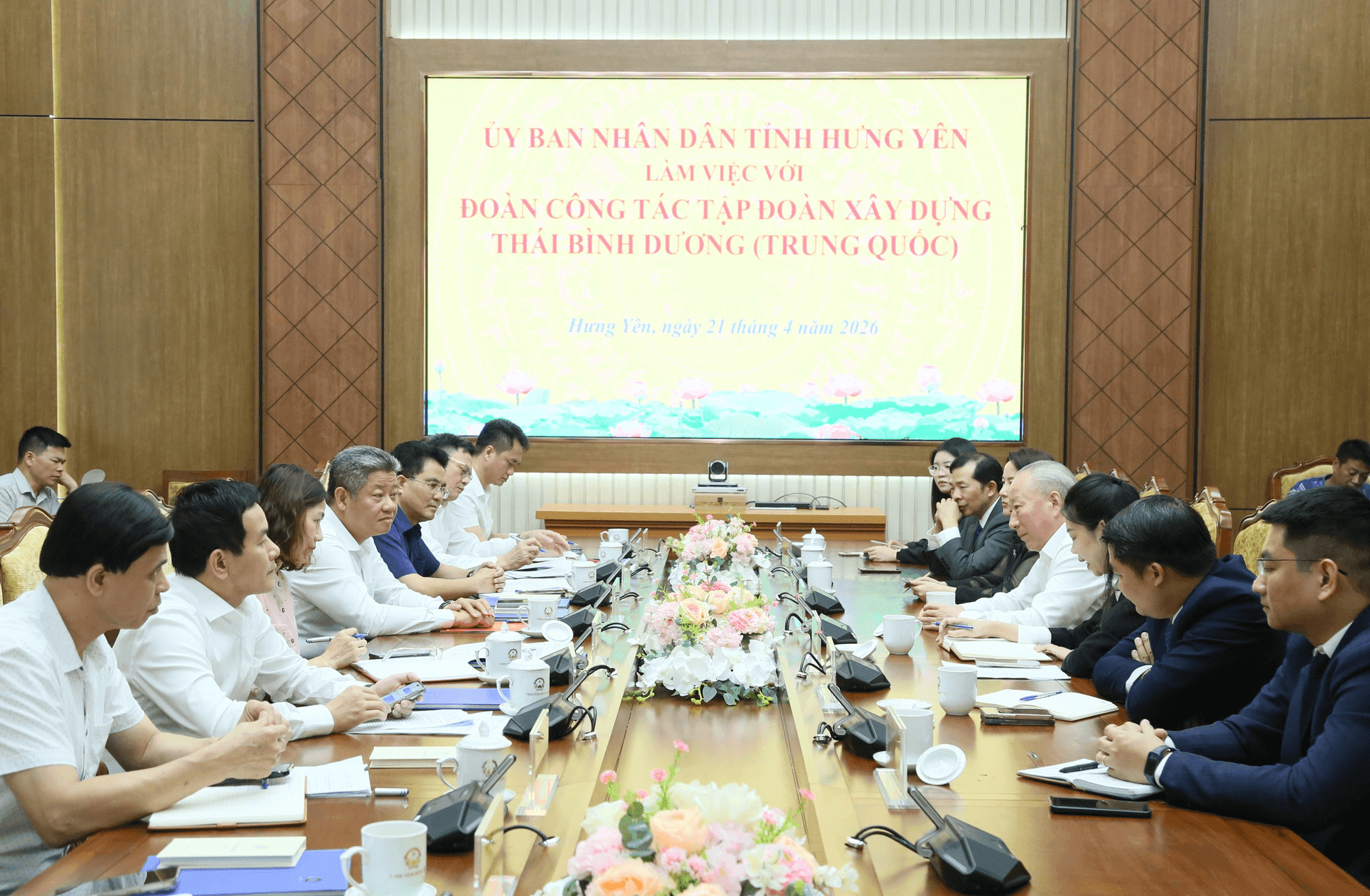
During a working visit to Hung Yen province, Mr. Nghiem Gio Hoa, founder of Pacific Construction Group of China, proposed studying a memorandum of strategic cooperation covering transport infrastructure, urban development, ports and logistics, urban rail, smart cities, ecological cities, and a free-trade zone.
According to the Hung Yen Province Portal, on the afternoon of April 21, Mr. Nguyen Manh Quyền, Vice Secretary of the Provincial Party Committee and Chairman of the Hung Yen People’s Committee, chaired a meeting with the Pacific Construction Group delegation led by Mr. Nghiem Gio Hoa. Leaders of several provincial departments also attended.
At the meeting, Hung Yen leaders presented the province’s potential and advantages, emphasizing its favorable geographic position for trade connectivity and its economic and social development outcomes. They noted that Hung Yen is reviewing and adjusting its 2021–2030 master planning with a vision to 2050, aiming for rapid and sustainable growth based on high-tech industry, modern urban systems, and ecological agriculture.
The province said its development approach is designed to harmonize economy and culture, using the Red River axis as a strategic development space while preserving and promoting heritage values. Hung Yen also highlighted investment attraction priorities including technical infrastructure, regional transport links, high-tech industrial zones, free economic zones, and smart cities.
In addition, the provincial leadership stated it will continue administrative reforms and improve policies to create a favorable investment environment for businesses.
In response, Mr. Nghiem Gio Hoa expressed thanks for the reception and shared information about Pacific Construction Group. The company, founded in 1986, operates in investment, construction, and infrastructure management, with a network of projects in many countries and 12 consecutive years in the Global 500.
In Vietnam, the group said it is expanding cooperation and has participated in joint ventures on several major projects in Hanoi. Appreciating Hung Yen’s potential and its strategic position within the Hanoi metropolitan area, the group leaders expressed a desire to establish a long-term cooperative relationship with the province.
They reiterated the proposal to study a memorandum of strategic cooperation focused on transport infrastructure, urban development, ports and logistics, urban rail, smart cities, ecological cities, and a free-trade zone.
Chairman Nguyen Manh Quyền praised the group’s capabilities and proposals. He assigned the Department of Construction to coordinate with relevant departments to study the proposals in line with Hung Yen’s development planning and current law.
The leadership also reiterated that Hung Yen welcomes and will facilitate capable, reputable, technology-driven investors to study, cooperate, and implement projects, contributing to sustainable socio-economic development and strengthening the province’s position in the region and nationwide.
After the merger, Hung Yen province (formed from the merger of Hung Yen and the former Thai Binh) is the smallest province in the country by area, with over 2,500 square kilometers and a population of 3.6 million. For comparison, Lam Dong is the largest province with more than 24,000 square kilometers, meaning Hung Yen’s area is about one-tenth of Lam Dong’s.


Premium gym chains are entering a “golden era” that is ending or already in decline, as rising operating costs collide with shifting consumer preferences toward more flexible, community-based ways to exercise. Long-term memberships are shrinking, margins are pressured by higher rents and facility expenses, and competition from smaller, more personalized…