•
•
•
•
•
•
•
•
•
•
•
•
•
•
•
•
•
•
•
•
•
•
•
•
•
•
•
•
•
•
•
•
•


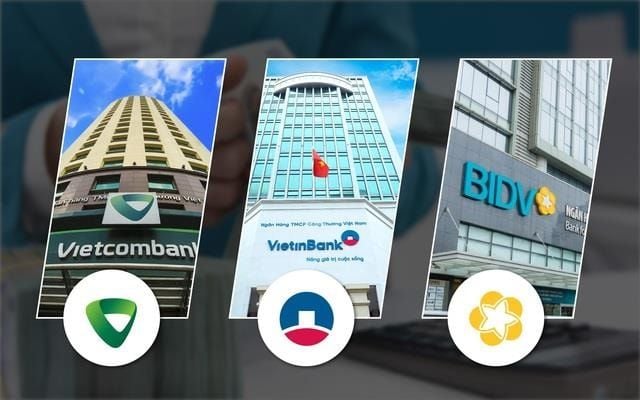
Amid fluctuations in the currency market, leaders of BIDV, Vietcombank and VietinBank said that pressure on interest rates is expected to ease in the near term as system liquidity improves and policy measures to support the banking system continue to be rolled out. exchange rates today
At the annual ordinary general meeting on the morning of April 24, BIDV’s leadership said the current interest-rate level has faced significant pressure during periods of tight market liquidity. The bank said this has directly affected funding costs and, in turn, banks’ net interest margin (NIM).
BIDV’s leadership also noted that the State Bank of Vietnam has emphasized solutions to stabilize interest rates and prevent further increases that could affect people and businesses. The regulator has implemented measures to stabilize the money market, including the possibility of adjusting rules to support liquidity for commercial banks, which could create room for rates to ease in the near future.
BIDV expects the interest-rate level to gradually stabilize and potentially ease modestly compared with the early part of the year.
At Vietcombank’s annual general meeting on April 24, responding to a shareholder question about the sharp rise in market rates and the State Bank’s directive to bring market rates down to a more reasonable level, Vietcombank Chairman Nguyen Thanh Tung said: “From now until the end of the year there will not be a race to attract deposits.”
Mr. Tung said Vietcombank has maintained lending rates at the market’s lowest level consistently from 2022 to date. He added that while keeping lending rates low can reduce competitiveness, it is sometimes necessary to meet broader objectives.
“As a state-owned commercial bank, there is always an awareness that beyond business duties we also implement NHNN directives to ensure the stability of the system of commercial banks,” Mr. Tung said.
He also stated that Vietcombank is coordinating with other state-owned commercial banks to keep lending and deposit rates low for customers, with the biggest objective being to maintain the safety of the system.
“The State Bank is also actively directing departments to pursue fundamental solutions to support the system of credit institutions and commercial banks so that there is no race to push deposit rates,” he added.
Vietcombank’s chairman said the current environment is volatile. He pointed to the Middle East conflict’s impact on energy prices, oil and gas logistics, and essential goods, which could influence inflation in the near future.
“Currently, the government has proactively adopted measures to mitigate negative effects. Vietnam is controlling inflation at a good level relative to many economies,” he said.
Mr. Tung said the evolution of the conflict and its impacts cannot be known in advance, but that the government, the State Bank and ministries have solutions. “From Vietcombank’s side, we also proactively prepare independent reports and build scenarios that assess impacts on the economy, the money market, and Vietcombank. For each scenario, we will have measures to ensure Vietcombank's safety and support the market,” he added.
From a more cautious perspective, Le Thanh Tung, a member of VietinBank’s Board, said the rapid rise in interest rates recently reflects both liquidity pressures and competition in the banking system, which increases funding costs.
Mr. Tung said the interest-rate trend will depend largely on domestic and global factors, especially developments in Iran. In the base scenario, VietinBank expects funding costs to remain high in the short term, with the pace of further increases slowing and stabilizing as market conditions improve. He added that if shocks persist, rate pressures could continue into 2026.
VietinBank’s analysis said a key reason is that long-term credit growth has outpaced deposit growth, straining system liquidity and requiring the State Bank to act prudently.
Mr. Tung said the State Bank has managed policy tools flexibly to maintain systemic liquidity and stabilize the rate level. However, he noted that evolving international developments are creating strong pressures on the State Bank’s policy management.
“In our assessment, with macroeconomic stability as the goal and supporting the economy, NHNN will implement synchronized measures to support system liquidity through tools such as the exchange rate, interest rate, OMO, refinancing, credit room, and liquidity regulations. Banks also urge relaxing how treasury deposits are treated to ease LDR pressure,” he said.




Premium gym chains are entering a “golden era” that is ending or already in decline, as rising operating costs collide with shifting consumer preferences toward more flexible, community-based ways to exercise. Long-term memberships are shrinking, margins are pressured by higher rents and facility expenses, and competition from smaller, more personalized…