•
•
•
•
•
•
•
•
•
•
•
•
•
•
•
•
•
•
•
•
•
•
•
•
•
•
•
•
•
•
•
•
•


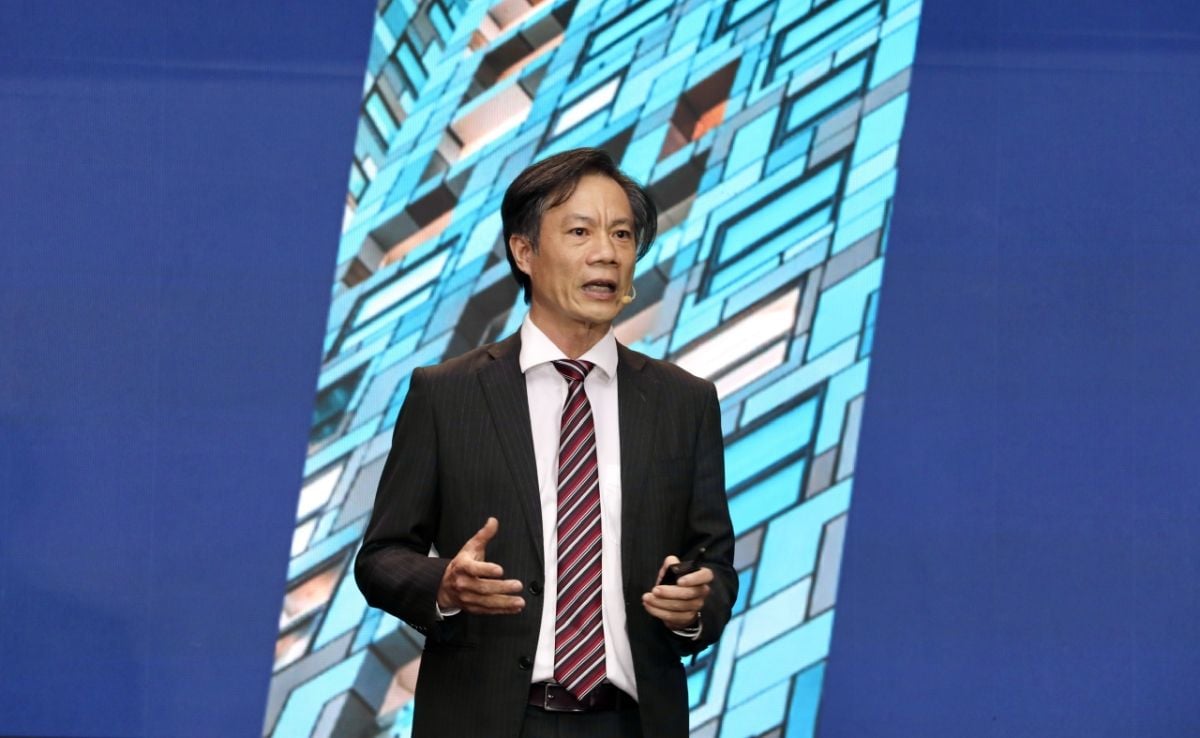
Amid volatility in global capital flows, Vietnam is looking to redefine the role of foreign direct investment (FDI) and strengthen links with the domestic private sector. At the Vietnam Development Bridge Forum 2026, under the theme “Investment-driven economy and the domestic economy in synergy to spur sustainable growth in the new phase,” Dr. Le Duy Bình, director of Economica Vietnam, reviewed Vietnam’s investment landscape for 2021–2025 and set out strategic directions for 2026–2030.
Over 2021–2025, total social capital reached about 17 quadrillion dong (roughly USD 680 billion). The structure of investment shifted, with the state budget accounting for about 27% of total investment and the remaining 73% coming from the private sector, including both domestic enterprises and FDI. Bình said the private sector, including foreign capital, has played an increasingly important role in Vietnam’s economy.
FDI capital also expanded significantly, rising by about 1.5 times over five years—from 2.9 quadrillion dong to about 4.2 quadrillion dong. This growth exceeded the registered figure (around USD 184 billion). Vietnam’s FDI disbursement rate reached about 85% (approximately USD 158 billion), which Bình noted is high compared with other countries in the region.
FDI flows have largely targeted manufacturing and processing, supporting Vietnam’s production capacity. A substantial share has also gone into real estate, including housing, resort real estate, and industrial park infrastructure, helping create conditions for further capital inflows.
Even as global investment slowed, Vietnam continued to attract capital. In 2025, global FDI flows were about USD 1,600 billion, while Vietnam attracted USD 38 billion—about 2.7% of the world’s share. Bình said this places Vietnam among the 15 developing economies with the strongest FDI appeal.
He added that this foundation can be leveraged amid new trends, particularly near-shoring or friend-shoring.
For 2026–2030, Vietnam aims for high and sustainable growth. To achieve this, capital demand is projected at about 38.5 quadrillion dong. Under the plan, the private sector and FDI are expected to cover up to 80% of total capital needs, while the State provides about 20%.
From the FDI side, Vietnam needs about USD 45–50 billion of committed capital and USD 35–40 billion of disbursed capital each year to sustain growth. Bình emphasized that the challenge is not only the volume of capital but also its quality.
Vietnam is aiming to attract “FDI of the new generation,” which is intended to finance green growth, demonstrate social responsibility, strengthen technological self-reliance, and increase domestic value.
Despite the presence of many FDI firms, Bình said the linkage between FDI and domestic enterprises remains loose. Vietnam has more than 1 million enterprises, but only about 5,000 are connected directly to global supply chains or multinational corporations (MNCs). He noted that only about 300 firms are Tier-1 or Tier-2 suppliers, and only around 100 are Tier-1 suppliers selling directly to major groups.
Bình attributed the gap to intrinsic factors within Vietnamese enterprises, including productivity that is currently about half of Thailand’s and a quarter of Malaysia’s. He also said 60–70% of firms still use outdated technology, while managerial capacity is weak and not ready to meet stringent international standards.
“We cannot rely solely on the goodwill of FDI firms or state support. The self-driven effort of domestic enterprises to upgrade governance and technology is essential,” Bình said.
Beyond production linkages, Bình outlined a new path through the financial market and indirect investment (FII). This includes foreign investors buying stakes in Vietnamese firms and Vietnamese investors investing in FDI firms, creating tighter forms of linkage.
However, he said the current number of FDI-listed companies on Vietnam’s stock market is very small—about 10 firms—and their capitalization represents only a small share of the overall market.
To strengthen connections, Bình said Vietnam hopes foreign capital and domestic enterprises can link not only through M&A or production, but also through indirect investment and cross-investment.
Bình said Vietnam’s strategy for attracting FDI has shifted from simply attracting capital to strategic selection, aiming to maximize benefits for growth, equity, and sustainability while addressing fairness and efficiency concerns. The policy stance emphasizes inclusive growth and the green transition, with continued focus on connecting FDI to the broader economy and domestic firms.
The drive to foster closer ties between foreign and domestic investment remains central to Vietnam’s effort to leverage FDI for long-term, sustainable development.
Premium gym chains are entering a “golden era” that is ending or already in decline, as rising operating costs collide with shifting consumer preferences toward more flexible, community-based ways to exercise. Long-term memberships are shrinking, margins are pressured by higher rents and facility expenses, and competition from smaller, more personalized…