Against a backdrop of positive economic growth and a rising
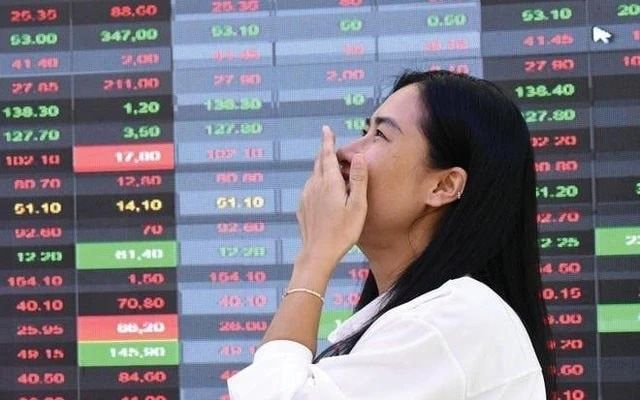
stock market, Vietnam’s capital market has officially moved toward an upgrade to the secondary emerging market, as FTSE Russell confirmed the trajectory for September 2026, creating positive expectations for the near term. However, external risks remain volatile, such as Middle East tensions, tariff-related events, or trade developments that could affect Vietnam to some degree.
Discussing this on The Finance Street Talk show on VTV8, Mr. Hoang Viet Anh, CFA, CMT, CEO of LPBank Securities (LPBS) noted that despite external challenges, Vietnam is building a more synchronized financial ecosystem with interconnected components. Therefore, investors should promptly implement a long-term asset allocation strategy as a key factor to fully seize the opportunities of the economy’s development over the next 5–10 years.
What opportunities does upgrading the stock market to a secondary emerging market present for Vietnam’s capital market, according to him?
Mr. Hoang Viet Anh, CFA, CMT, LPBS CEO:
We are at a very important moment, a turning point for Vietnam’s capital market. The upgrade by FTSE Russell is the first milestone in a long journey, where we continue to reposition our capital market within the global financial system.
Looking back, Vietnam’s stock market started in the 2000s and has since gone through several pivotal phases in more than 25 years. Notable milestones include 2007 when Vietnam joined the WTO, and 2017 with an IPO wave, privatizations, and a significant surge in foreign capital.
Moving into the current phase, being upgraded to a emerging market is seen as the first brick of a new growth cycle. I believe in the coming years we will not only rely on passive capital flows from FTSE, but will also target MSCI and other emerging-market standards, thereby expanding the scale of international capital into Vietnam.
By 2026, when the upgrade takes effect, Vietnam will enter a new phase in which foreign capital will be larger and more systemic, beginning to participate more strongly. Moreover, the path from FTSE to MSCI and other international standards will be a key driver for the growth of Vietnam’s capital market in the near term.
What opportunities will there be for the capital market and the stock market when upgrading to a secondary emerging market, in his view?
After the FTSE upgrade, around September, we will begin to receive passive flows first, followed by active flows. It is estimated that in the first 1–2 years, total capital inflows into Vietnam could reach about $3–5 billion, including both passive and active funds.
With MSCI, if upgraded, inflows could be broader, depending on reform pace and Vietnam’s weight in the index. More importantly, the share of active and strategic funds will rise significantly. In 2026–2027, Vietnam will continue to work with MSCI to broaden access for global funds. Currently, Vietnam meets about 17/18 MSCI criteria. Looking ahead 3–5 years after continued upgrade under MSCI, inflows could rise by another $5–8 billion.
In sum, foreign capital currently accounts for only about 12–14% of Vietnam’s stock market size, while in regional peers such as Thailand, Indonesia, the Philippines, or Malaysia this ratio can reach 20–40%. This shows there is substantial room for attracting foreign capital in Vietnam over the next 5–10 years, especially as market barriers continue to improve, creating opportunities for both passive and active funds.
Besides equities, another important pillar is the debt market, particularly government bonds, tied to the narrative of upgrading the sovereign rating toward Investment Grade in the coming years. Vietnam is currently near Investment Grade (BB+). When upgraded to BBB-, this would be a major turning point, opening access to capital from large global funds such as pension funds, insurance funds, and Investment Grade funds. More importantly, upgrading the rating would help reduce the cost of capital by around 100–150 basis points (1–1.5%), enabling the government and Vietnamese firms to borrow more cheaply in international markets.
Currently, foreigners hold less than 5% of Vietnam’s government bonds, while in many regional countries the figure can reach 20–30%. This represents a large runway to expand international capital into Vietnam’s debt market. Experiences from Thailand and India show that when foreign capital participates strongly in the debt market, a country’s foreign exchange reserves can rise by 50–100%, contributing to macroeconomic stability and monetary policy.
In my view, upgrading both the stock market and the sovereign rating will help Vietnam reposition its status on the global financial map over the next five years.
However, there are also external challenges ahead, such as Middle East conflict, tariff-related events, and other unpredictable developments. domestically, what measures are needed to mitigate these effects?
Mr. Hoang Viet Anh, CFA, CMT, LPBS CEO:
External factors, especially the Middle East conflict, are global risks largely beyond a country’s control. Looking back at history—from the 1970s oil crises, the Iranian Revolution, through Iran-Iraq and Iraq-Kuwait conflicts—oil supply disruptions typically stay below 10%. However, in the current scenario, if key transit routes such as the Hormuz Strait are affected, disruption could reach around 20%, significantly higher than in prior cycles. The typical consequence is a sharp rise in oil prices, potentially 2–3 times or more in some periods. Today, world oil prices have nearly doubled versus pre-conflict.
Subsequently, the impact would spill over into inflation and central banks’ monetary policy. However, policy responses are not identical across cycles. Only in periods of very high inflation—exceeding 10%—does the Fed tighten markedly; in many other circumstances, the Fed may hold or ease. Currently, many forecasts suggest US inflation could rise from about 2.4% to above 4% due to energy prices. Yet markets still expect the Fed to proceed cautiously and monitor developments.
For Vietnam, higher energy prices will pressure some sectors with high input costs, particularly logistics and manufacturing, affecting corporate margins. This makes market prospects more cautious. It is estimated that overall market profit growth could ease from about 18% to around 15%, reflecting the macro environment and high energy prices.
So how will the capital market evolve in this new phase after considering these factors?
Mr. Hoang Viet Anh, CFA, CMT, LPBS:
In the long run, Vietnam is building an increasingly integrated financial ecosystem with interconnected components. In addition to upgrading the stock market and sovereign rating, Vietnam is also developing several new components such as an international financial center, a carbon credit exchange, a market for startups, and a market for digital assets. These are major global trends. For example, the global carbon market currently has a size of about $500–$800 billion per year and could reach $3–4 trillion by 2030 thanks to the Net Zero shift.
Implementing a carbon exchange in Vietnam is a prudent step to capture global green capital. At the same time, the digital asset market is also becoming a major trend, as many countries and central banks are studying and testing. Implementing a sandbox mechanism for digital assets helps create a controlled testing environment, allowing investors to access new products while maintaining a legal framework and safety standards.
Overall, the linkage between the domestic capital market, global financial markets, and new asset channels will help Vietnam progressively elevate its status toward becoming a regional financial hub. However, to absorb foreign capital effectively, the domestic market must continue to diversify the supply of enterprises. In the next five years, a wave of IPOs could appear in sectors such as industry, infrastructure, retail, and finance. To capitalize on this trend, domestic financial institutions, including LPBS, are preparing a strategy to develop a comprehensive ecosystem of financial products to serve investors and contribute to market development.
From the investor side, what strategies should be adopted to suit the context and the new phase of Vietnam’s capital market?
Mr. Hoang Viet Anh, CFA, CMT, LPBS:
In recent years, especially as Vietnam’s per-capita income has surpassed $5,000, the middle class has grown rapidly. This trend drives rising demand for professional investing and asset management. The government’s direction is also to raise financial literacy and promote inclusive finance. In this context, investors need a holistic, long-term asset allocation strategy to capture growth opportunities in the new era.
In the long term, Vietnam aims for GDP growth of about 8–10% per year over the next decade. With that foundation, corporate profit growth of 10–15% per year is entirely feasible. At the same time, as the market upgrades to a emerging market, valuations could expand from around P/E 11–12x to about 14–15x, providing additional upside for the stock market.
However, markets are cyclical. If an investor concentrates too much in a single asset at a given time, they risk losses when the market turns. Therefore, diversification across equities, bonds, gold, and new assets like crypto is crucial. A balanced portfolio helps ensure growth while controlling risk over the long run. In a context where Vietnam enters a new growth cycle and targets double-digit growth, a long-term asset allocation strategy will be the key to fully leveraging the economy’s growth opportunities over the next 5–10 years.
Ngọc Ly
Market Pulse