•
•
•
•
•
•
•
•
•
•
•
•
•
•
•
•
•
•
•
•
•
•
•
•
•
•
•
•
•
•
•
•
•


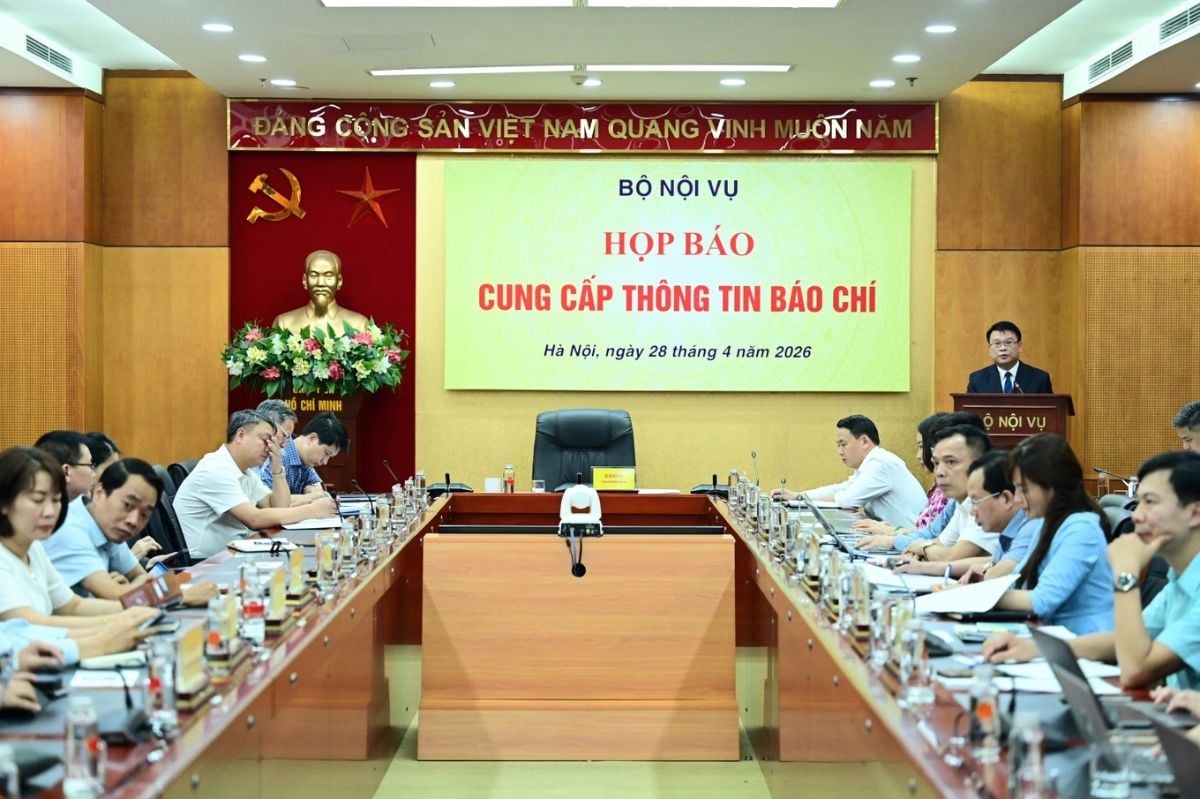
On 28 April 2026, at a press conference, the Ministry of Interior (MoI) stated that in Q1-2026 the ministry focused on developing the Wage Policy Reform Project and reported to the Deputy Prime Minister on the wage reform roadmap. It also reviewed and finalized the content of the draft law amending and supplementing certain provisions of the Social Insurance Law. The ministry continued to finalize regulations on the wage regime for civil servants, public employees, and the armed forces, contributing to the ongoing improvement of the public sector wage mechanism toward gradually increasing incomes and providing incentives for the workforce. Regarding the progress of drafting a decree to adjust the base salary, Nguyen Duy Cuong, Deputy Director of the Salary and Social Insurance Department (MoI), said that based on Conclusions 83-KL/TW and 206-KL/TW of the Politburo and the government’s assignments, MoI has coordinated with relevant ministries to draft a decree detailing the base salary level for civil servants, public employees, and the armed forces. It is expected that from 1 July 2026, the base salary will rise from the current 2.34 million VND to 2.53 million VND, an increase of about 8%. The proposed increase in the draft decree is based on a foundation that the Government’s Party Committee reported to the Politburo for consensus. According to Mr. Cuong, the draft decree has been completed and sent for legal appraisal by the Ministry of Justice. Following the appraisal conclusions, MoI will finalize the draft decree to be submitted to the Government so it can be issued before the effective date (1 July 2026). In addition to the base-salary adjustment, in Q2-2026 MoI will finalize the mid-term report on the implementation of NQ27-TW on wage reform and NQ28-TW on social insurance reform. The ministry will also thoroughly propose specific options for implementing wage reform under the roadmap. Furthermore, the ministry will focus on finalizing detailed regulations for implementing the amended Civil Servants Law to ensure quality and deadlines. It will continue to review and improve the administration of job positions across the political system; link approval of job positions in administrative bodies and public service units with restructuring to raise the quality of civil servants and implement staff reductions. Additionally, MoI will continue to streamline the ministry’s organization, reconfigure it, and enhance the quality of civil servants; ensure recruitment, appointment, and rotation of staff comply with the conditions and standards of the approved positions. Moreover, MoI will study and develop policies to support employment for workers in general, vulnerable groups, and those with special needs (e.g., people with disabilities, ethnic minorities, the elderly, women, youth); review and propose amendments to regulations related to labor and employment to align with the Local Governmental Administration Law. The ministry will also focus on effectively implementing policies to stabilize the labor market, create jobs, and ensure public order and security; monitor labor relations, support dialogue among parties, prevent and mitigate labor disputes and strikes, and assist in resolving arising issues. ### The Ministry of Home Affairs requests a review and evaluation of wage reform implementation






Premium gym chains are entering a “golden era” that is ending or already in decline, as rising operating costs collide with shifting consumer preferences toward more flexible, community-based ways to exercise. Long-term memberships are shrinking, margins are pressured by higher rents and facility expenses, and competition from smaller, more personalized…