•
•
•
•
•
•
•
•
•
•
•
•
•
•
•
•
•
•
•
•
•
•
•
•
•
•
•
•
•
•
•
•
•


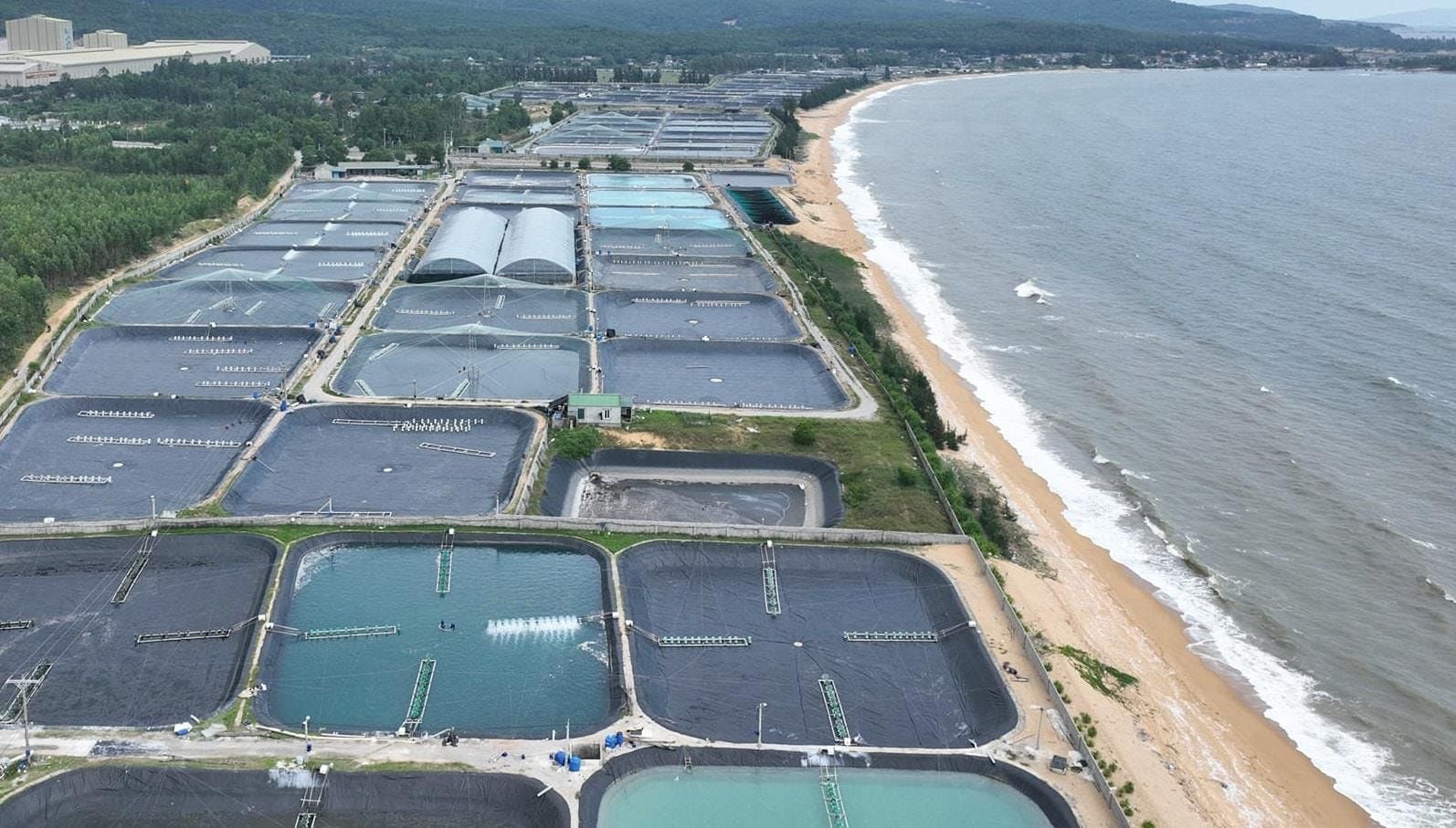
Nghệ An Province has the conditions to develop the maritime economy and logistics, including an 82-kilometer coastline, a central location in the North Central region, and ample land. However, according to the provincial people’s committee chair, after many years the province has yet to establish a deep-water port commensurate with its potential.
Four investment projects are being proposed:
Among them, Hoa Sen Group proposes a large-scale study and investment across the entire Đông Hồi Port area to serve northern Nghệ An’s logistics and industrial chain. The international consortium Song Lam – Hon La – VPCC Construction Consulting proposes developing Đông Hồi International Port as a multipurpose port with inter-regional logistics. Logistic SC Joint Stock Company intends to invest in Đông Hồi Port 2, while Vicem Hoàng Mai Cement continues to propose Vicem Đông Hồi Port.
A comprehensive review of the capacities of current investors is to be completed by May 30, 2026.
At the meeting, delegates commented on the port investment plans, including the Đông Hồi Port investment plan and the Thanh Thành Đạt Port project. Thanh Thành Đạt Port was granted an investment certificate by the Southeast Economic Zone Authority in 2014 but has yet to be implemented. Delegates also discussed which agency should implement the investment procedures.
Nghe An Province Chairman Võ Trọng Hải said the province has advantages for maritime economy and logistics, but after many years it has not yet formed a deep-water port matching its potential. He noted that neighboring localities such as Hà Tĩnh or Thanh Hóa have achieved breakthroughs in port economics and contribute large budget revenues each year.
The Chairman called for accelerating investment in the Đông Hồi port area with the strongest political resolve in this term, aiming to establish a modern port to serve the province’s import-export needs and to link the North Central region and neighboring countries.
He requested the Southeast Economic Zone Authority, together with relevant departments, to promptly review the entire planning, dossiers, and legal procedures for the projects; update progress monthly; and promptly address difficulties and obstacles. Finance, Construction, Agriculture and Environment, Industry and Trade, and other related agencies were asked to focus on supporting the Southeast Economic Zone Authority to ensure the overall project timeline.
The Chairman emphasized that the evaluation and implementation process must be strict, aligned with planning and the law, and that there must be no mistakes that could cause long-term consequences.
Regarding investors currently applying to study project proposals, provincial leadership called for a comprehensive review of their capabilities, with the report due by May 30, 2026.
The Chairman stressed the guiding principle of “moving fast but in full compliance with the plan and regulations.” The province will select only investors with real capacity and genuine commitment to implementation. Cases of reservations, delays, or lack of capacity will be decisively terminated in accordance with regulations to avoid wasting resources and jeopardizing opportunities to attract other strategic investors.
According to the port development plan through 2030, the Đông Hồi Port area will serve as a general port, bulk cargo port, and liquid/gas port. The projected scale includes 3 port facilities with 5–6 berths, including:
The port is capable of handling general cargo ships and bulk carriers of 50,000–70,000 tons, and liquid/gas ships up to 150,000 tons. The total planned area is about 87.81 hectares of land and 15.63 hectares of water.
Investing in and bringing the Đông Hồi Port area into operation is expected to enhance Nghệ An’s logistics capacity and reduce transportation costs for local enterprises. It is also intended to strengthen regional connections and expand imports and exports for the North Central region and neighboring countries in the area.
Premium gym chains are entering a “golden era” that is ending or already in decline, as rising operating costs collide with shifting consumer preferences toward more flexible, community-based ways to exercise. Long-term memberships are shrinking, margins are pressured by higher rents and facility expenses, and competition from smaller, more personalized…