•
•
•
•
•
•
•
•
•
•
•
•
•
•
•
•
•
•
•
•
•
•
•
•
•
•
•
•
•
•
•
•
•


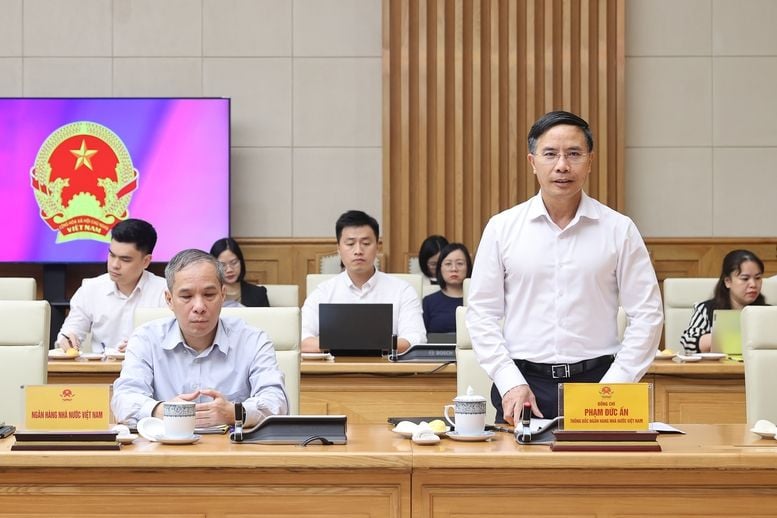
Early on the morning of April 29, Prime Minister Le Minh Hung presided over a meeting with the State Bank of Vietnam (SBV) to review the banking sector’s performance in the early months of 2026, discuss near-term directions and key tasks, and consider proposals and recommendations. Deputy Prime Ministers Pham Gia Tuc and Nguyen Van Thang; SBV Governor Pham Duc An; ministers and heads of government offices; and leaders of relevant agencies attended. exchange rates today
The meeting assessed the banking sector’s operations, highlighted achievements, and noted remaining difficulties and challenges. It also set out priorities for monetary policy and banking supervision, particularly measures to help implement the two-digit growth target under Resolution 18-KL/TW, covering exchange rate policy, base interest rates, credit growth, inflation control, and efforts to improve the quality of the banking system.
The Prime Minister reaffirmed the goal of achieving two-digit growth on a stable macroeconomic foundation. He emphasized that, amid global and regional uncertainties and complex developments, authorities must adapt to changing conditions while maintaining currency stability, stable interest rates, adequate liquidity, and robust credit growth.
He said monetary policy and credit policy should be designed to meet higher targets using effective tools, with financial system stability remaining a core priority. The discussion also reiterated the SBV’s role in ensuring macro stability and system safety, controlling inflation, and supporting economic growth.
The Prime Minister called for a shift in approach from “managing” to “creating development opportunities” within the SBV and the banking system. This includes proposing policy options, drafting plans, and using appropriate tools to build a stable and predictable environment so households and businesses can feel confident to invest in production and business activities, or at least deposit more funds into banks to mobilize resources for development.
He urged maintaining a flexible and proactive approach to exchange rate management, base rates, and credit growth, while keeping the two-digit growth objective anchored in macro stability, inflation control, and system safety for credit institutions.
He also highlighted the importance of safe payment systems, cybersecurity, and remote supervision, along with timely information dissemination and transparency to sustain market confidence.
The meeting’s priorities were tied to implementing the two-digit growth target under Resolution 18-KL/TW, with emphasis on exchange rate policy, base interest rates, credit growth, inflation control, and improving bank sector quality.
The Prime Minister stressed that policy execution should support a predictable environment for economic actors and encourage capital to flow toward production and investment. He also called for removing obstacles to lending, especially for small and medium-sized enterprises, in line with central conclusions.
The Prime Minister underscored the importance of gold market management with a plan aligned to directives from top leaders. The goal is to reduce speculative demand while ensuring macroeconomic fundamentals remain strong enough to encourage people to reallocate funds toward production and investment.
He urged the SBV to complete ongoing reforms to the credit system and finalize the modernization program, while also expediting legislative and administrative reforms. This includes continuing legislative reform for SBV and credit institution laws and accelerating administrative simplifications to reduce compliance costs for people and businesses while meeting central directives.
Finally, he called for vigorous implementation of technology and digital transformation investments in the action program, promoting payment innovations such as cross-border payments and sandbox-like experiments, and maintaining clear official policy communications to sustain market confidence.
The Prime Minister concluded by urging SBV and the banking system to fulfill the tasks entrusted by the Party, State, and people with dedication and proactive, creative research to support Government policy and macroeconomic management.






Premium gym chains are entering a “golden era” that is ending or already in decline, as rising operating costs collide with shifting consumer preferences toward more flexible, community-based ways to exercise. Long-term memberships are shrinking, margins are pressured by higher rents and facility expenses, and competition from smaller, more personalized…