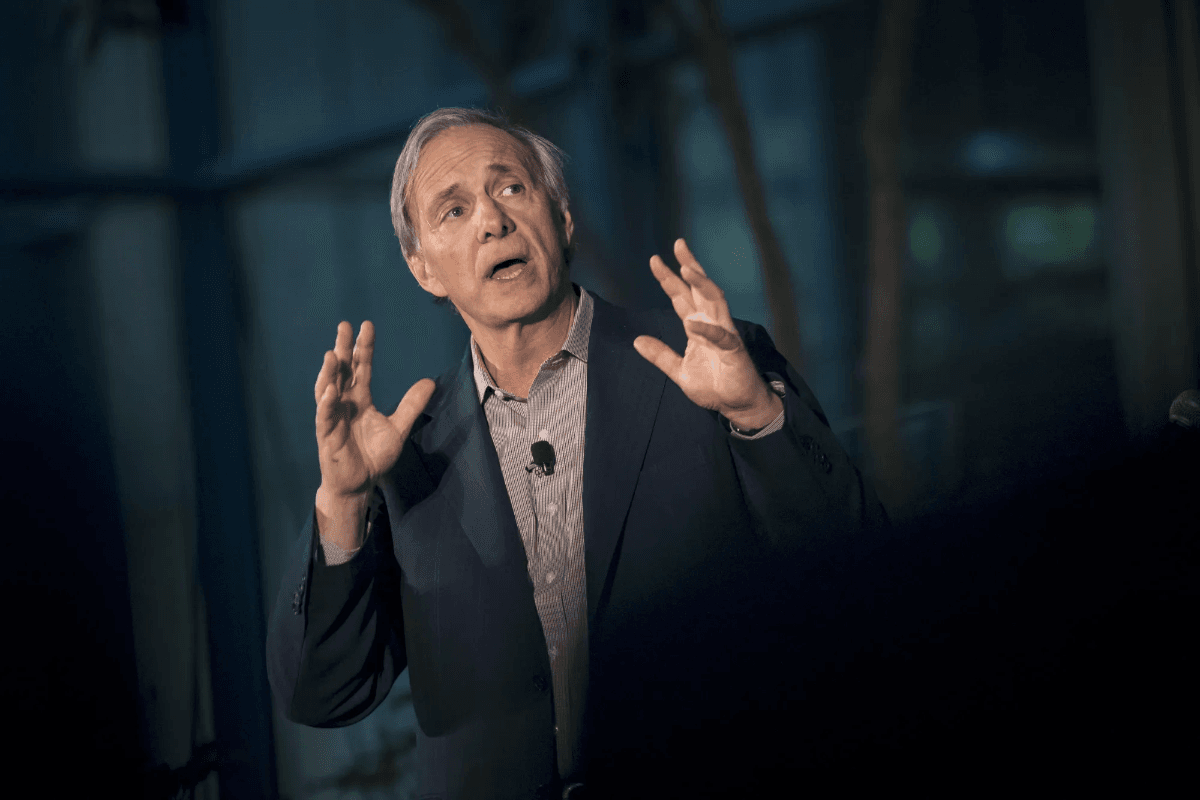
Ray Dalio, the billionaire founder of Bridgewater Associates, said the ongoing war between the United States and Iran is increasing uncertainty worldwide and that investors should consider allocating 5-15% of their portfolios to gold. In a CNBC interview, Dalio framed the key issue for global investors as whether the United States will “win” the conflict, noting that the Trump administration faces pressures including higher oil prices, the upcoming peak US travel season in summer, and the November midterm elections—factors that could make it reluctant for the war to drag on.
Dalio also pointed to a second question: who will ultimately gain control of the Hormuz Strait. He said the route remains closed even after the US and Iran ended hostilities on April 8. Before the conflict, Hormuz was the passage through which 20% of the world’s crude oil passed each day.
Dalio described gold as a form of money, calling it the oldest form of money and noting its role in central bank reserves. He said gold is the second-largest reserve currency by central banks, after the US dollar, followed by the euro and the yen. He also emphasized gold’s function as an asset to diversify reserves.
“The current environment is favorable to gold,” Dalio said, adding that gold can help investors diversify efficiently during periods of heightened uncertainty.
Dalio’s recommendation to hold more than 5% gold has been a recurring theme. He referenced the traditional 5% allocation commonly recommended by financial professionals.
Gold has declined since the US-Iran conflict began, as oil prices rose and inflation pressures increased globally—raising the possibility that central banks may keep rates higher for longer or raise rates. Even so, gold has risen more than 6% year-to-date, after a record 65% gain last year.
On the currency side, the Dollar Index—measuring the US dollar against a basket of six major currencies—fell to a four-year low at the start of the year, later recovering its safe-haven status. More recently, the dollar weakened again and the Dollar Index has fallen about 0.2% year-to-date, according to MarketWatch.
Dalio said the US economy is entering a stagflation-like period, characterized by high inflation and weak growth, and that investors should seek portfolio protection in such an environment. He argued that stagflation is particularly difficult for investors because it pressures both stocks (as growth slows) and bonds (as inflation remains high).
To protect portfolios, he suggested allocating 5-15% of capital in gold. He said today’s conditions match stagflation risk based on two factors:
In the interview, Dalio also warned that the Fed should not cut rates too soon. He argued that premature easing would backfire by eroding the Fed’s credibility in fighting inflation, which could lead to more market volatility. In his view, that would mean traditional policy responses may not work as effectively in the current environment.