•
•
•
•
•
•
•
•
•
•
•
•
•
•
•
•
•
•
•
•
•
•
•
•
•
•
•
•
•
•
•
•
•


Rehabilitation has moved from being a peripheral specialty to an essential societal need as Vietnam and other countries face rapidly aging populations, rising non-communicable diseases, and the growing burden of long-term complications from strokes, injuries, and chronic illnesses. Rehabilitation and mobility are central to improving treatment effectiveness and long-term quality of life.
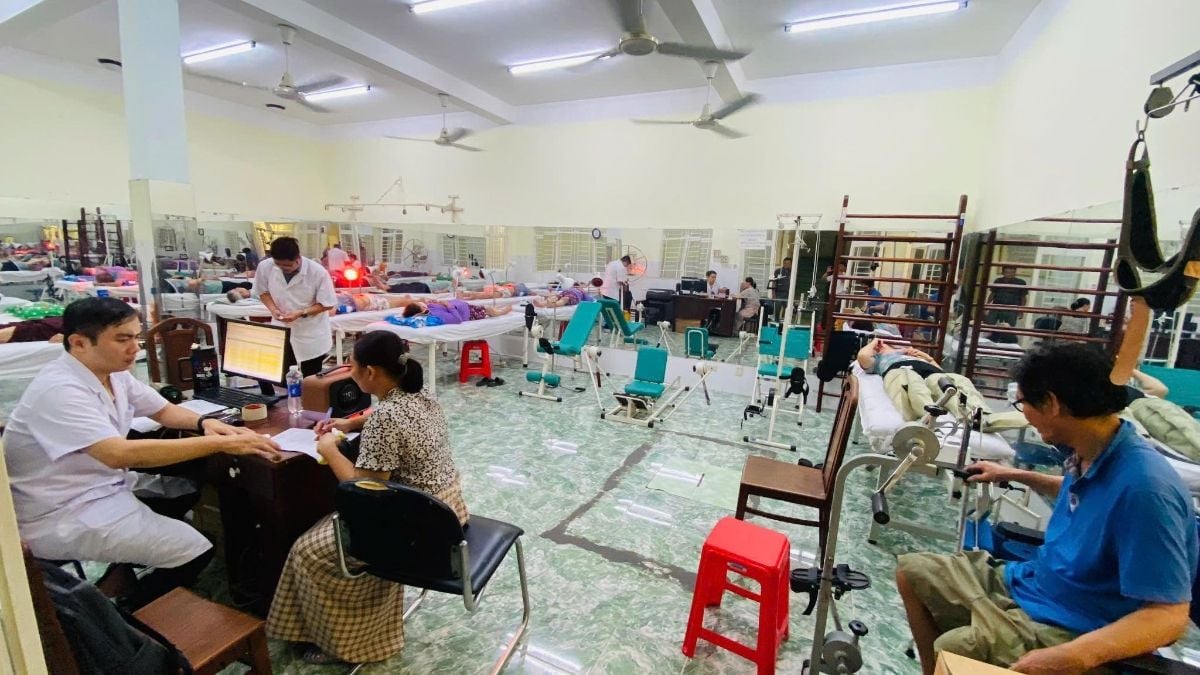
In March 2026, the Center for Rehabilitation at Bach Mai Hospital continuously admitted many cases of shoulder periarthritis. Patients came from a wide range of age groups, including students and office workers, indicating the condition is no longer limited to older people.
Shoulder periarthritis refers to damage to soft-tissue structures around the joint, including tendons, muscles, ligaments, and the joint capsule. Patients typically experience dull, persistent pain that intensifies at night (around midnight or early morning) along with limited range of motion—such as difficulty combing hair, dressing, and reaching behind the back. The condition can significantly affect daily activities and overall quality of life.
Ms. N., a Hanoi office worker, reported months of shoulder pain and attempted self-treatment with massage, which did not help. After diagnosis and treatment at the Center, her pain decreased significantly within one week. She was able to raise her arm more easily, movement became more flexible, and her sleep improved.
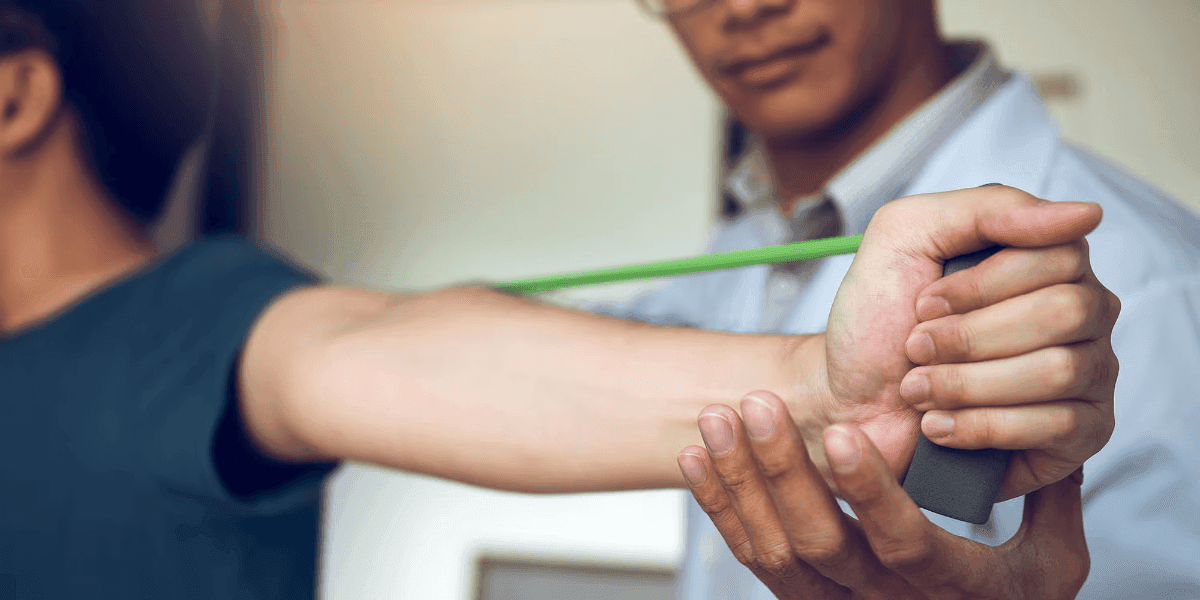
Experts at the Center for Rehabilitation at Bach Mai Hospital said exercise therapy is the foundational approach for shoulder periarthritis because it targets the root causes of movement limitation and helps reduce pain. Treatment is guided through a structured progression: starting with light movements to loosen the joint, then gradually increasing strength and stability.
Alongside mobility therapy, patients receive a combination of physical treatments, including heat therapy (infrared, shortwave, paraffin), ultrasound, high-power laser, and shock-wave therapy. Electrotherapy is used for pain relief and anti-inflammatory effects, while massage and stretching support recovery. The combined approach aims to reduce pain quickly, facilitate training, and shorten recovery time.
Rehabilitation is not only a post-treatment phase; it can be the entire treatment process. Some domestic rehabilitation facilities have begun applying AI in movement assessment, exercise design, and personalized treatment planning. This helps physicians and technicians better understand movement mechanics, measure progress more accurately, and shorten recovery time.
Professor Dr. Tran Quy Tuong, President of the Vietnam Biomedical Informatics Association and Vice President of the Vietnamese Rehabilitation Association, said AI is helping Vietnam’s rehabilitation sector shift from manual, traditional methods toward a “Smart Rehabilitation” model. He noted that the model enables precise movement assessment using sensor data and imaging analysis, personalizes treatment regimens based on progress and patient characteristics, and supports remote monitoring and intervention.
A case highlighted by the article involves Mr. Nguyen Ngoc Chuyen’s son, who nearly lost all motor function on the right side after a stroke. At Quang Ninh Geriatrics Hospital – Rehabilitation, the patient received recovery support using the Erigo Pro robotic system.
The hospital is among the few units in northern Vietnam applying robot-assisted rehabilitation early for patients after stroke, spinal injuries, and motor decline. Dr. Tu Khanh Linh, Department of Physical Therapy, Bach Mai – Geriatrics Hospital, said the Erigo Pro robot can perform multiple techniques, including tilt-table standing, passive movement of the lower limbs, and functional electrical stimulation (FES).
“Through sensor data and control software, the robot records movement parameters so doctors can adjust the training intensity to each patient. This makes the rehabilitation process scientifically tracked, precise, and more effective,” Dr. Linh said. The hospital also uses other advanced rehabilitation devices, including spinal decompression therapy machines and partial-weight-bearing walking devices.
The article notes that even when surgery is successful or symptoms improve, patients do not automatically return to normal life quickly. Rehabilitation plays a central role in completing treatment and improving long-term quality of life.
In Vietnam, demand for rehabilitation is rising rapidly due to an aging population and increasing prevalence of chronic diseases such as stroke, osteoarthritis, cardiovascular disease, and chronic obstructive pulmonary disease.
According to Prof. andAssoc. Dr. Vu Hong Vinh, Head of the Rehabilitation Technology Department at the International University of Ho Chi Minh City, current manpower in the field is about 0.25 per 10,000 people, while the World Health Organization recommends 0.5 to 1 per 10,000. He said the sector is meeting only about 40 to 50% of demand.
Vinh also pointed to gaps beyond workforce numbers, including quality and organizational models. He said rehabilitation is sometimes treated as a supportive step rather than an essential part of the treatment plan, and that this mindset needs to change starting from training. He added that motor stimulation is crucial for developing and maintaining the body, affecting organs, tissues, and biological processes.
At the end of March, Bach Mai Hospital held a working session with a delegation from Fujian University of Traditional Chinese Medicine (China). Inputs from neurology, orthopedics, rehabilitation, stroke, and neurosurgery departments indicated strong demand for integrating traditional medicine into clinical practice—particularly for neurological conditions, stroke, post-surgical care, and chronic diseases.
The article said combining approaches such as acupuncture and tuina with modern treatment is expected to improve rehabilitation outcomes, reduce complications, and enhance patients’ quality of life.
Earlier, at the Ministry of Health’s 2025 Rehabilitation Review Conference, Deputy Minister Trần Văn Thuấn said: “Rehabilitation is an area that requires perseverance, long-term investment, and close collaboration across many sectors and levels. But this is also an area where every forward step, even if not loud, yields substantial value for patients and society.”
Premium gym chains are entering a “golden era” that is ending or already in decline, as rising operating costs collide with shifting consumer preferences toward more flexible, community-based ways to exercise. Long-term memberships are shrinking, margins are pressured by higher rents and facility expenses, and competition from smaller, more personalized…