•
•
•
•
•
•
•
•
•
•
•
•
•
•
•
•
•
•
•
•
•
•
•
•
•
•
•
•
•
•
•
•
•


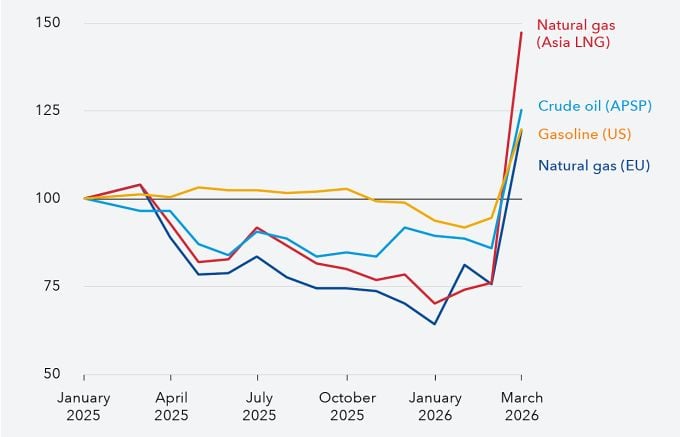
Asia’s protective shield against energy shocks from the Iran conflict is weakening, and a second wave of impacts is beginning to hit. After hostilities flared in late February, global energy supply tightened, prompting many Asian governments to conserve electricity, prioritize gas for households over production, and draw on national reserves. Those measures were largely based on the expectation that the conflict would be short and energy flows would quickly resume. With the war showing no clear end and the Hormuz Strait remaining closed, the fuel crisis is deepening.
Experts say higher prices for air travel, freight, electricity, and gas are threatening economic growth across the region. The United Nations Development Programme (UNDP) warned that the conflict could cause economic damage of up to $299 billion for the Asia-Pacific, with about 8.8 million people at risk of falling into poverty.
“Countries with the least resources to respond or households with the least purchasing power will be the first to feel the impact,” said Samantha Gross, a Brookings Institution energy expert.
In India, prioritizing gas supply for around 330 million households has reduced input for fertilizer plants. Fertilizer prices rose sharply, while drought risks from El Niño threaten the rice sector. India continues to subsidize fuel to shield 1.4 billion people from fuel price shocks.
On May 10, Prime Minister Narendra Modi urged residents to prioritize domestic goods, limit overseas travel to conserve foreign exchange, work from home, and use public transport to reduce fuel consumption. He also urged farmers to cut fertilizer use by half.
Neighbors such as Pakistan and Bangladesh, which lack foreign exchange, must buy oil and gas at spot prices—often more volatile and higher than long-term contracts. This increases import costs and adds pressure to foreign exchange reserves.
Endut noted that governments could sustain subsidies by cutting welfare or borrowing more, while reducing subsidies could trigger negative public reaction. “When subsidies run out and inflation accelerates, countries may face a fiscal bomb,” he warned.
In Southeast Asia, the Philippines has adopted a four-day work week to save fuel and is subsidizing low-income groups. However, Fitch Ratings said most consumers still face higher energy costs, slowing activity in major urban centers such as Manila.
Last month, the IMF downgraded the Philippines’ growth forecast for this year to 4.1% from 5.6% in January, citing the energy shock compounded by negative base effects from 2025.
Maria Monica Wihardjam, a researcher at ISEAS-Yusof Ishak (Singapore), said the energy shock will gradually reshape Southeast Asian economies, including changes to the labor market and how countries prepare for future energy crises. Across Asia, the crisis highlights the vulnerability of the middle class, with many at risk of returning to poverty.
According to the IMF, growth in 2026 for Asia’s developed and emerging economies will reach 4.9%, down 0.1 percentage point from previous forecasts. In some South and Southeast Asian economies, Middle East disruptions are expected to reduce tourism revenues and remittances, weakening domestic demand.
Even if the conflict ends, Asia will still face pressure. Samantha Gross said the global oil-and-gas supply chain will not recover immediately. Repairing damaged infrastructure, restarting plants, and transporting fuel from the Middle East could take weeks or months.
In the longer run, countries in the region have begun discussing and implementing solutions such as diversifying energy supply, developing nuclear power, and expanding renewables including solar.
AP, IMF
Premium gym chains are entering a “golden era” that is ending or already in decline, as rising operating costs collide with shifting consumer preferences toward more flexible, community-based ways to exercise. Long-term memberships are shrinking, margins are pressured by higher rents and facility expenses, and competition from smaller, more personalized…