•
•
•
•
•
•
•
•
•
•
•
•
•
•
•
•
•
•
•
•
•
•
•
•
•
•
•
•
•
•
•
•
•


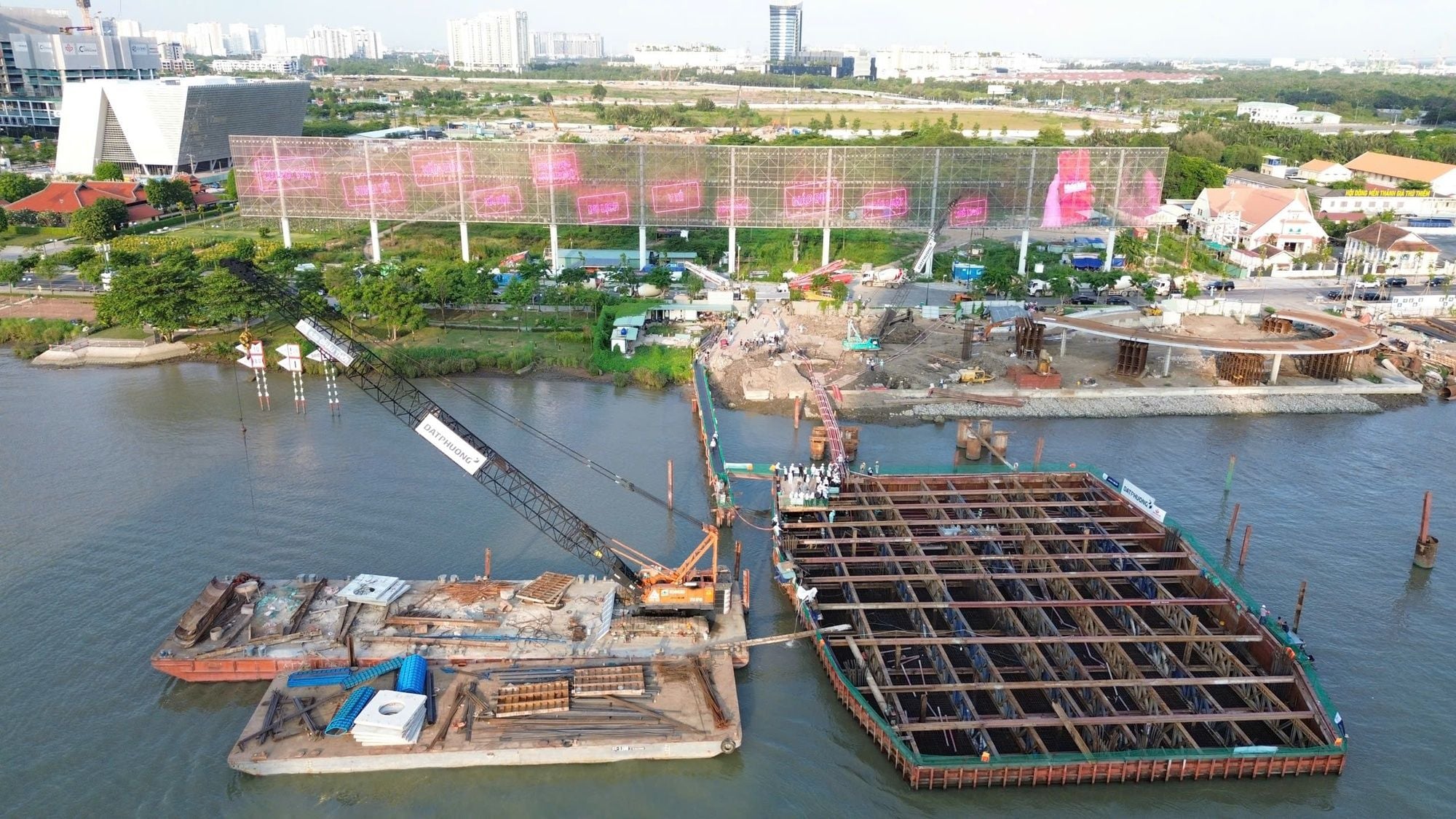
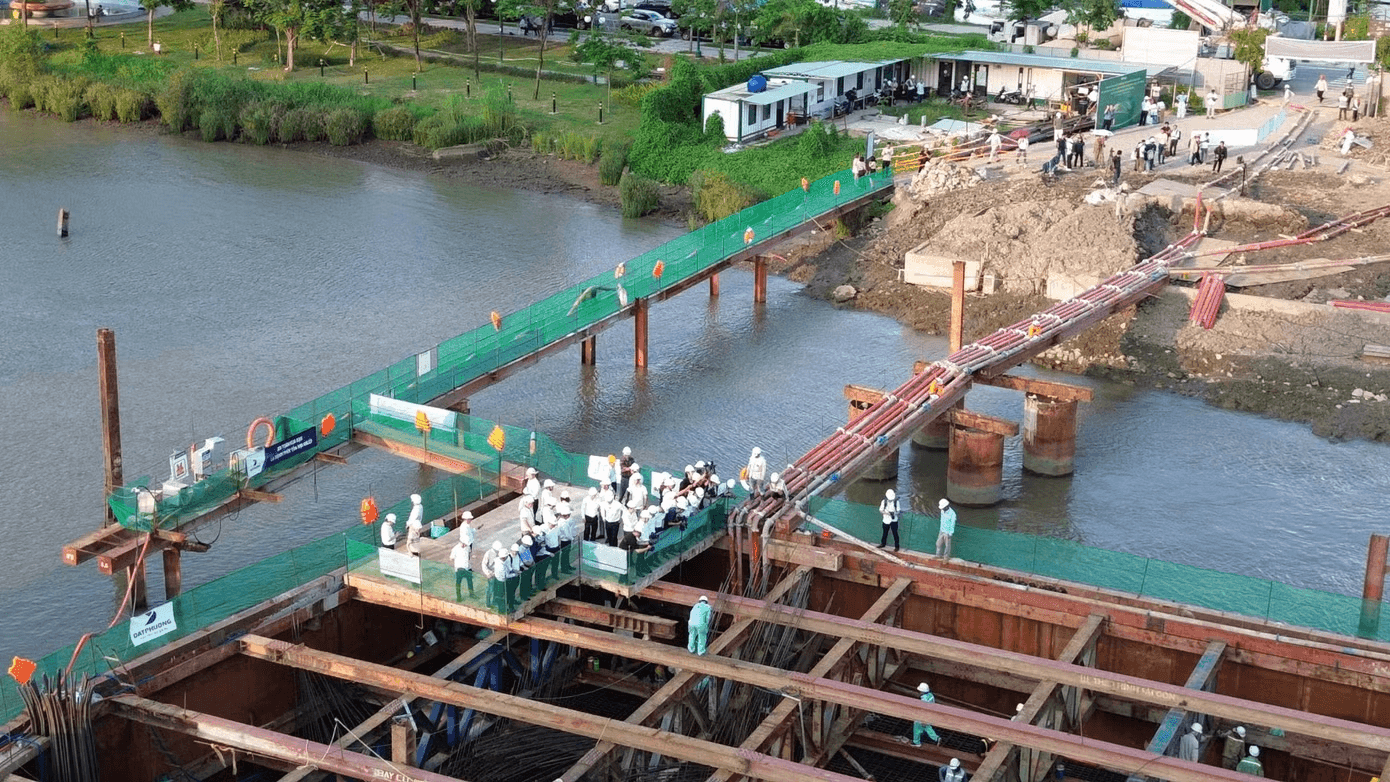
Construction on the Saigon River pedestrian bridge is accelerating, with hundreds of engineers and workers working around the clock to keep the project on schedule. In the Thu Thiem area, multiple work fronts are advancing simultaneously, from approach and revetment sections to the main structural components that are expected to become a new landmark for Ho Chi Minh City.
Observations at the site indicate that more than 250 engineers and workers are mobilized to work continuously day and night across the construction site and fabrication yards. Numerous 25-ton steel beam modules for the approach sections are transported repeatedly by heavy-duty trucks from factories to Thu Thiem at night to support ongoing installation.
Approach and revetment works are being pushed to speed up overall progress. At the same time, the main bridge has entered a rapid-construction phase with multiple tasks implemented in parallel, including concrete piers, the main steel arch, pumping stations, landscaping water features, spiral stairs, escalators, elevators, and the decorative lighting system.
On May 11, the project carried out the first concrete pour for Pier TC2 of the main bridge in the presence of Ho Chi Minh City leaders. The event is described as a key milestone marking the transition into the structural construction phase, with implications for safety, quality, and project progress.
A standout feature of the bridge is its space steel arch, modeled to resemble the image of a coconut leaf. The design is regarded as one of the most unique in Vietnam.
The project began in late March 2025 with total investment of nearly 1,000 billion VND. The bridge spans about 720 meters, with a 187-meter main span cable-stayed arch. The deck uses a steel-girder system with a width varying from 6 to 11 meters. Nutifood funds the project, which is expected to be completed by September 2, 2026.
The bridge is designed with a navigable air clearance of 80 meters and a height of 10 meters to support safe river traffic on the Saigon River. Once completed, it is expected to connect the two banks and serve as a new architectural-cultural landmark for Ho Chi Minh City, offering a modern public space for pedestrians to walk, enjoy views, and experience the riverside environment.
Premium gym chains are entering a “golden era” that is ending or already in decline, as rising operating costs collide with shifting consumer preferences toward more flexible, community-based ways to exercise. Long-term memberships are shrinking, margins are pressured by higher rents and facility expenses, and competition from smaller, more personalized…