•
•
•
•
•
•
•
•
•
•
•
•
•
•
•
•
•
•
•
•
•
•
•
•
•
•
•
•
•
•
•
•
•


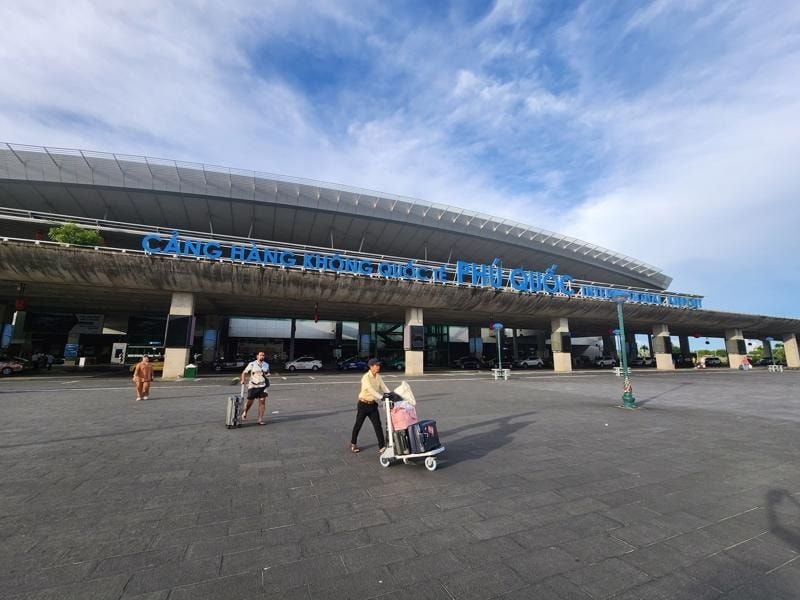
Adjustments to the master plan for Phú Quốc International Airport have been proposed in a dossier submitted to the Ministry of Construction. The changes aim to optimize land use, arrange space for aircraft operations more reasonably, and support the airport’s long-term development direction. The updated approach is expected to enable faster implementation of expansion components to serve APEC 2027 with higher efficiency than the previous plan.
In the airside area, the Civil Aviation Authority of Vietnam proposes adjusting the investment phasing to synchronize parallel taxiways and the northern connections of Runway 2 during the 2021-2030 period. The adjustment is intended to connect with a maintenance hangar planned for the northern part of the airport.
For the apron, the 2021-2030 master plan will add apron stands in front of Terminal 2 and expand the existing apron. This is expected to increase total capacity to about 42 parking positions.
In addition, a new apron area between Terminals 1 and the VIP/civil aviation zone is planned, with about 45 positions. Land to the west of the VIP area is reserved for future expansion if demand increases. Looking ahead to 2050, Phú Quốc Airport will continue to expand aprons on available land as needed.
Regarding internal port infrastructure, the plan proposes adjustments to the route connecting from the main transport axis into Terminal 2. The basic service roads will remain aligned with the current master plan, with some added segments to support security, patrols, and safety requirements for APEC 2027.
The parking system will be repositioned to align with Terminal 2 and to reorganize the stormwater pond. Several power supply, lighting, and water supply facilities will also be relocated to enable immediate investment and support APEC 2027.
The updated master plan includes northern and western adjustments to water bodies and civil aviation zones, the northern airside drainage and drainage network, and completion of an integrated drainage system.
For aviation service facilities, the authority proposes relocating the ground handling and equipment assembly yard to the southeast of Terminal 2 to accommodate an in-flight catering facility. Other assembly areas around the VIP guest house will also be adjusted to free up land for future apron expansion and to support APEC organization.
Maintenance and repair facilities for aviation equipment will remain broadly the same in scale but will be repositioned toward the west of Terminal 1 to facilitate operations. The aviation fuel storage area is planned to be relocated to the northern airport area, covering more than 7 hectares.
The plan also updates the positions and scales of multiple other facilities, including the airport operations control center, state management offices, airline offices, the operations center, infrastructure maintenance areas, security facilities, and emergency rescue facilities.
According to the file submitted to the Ministry of Construction, land-use demand for Phú Quốc International Airport in the 2021-2030 period, with a vision to 2050, is about 1,049 hectares. Other contents will continue to be implemented in accordance with Decision 427 dated 15/4/2025 by the Minister of Construction.
The Civil Aviation Authority of Vietnam states that the plan adjustment dossier has been completed in line with current regulations and recommends that the Ministry of Construction appraise and approve it promptly. It also requests the An Giang Provincial People’s Committee to update the airport master plan in accordance with land-use planning and public transport connectivity planning.

Premium gym chains are entering a “golden era” that is ending or already in decline, as rising operating costs collide with shifting consumer preferences toward more flexible, community-based ways to exercise. Long-term memberships are shrinking, margins are pressured by higher rents and facility expenses, and competition from smaller, more personalized…