•
•
•
•
•
•
•
•
•
•
•
•
•
•
•
•
•
•
•
•
•
•
•
•
•
•
•
•
•
•
•
•
•


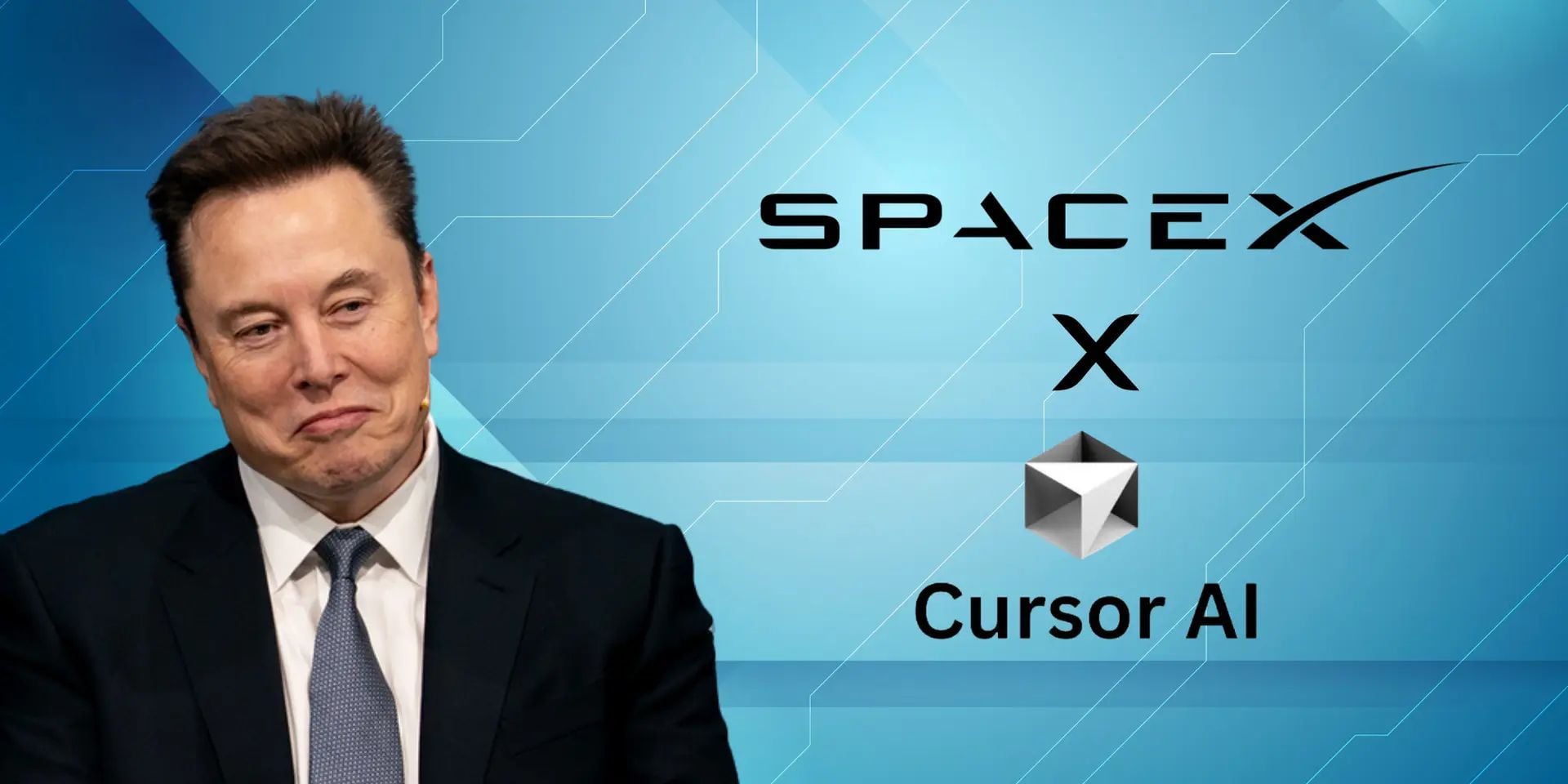
SpaceX has agreed to pay $10 billion upfront to secure the right to acquire Cursor, an AI coding startup, at a $60 billion valuation within the next year. The structure is described as a 12-month call option, with a proposed $60 billion “strike price,” which is 15% above the $52 billion valuation Cursor was negotiating with Andreessen Horowitz and NVIDIA last week.
Under the agreement, if Elon Musk decides not to buy Cursor within the 12-month window, the $10 billion would remain with Cursor as a termination fee. The deal also includes a restriction preventing Cursor from selling itself to any third party during the next year, including OpenAI, which had shown interest in acquiring the startup earlier in 2025 but was declined.
Beyond the unusual scale of the transaction, the agreement is tied to Cursor’s compute needs. The startup builds a code-editing tool and has developed its own AI model, Composer 2, which recently beat Anthropic’s Claude Opus 4.6 on Terminal-Bench at costs reported to be one-tenth of the competition.
To train the next generation of models, Cursor needs tens of thousands of GPU chips. However, the company must rent compute power from the same large firms that compete with it in AI coding, including OpenAI, Anthropic, and Google.
The article notes that OpenAI has Codex, Anthropic has Claude Code, and Google has Gemini CLI—each competing directly in AI coding while also controlling major supercomputer clusters used for training. In that context, SpaceX’s offer is presented as a way to access compute resources that rivals would be unlikely to provide.
SpaceX’s proposed solution centers on Colossus, a supercomputer cluster located in Memphis. The cluster currently has 230,000 GPUs and is expected to scale to 1 million GPUs by year-end, described as the largest in the world.
According to sources cited from The Information, Cursor has begun renting tens of thousands of chips from Colossus to train Composer 3.
In a social media post, SpaceX said the combination of Cursor’s product and the Colossus training supercomputer “equates to 1 million H100 chips” and would help build “the world’s most useful models.”
The article also frames the deal as not fully neutral for Cursor. After acquiring xAI, Musk’s Grok AI chat company, SpaceX is developing Grok Code, a product competing directly with Cursor. Still, the article suggests that Musk’s strategic view is that Cursor outperforming rivals like OpenAI would be preferable to OpenAI dominating the AI coding market.
The agreement comes as SpaceX prepares for an IPO in the coming months, with a reported valuation of about $1.75 trillion and a fundraising round of $75 billion, described as potentially the largest IPO in history.
Overall, the deal is presented as a “win-win” structure: Cursor gives up its ability to sell itself for 12 months in exchange for access to Colossus, while receiving $10 billion upfront regardless of whether the acquisition closes. For SpaceX, the $10 billion is described as buying a year to monitor Cursor’s progress before deciding whether to pay an additional $50 billion to complete the acquisition.

Premium gym chains are entering a “golden era” that is ending or already in decline, as rising operating costs collide with shifting consumer preferences toward more flexible, community-based ways to exercise. Long-term memberships are shrinking, margins are pressured by higher rents and facility expenses, and competition from smaller, more personalized…