•
•
•
•
•
•
•
•
•
•
•
•
•
•
•
•
•
•
•
•
•
•
•
•
•
•
•
•
•
•
•
•
•


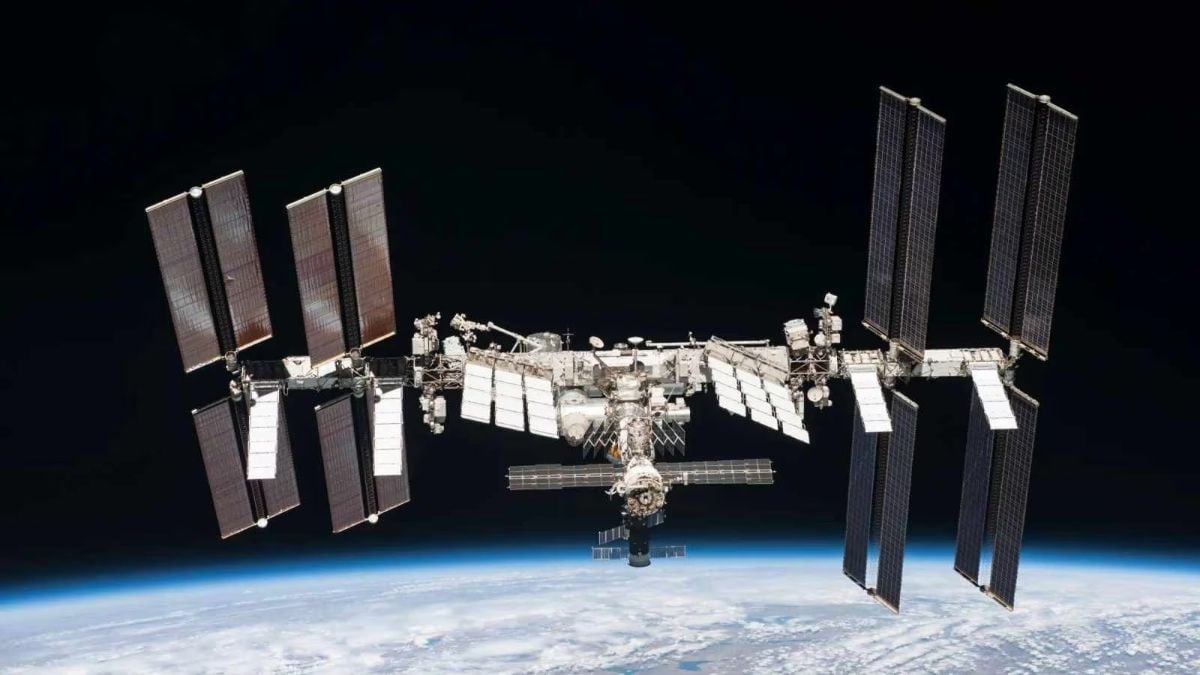
SpaceX recently filed for an IPO. Its founder and CEO Elon Musk says the funds raised will support the ambition to become an AI superpower, with plans to launch up to one million data-center satellites into orbit to overcome Earth's energy and water constraints. THE MICROSOFT MISSTEP The idea of moving data centers off the ground is not new. In 2015, Microsoft conducted a bold experiment by deploying a container-sized data center on the seabed off Scotland. The objective was to use seawater for natural cooling while leveraging offshore wind and tidal power. The project was once expected to be a watershed for data-center technology. Technically, the project reportedly achieved its goals. However, according to Reuters, the underwater data-center model was halted more than two years ago because it failed to prove economic viability. Customers still preferred inland data centers with faster upgrade cycles and more cost efficiency. Microsoft representatives stated that although they do not currently operate an underwater data center, the company continues to use it as a research platform to test and validate ideas related to data infrastructure. Indian Express quoted five industry experts saying Microsoft's test serves as a notable warning for SpaceX. Despite differences in deployment environments (undersea vs. space), both models share core similarities: reliance on expensive deployment modules and limited ability to scale, repair, or upgrade. Roy Chua, founder of the research firm AvidThink, notes that these challenges may be even more severe when placed into orbit. Unresolved issues include cooling the system in a space environment, high launch costs, and the effects of radiation and harsh conditions on AI chips. In practice, a satellite or underwater data center is typically replaced after 5–7 years, while AI chips evolve rapidly. This increases the risk of technological obsolescence. Moreover, the cost of deploying underwater data centers is significantly higher than on land. While larger scales can reduce unit costs, achieving that scale requires tens of billions of dollars in investment. If this model extends to space, costs would rise multiple times. According to MoffettNathanson's estimates, to realize the ambition SpaceX would need about 3,000 launches per year, equivalent to eight per day—an unprecedented figure. A February report from MoffettNathanson projected that launching a million AI satellites could cost trillions of dollars. Elon Musk believes these barriers can be overcome by substantially reducing launch costs, developing AI chips that withstand radiation better, addressing thermal management in vacuum, and extending hardware lifespans. He argues that demand will not be a problem as AI consumes more energy and becomes core infrastructure for a future where robots are more common than humans, self-driving cars become the norm, and space travel is no longer a luxury. JEFF BEZOS' BILLIONAIRE ENTRY INTO THE DATA-CENTER RACE Today, not only Musk but Blue Origin, Jeff Bezos' space company, is involved. In March, the company announced Project Kuiper Sunrise to develop AI-computing capabilities in orbit, leveraging solar energy while reducing pressure on terrestrial data-center infrastructure. Blue Origin has not yet provided detailed comments on the plan. Claude Rousseau, Research Director at Analysys Mason, notes that space-based data centers remain feasible but are likely to play a supplementary role to terrestrial infrastructure, serving specific needs of space-based assets like military satellite constellations or space stations. In a February All-In podcast, Jensen Huang, Nvidia's CEO, stated that the economic viability of AI data centers in space has not yet been compelling. He views this as a long-term technological challenge rather than a near-term solution and emphasizes that terrestrial infrastructure should remain a priority. Roy Chua from AvidThink also argues that placing data centers on the seabed or in space risks becoming an attempt to dodge Earth-based problems while creating a new set of challenges that could be more complex. There are still many problems to solve on Earth first, from improving AI chip efficiency, enhancing water recycling, to expanding renewable energy use—such as solar power—and developing modular small-scale nuclear reactors. SpaceX has not issued an official comment yet. Earlier, the company acquired AI startup xAI in February. If the IPO succeeds, SpaceX could raise up to $75 billion, potentially making it one of the largest IPOs in history. DATA CENTER AI PUSHES ambient temperature around by up to 9°C 15:49, 30/03/2026 ELECTRICITY is the bottleneck for data-center projects 19:00, 21/03/2026 AI data centers could become a new military target for Iran 14:47, 07/03/2026 KEYWORDS: AI, technology, data infrastructure, digital economy, SpaceX, data center

Premium gym chains are entering a “golden era” that is ending or already in decline, as rising operating costs collide with shifting consumer preferences toward more flexible, community-based ways to exercise. Long-term memberships are shrinking, margins are pressured by higher rents and facility expenses, and competition from smaller, more personalized…