•
•
•
•
•
•
•
•
•
•
•
•
•
•
•
•
•
•
•
•
•
•
•
•
•
•
•
•
•
•
•
•
•


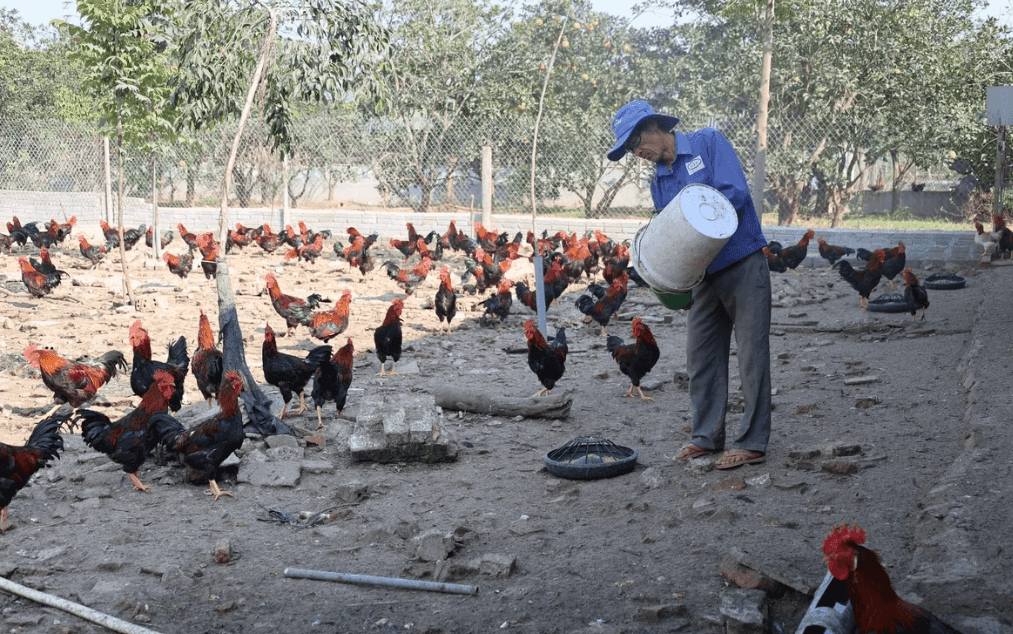
On a sunny April morning in Thọ Xuân commune, Thanh Hóa, chickens roam in open pens, scratching at bio-litter bedding that helps keep the farm clean. In these spacious houses, Ri chickens move freely, reflecting a shift from traditional, small-scale raising toward a more organized and professional production model.
Until a few years ago, chicken farming in the area was largely small-scale and fragmented. Households typically raised only a few hundred birds, selling mainly to traders while facing frequent price swings. Farmers also worried about oversupply when harvests were good and about shortages when prices rose.
The change accelerated at the end of 2024, when the Xuân Hồng Village Chicken Production and Processing Cooperative was established. Individual farmers began working together to design a common production process, share inputs, and secure more stable outlets for their products.
“Previously, farming was based on experience; now we follow guidelines, with supervision and guaranteed buyers, so I feel more secure,” a poultry farmer said while dispensing feed to fast-growing birds.
Under the cooperative model, production is organized around batches. The cooperative maintains about 120,000 birds per batch, raised across member households to support steady supply and reduce surplus risk at sale time.
Pure Ri chickens are raised for six months and reach 1.8–2 kg. Farmers say the breed’s aroma and firm meat support the local branding.
In addition to breeding, a small processing area is being developed within the cooperative. There, products such as chicken sausages and herb-marinated chickens are produced to order, helping farmers add value and reduce dependence on selling only live birds.
At Mr. Trịnh Phú Tuấn’s farm, six pens are arranged for rotation, with each pen holding a different brood. The setup is designed to connect production timing and support sales throughout the year. His farm scale is about 5,000 birds per batch, and he has been in the business for over a decade.
Tuấn highlighted differences in care practices. The housing uses bio-litter bedding, which reduces the need for frequent cleaning. He also noted that Ri chickens’ natural foraging behavior supports in-chamber decomposition of manure, helping reduce odor and labor requirements.
“This system is less tiresome, the environment is cleaner, and disease risk is lower,” Tuấn said, observing the steady growth of the flock.
The cooperative model is not limited to large farms. Many small- and medium-sized households are also benefiting. In Le Nghĩa 1 village, Hà Xuân Hòa’s family raises about 8,000 birds per batch. On land previously planted with oranges and grapefruits that performed poorly due to flooding, the chicken flock now provides a more stable income, with annual profits around 300 million VND.
“With stable outlets, I only need to raise the birds well. I no longer worry about price shocks,” Hoa said.
In November 2025, the Xuân Hồng chicken product received VietGAP certification, strengthening farmers’ confidence. The certification is described as both recognition of the production process and a pathway to more modern distribution channels.
As farmers move from scattered small sheds toward a linked value chain, the area’s production is becoming more coordinated. Farmers are no longer isolated, and products are less dependent on market fluctuations.
Looking ahead, leadership of the Thọ Xuân Farmer’s Association views the cooperative approach as a suitable direction for restructuring the livestock sector—aiming to raise value through chain production and VietGAP standards. The cooperative plans to expand scale, bring in more households, and invest in deeper processing while building a more professional brand image. The goal is stable consumption and the continued establishment of Xuân Hồng Ri chickens in the market, supporting a more modern and sustainable rural economy.







Premium gym chains are entering a “golden era” that is ending or already in decline, as rising operating costs collide with shifting consumer preferences toward more flexible, community-based ways to exercise. Long-term memberships are shrinking, margins are pressured by higher rents and facility expenses, and competition from smaller, more personalized…