•
•
•
•
•
•
•
•
•
•
•
•
•
•
•
•
•
•
•
•
•
•
•
•
•
•
•
•
•
•
•
•
•



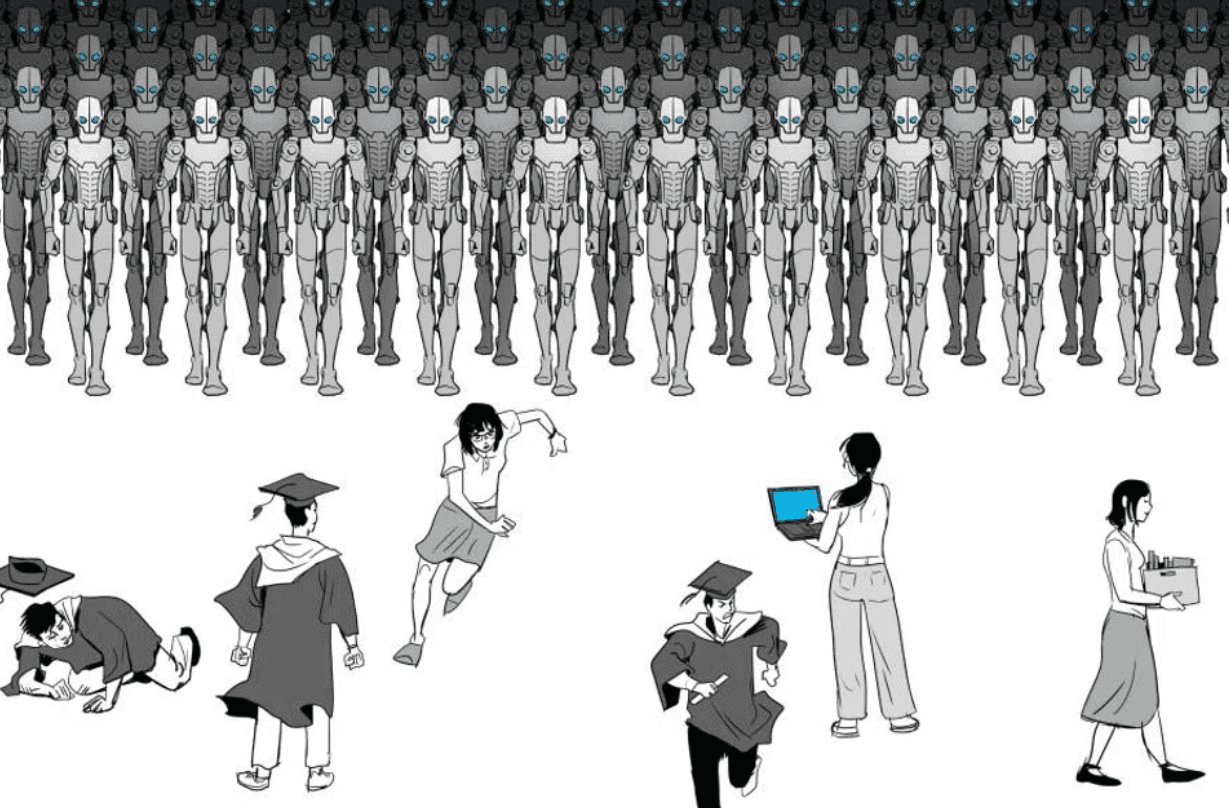
The Washington Post reports that programming—once promoted as a “golden ticket” to a prosperous future—appears to be entering a harsher phase. After 15 years of technology-driven growth following the Great Recession, the coding boom is showing signs of a pronounced slowdown.
For much of the past 15 years, technology has been a bright spot in the U.S. economy, and “learn to code” became a common message in parenting and career guidance.
However, data from the U.S. National Center for Education Statistics (NCES) indicates that the surge in computer science education may be reaching a turning point. From 2008 to 2024, the number of Bachelor of Science degrees in Computer Science more than quadrupled—rising fivefold—and grew faster than other large fields such as nursing or mechanical engineering.
More recent signals point to a shift. Data from the National Student Clearinghouse, which tracks information from about 97% of American colleges, shows that in fall 2025 undergraduate computer science enrollment at four-year institutions fell by 8.1%.
In absolute terms, this is the largest year-over-year decline among core majors since 2020. Over the same 12-month period, computer science fell from the 4th-largest major to the 6th, making room for fields including Business, Healthcare, and Liberal Arts.
Beyond AI-related fears, employers’ demand dynamics are also influencing student choices. Gavin O’Malley, a first-year student at Rice University, says he feels “threatened” by intense competition even while still in high school.
Online memes and jokes about IT unemployment reflect broader worries about job security for programmers.
The article also points to cooling hiring after pandemic-era surges in big tech. Combined with corporate HR optimization, this has contributed to computer science becoming less “scarce” than it was previously. While computer science enrollment declines by 8%, engineering fields show growth: Mechanical Engineering is up 11% and Electrical Engineering is up 14%.
Michael Leamy, head of the Mechanical Engineering department at the University of Vermont, says enrollments in his department have risen by more than 20% over two years, while computer science enrollment has fallen by more than half. He adds that students appear to view traditional engineering as offering greater adaptability in an AI-driven world, where hardware and software must work together in areas such as drones, electric vehicles, and robotics.
Carnegie Mellon’s Tom Cortina is described as cautiously optimistic, stating that AI will have some impact but may represent a temporary dip rather than a structural shift.
Whether the change proves temporary or signals a broader exodus, the article concludes that the era of “learn to code and you’ll earn” is no longer the default assumption for students. Instead, they are weighing real-world value and adaptability in a technology-driven future.






Premium gym chains are entering a “golden era” that is ending or already in decline, as rising operating costs collide with shifting consumer preferences toward more flexible, community-based ways to exercise. Long-term memberships are shrinking, margins are pressured by higher rents and facility expenses, and competition from smaller, more personalized…




