•
•
•
•
•
•
•
•
•
•
•
•
•
•
•
•
•
•
•
•
•
•
•
•
•
•
•
•
•
•
•
•
•


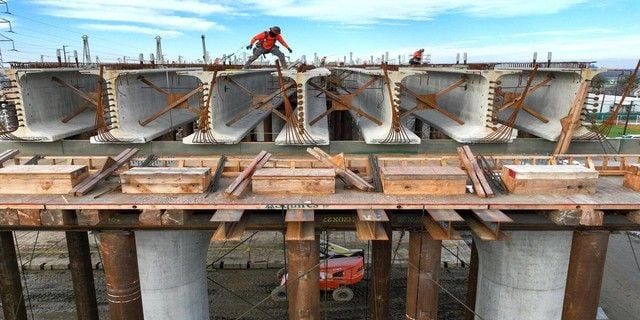
The UK’s HS2 high-speed rail project, valued at about USD 136 billion, is unlikely to meet its deadlines, according to recent reporting and parliamentary updates. Launched in 2020, HS2 is intended to connect London with Birmingham and is described as the first major rail line built north of London in more than a century. The project is designed to increase capacity on a congested rail network and reduce journey times while delivering zero-carbon travel between the two largest cities.
HS2 is divided into three phases: Phase 1 from London to the West Midlands; Phase 2a to Crewe, connecting the North; and Phase 2b extending to Manchester and Leeds. However, Phase 1 progress has been repeatedly revised. Initially, Phase 1 was expected to be completed in 2026, but a November 2023 update pushed the deadline to 2029 and then to 2033.
More recently, the project has been announced as delayed again. The main drivers cited are large-scale changes in project scope, along with technical and financial challenges affecting the original timetable. The completion date is expected to continue being adjusted based on construction progress.
Cost estimates have risen sharply. The Business Times reported that the project’s cost estimate has nearly tripled, from GBP 37.5 billion in 2013 to over GBP 100 billion (about USD 136 billion), making it among the most expensive rail lines in the world.
In a six-month update published in March 2026, total costs to date were reported at GBP 46.2 billion (current prices). This includes GBP 2.6 billion for the northern Birmingham-to-Manchester section, a portion that was canceled in 2024. The government expects to keep costs under control before releasing a revised plan, including recalculating total investment at 2026 prices. After years of inflation during the Covid-19 pandemic, with labor and steel costs rising sharply, total investment is forecast to exceed GBP 100 billion.
In March 2026 reporting, The Guardian said Britain has asked HS2 to consider operating trains at lower speeds to curb ballooning budgets and bring the line into service sooner. HS2 Ltd is expected to evaluate whether limiting speed to 186 mph (300 km/h) instead of 224 mph could save costs, potentially by billions of pounds, and help the line enter service in the 2030s.
Current UK high-speed services typically run up to 125 mph. High-speed lines to Kent and the Channel Tunnel (HS1) have a maximum speed of 186 mph, described as a common European standard.
Transport Secretary Heidi Alexander said in a parliamentary update: “Since HS2’s chief executive Mark Wild set out plans to reset the project’s schedule and budget, the scale of the challenge has become clearer than ever.”
Officials noted that no railway in the UK is designed to operate at 360 km/h, the maximum speed referenced for HS2 trains. This could require waiting for the HS2 track to be completed before testing trains, which may increase costs and delay completion. An alternative discussed is testing trains abroad.
Ms. Alexander also said HS2 is on track in terms of construction milestones, including completing the excavation of all 23 miles of deep tunnels required for the opening phase.
HS2’s technology choices have included decisions about suppliers and systems. The Building (UK) reported that China Railway Construction Corporation (CRCC) had proposed building HS2, promising costs lower by more than half based on experience with the world’s largest high-speed rail network, with average prices from USD 17–21 million per km compared with Europe’s USD 25–39 million per km. The UK rejected the proposal, citing HS2 as strategic infrastructure and the government’s desire to control domestic supply chains. The UK also emphasized job creation and direct economic contribution from construction.
Instead, HS2 chose technology from Japan and France for the high-speed trains. HS2 trains are designed for a maximum speed of 360 km/h, with manufacturers including Hitachi and Alstom. The trains are described as incorporating energy-saving technologies and reducing noise. The track system uses technology with no joints to reduce vibration and enhance stability and durability.
With large bridges and tunnels, the project uses Tunnel Boring Machine (TBM) technology, according to Railway News. For operations management, HS2 will implement the latest generation European Train Control System (ETCS) for automatic train control, enabling high-speed operation with maximum precision. Digital signaling systems are also intended to improve operational efficiency, reduce collision risk, and optimize timetable operations.
HS2’s chief executive said: “I am committed to the government to regain control of the HS2 project and end cost overruns and delays. As performance improves, thanks to the efforts of about 30,000 workers on site, we are considering further options to improve efficiency. Speed has never been the main target. This railway will provide a better journey, increase capacity across the network, and drive economic growth.”
When completed, HS2 is expected to reduce travel time from London to Birmingham by up to 40%, to 49 minutes.







Premium gym chains are entering a “golden era” that is ending or already in decline, as rising operating costs collide with shifting consumer preferences toward more flexible, community-based ways to exercise. Long-term memberships are shrinking, margins are pressured by higher rents and facility expenses, and competition from smaller, more personalized…




