•
•
•
•
•
•
•
•
•
•
•
•
•
•
•
•
•
•
•
•
•
•
•
•
•
•
•
•
•
•
•
•
•


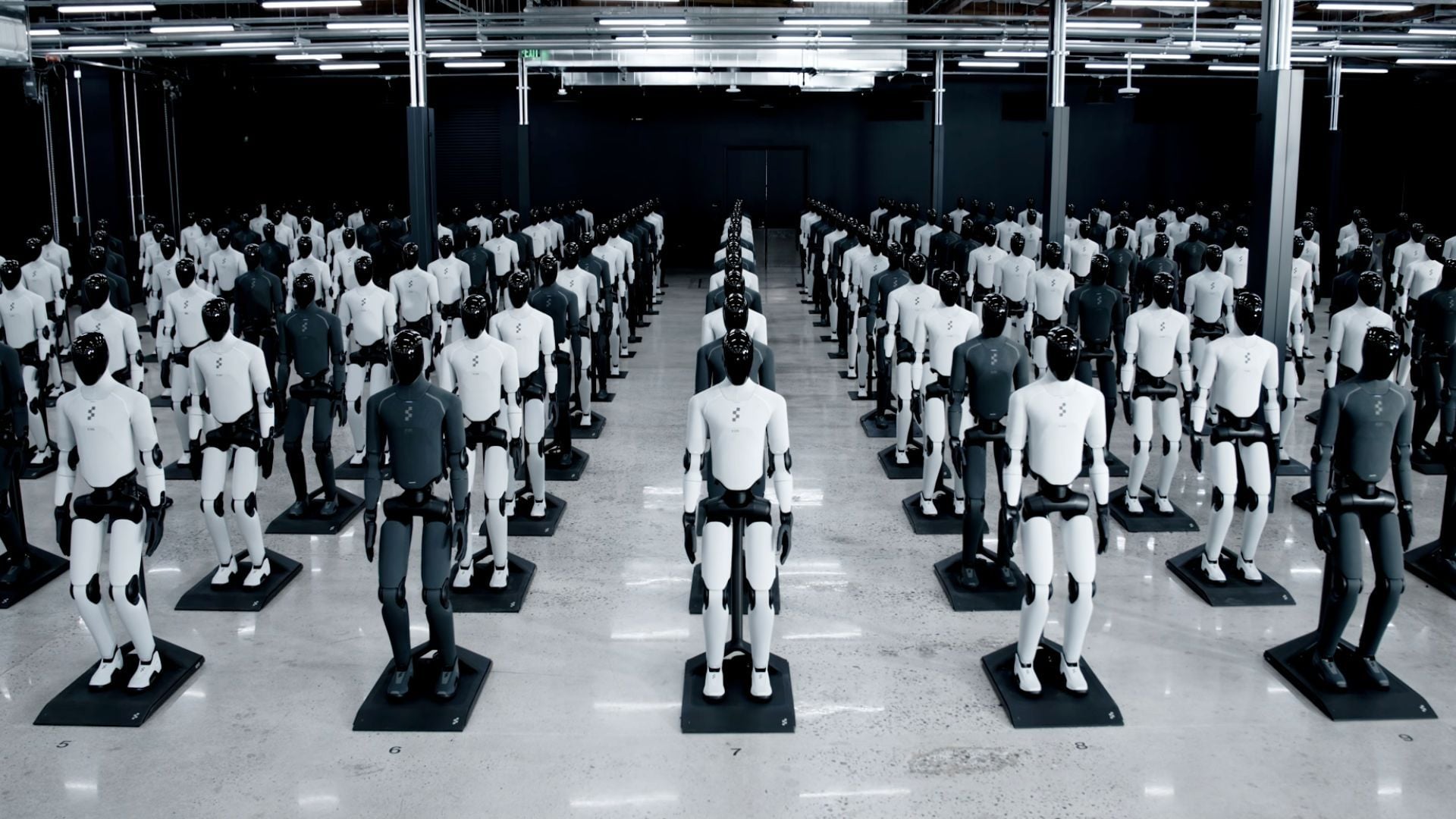
Humanoid-robot development is moving beyond laboratory demonstrations toward mass production, and Figure—one of the most closely watched U.S. humanoid-robot startups—has announced a major manufacturing milestone. The company says it can now produce one humanoid robot per hour at its BotQ plant in California.
Figure’s latest update indicates a rapid scaling of production. In less than four months, the company increased capacity from one robot per day to one per hour, a 24-fold increase. The company frames this as a key marker for the humanoid-robot sector, which has struggled to transition from research and development to large-scale manufacturing.
Figure attributes the ramp-up to a customized manufacturing software system that connects more than 150 workstations across the BotQ facility. The company also says it has delivered more than 350 robots and improved manufacturing quality through a supplier-qualification process and multiple checks along the production line.
To support industrial-scale output, Figure says it has adopted an electric-vehicle-style production approach, including dedicated lines for critical modules of Figure 03, ranging from battery systems to mechanical actuators.
Figure reported several performance indicators from the production line. The pass rate at the end of the line is above 80% on the first attempt. For the battery line, the company cites a 99.3% success rate. It also says it has produced more than 9,000 actuators and shipped over 500 batteries.
Figure says each Figure 03 robot undergoes more than 80 functional tests before leaving the factory. The testing includes heavy-load trials, treadmill tests, and squats designed to detect early faults in mechanical and electrical systems.
Beyond manufacturing expansion, Figure has upgraded its Helix System 0 humanoid-robot-control software. The company says the robot can now fuse proprioception with vision to govern movement.
Previously, the system relied mainly on proprioception, which senses joint states and body position. Figure says this was sufficient for basic motions but became challenging in complex environments such as stairs, rough terrain, or unstable surfaces.
In the new version, Helix S0 integrates data from stereo cameras mounted on the robot. Figure says the RGB imagery is converted into a 3D spatial model, allowing the robot to understand surrounding terrain rather than relying only on internal motor states.
Figure reports that its robots can climb stairs and move across varied terrain with steadier motion, including under changing lighting conditions. The company says these behaviors were trained using reinforcement learning in simulated environments with many random terrains.
Figure also says skills learned in simulation can transfer directly to real robots without additional tuning, addressing what is commonly referred to as the “sim-to-real gap.”
Figure says it has built fleet-management systems, internal maintenance services, and over-the-network software updates to support large-scale operations. The company says this allows it to monitor robot status continuously, update software remotely, and collect feedback to accelerate product improvement.
Figure argues that deploying more robots in real-world settings supports both business growth and AI training. The company says more robots operating generate more data to improve Helix, and that real-world operational data are considered as important as hardware capability for learning. It also notes that broader deployment helps robots experience more environments and scenarios.
More broadly, Figure’s approach reflects a push by humanoid-robot firms to move from lab prototypes to commercial platforms. With major players such as Tesla and Boston Dynamics, alongside heavy investment by many Chinese firms, competition to develop versatile humanoid robots is positioned as a major technology frontier for the coming decade.






Premium gym chains are entering a “golden era” that is ending or already in decline, as rising operating costs collide with shifting consumer preferences toward more flexible, community-based ways to exercise. Long-term memberships are shrinking, margins are pressured by higher rents and facility expenses, and competition from smaller, more personalized…




