•
•
•
•
•
•
•
•
•
•
•
•
•
•
•
•
•
•
•
•
•
•
•
•
•
•
•
•
•
•
•
•
•
Vietnam’s national airport system plan for 2021–2030, with a vision to 2050, is set to expand the country’s aviation network and improve access for the majority of the population. Under a proposal referenced by the Government Portal, by 2030 more than 95% of Vietnam’s population would be able to reach an airport within 100 km—higher than the global average of about 75% and comparable to several countries in the region.
In a report submitted to the Government on the status of implementation and a draft outline to adjust the national airport system plan for 2021–2030 (vision to 2050), the Ministry of Construction said that, according to PM Decision 648/QD-TTg dated June 7, 2023, Vietnam’s airport system by 2030 will include 30 airports—14 international and 16 domestic. By 2050, the network is expected to expand to 33 airports—14 international and 19 domestic.
The Ministry also noted that, in addition to airports already included in the plan, there are 12 potential sites under continued research for possible inclusion.
The Ministry of Construction submitted in late April a draft outline adjusting the national airport system plan 2021–2030 (horizon to 2050). The draft is intended to redefine the network toward coordination and flexibility, aligning with international trends.
Key proposed changes include adding Mang Den and Van Phong to the plan. The draft also proposes upgrading Quang Tri airport from 4C to 4E to meet long-term operational needs.
Among the projects highlighted in the draft, Van Phong airport is described as the most notable. The project would be built in Van Thang commune, Van Ninh district, Khanh Hoa province, about 65 km from Nha Trang.
According to the study, the airport would be constructed on water, covering about 497.1 hectares. The Ministry described this as a new aviation infrastructure model for Vietnam.
The project is designed to meet 4E standards, with projected capacity of about 1.5 million passengers per year by 2030 and about 2.5 million by 2050. Total investment is estimated at about 9.214 trillion dong. If implemented, it would be Vietnam’s first airport built entirely on water.
The Van Phong airport project aims to form a key air transport gateway for the South Central Coast and the Central Highlands. It is expected to support economic development and tourism, strengthen logistics capabilities, and contribute to international integration. The project is also expected to act as a new growth engine for the Van Phong Economic Zone and surrounding areas.
The province said the Van Phong project aligns with the master plan for the Van Phong Economic Zone to 2040 with a vision to 2050, approved by the Prime Minister, and aligns with adjustments to the land-use plan to 2030.
The water-based model requires rigorous technology, cost control, and adaptation to natural conditions, and it would need thorough assessment before implementation.
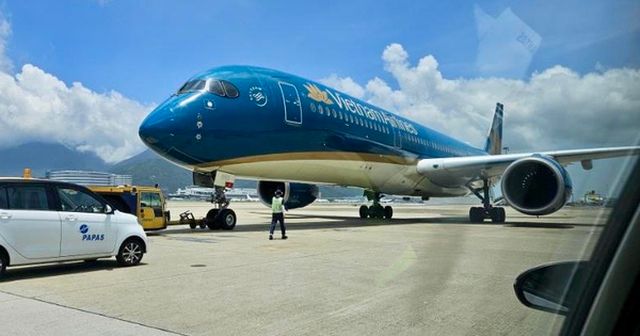
Globally, water-based airports are not new. Examples cited include Kansai International in Japan, Hong Kong International, Incheon International, and Hamad International in Qatar. These projects reflect a broader trend of extending aviation infrastructure onto the sea to reduce land pressure and increase long-term capacity.
The crypto bear market remained in force on Wednesday, with bitcoin slipping back toward the $60,000 area. Sharp pullbacks in gold and oil also weighed on the 2025 “debasement trade,” which had supported hard assets amid concerns about government debt and fiat currencies. Meanwhile, tech—particularly the AI boom—continued…