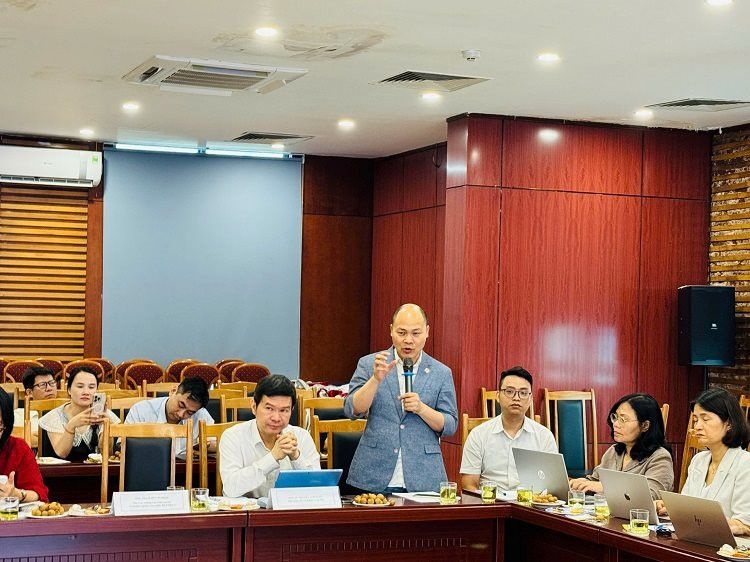
On the afternoon of June 30, Hanoi's Department of Science and Technology, in cooperation with the Center for Strategy Consulting on Science and Technology Policy (Ministry of Science and Technology), organized a forum titled Solutions to create a market for science and technology enterprises through ordering, assigning tasks and outsourcing of technology services in Hanoi.
During the forum, Nguyen Tu Quang, vice chairman of VINASA and founder-chairman of BKAV, stated that Vietnamese technology companies fully have the capacity to master high-tech products comparable to global giants such as Apple and Samsung, if there is clear demand and a government procurement mechanism. He noted that the issue is not a lack of money; Hanoi alone has more than 9 trillion VND in its budget for science and technology, innovation, and digital transformation, but this resource has not been connected effectively to the city's real projects.
The city would issue specific, clear briefs; enterprises or science and technology funds would invest to research and implement pilot solutions to address the problem. This approach helps ensure that government budgets are not spent upfront on research, reducing the risk of failure, while ensuring collaboration between enterprises and the city to bring the pilot toward a final result.
After the product has demonstrated technical standards through the pilot, the city will place orders and organize open procurement bidding. According to Quang, firms that participated in the POC will have advantages in understanding technical requirements, mastering technology, and competing on price, while benefiting from current domestic preferences for local bidders. If this process is put into practice, we will solve many important city-level problems with the existing budget, avoiding the situation where money exists but cannot be disbursed, Quang stressed.
If the proposed process is put into practice, it would help solve many important city-level problems with the existing budget, avoiding a scenario where money exists but cannot be disbursed.
A representative of Hanoi's Department of Science and Technology said the city is implementing the City as the first customer mechanism, prioritizing public procurement for products that have been successfully tested. The representative also said Hanoi plans to install about 24,000 AI cameras in 2026 to support urban management, and to build innovation funds and risk-sharing mechanisms in scientific research to encourage enterprises to develop new technologies.