•
•
•
•
•
•
•
•
•
•
•
•
•
•
•
•
•
•
•
•
•
•
•
•
•
•
•
•
•
•
•
•
•


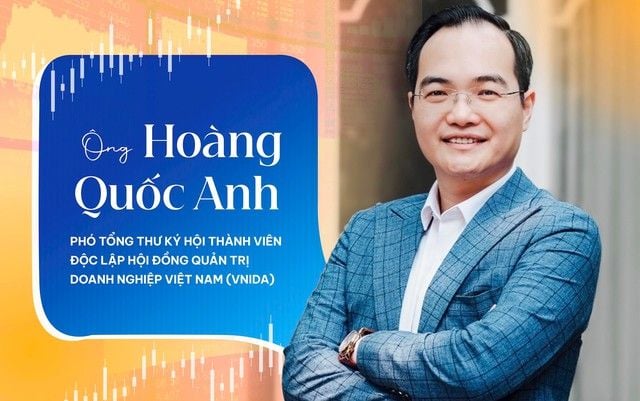
In 2012, among tens of thousands of shareholders attending Berkshire Hathaway’s annual meeting, a Vietnamese attendee named Hoang Quoc Anh was in the audience. He is now CEO and Deputy Secretary General of the Independent Members’ Association of the Board of Directors of Vietnamese Enterprises (VNIDA). The trip gave him direct exposure to Warren Buffett and Charlie Munger’s discussions on investing, business ownership, risk, discipline, and long-term thinking.
Quoc Anh, who later became known for investment writing and corporate governance work, said the most important takeaway from Buffett and Munger was not a specific stock, but the idea that investing is equivalent to owning a business. He emphasized that buying a stock means buying a portion of a company—not merely a ticker symbol.
He also highlighted the need to understand how a business operates before investing, including how governance works, where risks lie, whether the 5–10 year outlook remains attractive, and whether the current price is reasonable. In his view, daily price movements are largely a short-term story.
Quoc Anh said he paid “tuition” when entering the Vietnamese stock market in 2006–2007, a period he described as marked by excessive optimism. He said he initially made money, but when the crisis hit, the market turned and profits nearly vanished. Looking back, he considered himself fortunate because his capital at the time was limited, meaning the losses would not have been catastrophic.
The experience led him to a core question: if investing cannot rely on emotions, rumors, or flashing price boards, then what should it rely on? He said the answer he found from Buffett was to return to the fundamentals of the business.
Quoc Anh’s approach was also shaped by his work at Unilever, where he was one of 17 highly selective management trainees. He rotated through multiple departments, including marketing, sales, finance, and the supply chain. He described this as learning how the pieces fit together—seeing the “whole elephant” rather than focusing on isolated parts.
He summarized the business-first test by asking: what does the company sell, how does it make money, who are its customers, is the operating “system” solid, and do leadership have the capability and ethics to steer the company?
Quoc Anh argued that many investors’ biggest mistake is not a lack of information, but a lack of composure. When markets rise, investors fear missing out; when markets fall, they panic and sell. He framed investing as not only a valuation problem, but primarily a self-control problem.
He referenced George Soros’s 1992 short-selling of the pound as an example. In Soros’s explanation, the maximum loss in a worst-case scenario would have been only about 2–2.5%, equivalent to 4% of the fund size—an amount that could not “kill” the organization. For Quoc Anh, the essence of an investment decision is understanding how much can be lost if the thesis is wrong, and whether the reward justifies the risk.
He also echoed the probability mindset attributed to Charlie Munger: no one is right all the time, so when an investor is wrong, the mistake should not destroy their ability to continue.
Quoc Anh said Charlie Munger’s inverted thinking resonates with him as well. Instead of asking how to win big, investors should ask what could cause them to go broke. By avoiding fatal errors and surviving long enough, compounding can work in an investor’s favor. He added that the market’s ultimate winner is not necessarily the smartest, but the one with enough discipline not to self-undo and enough perseverance to reach the end of the road.
Quoc Anh pointed to examples where expenses that may appear irrational can actually protect an organization. He cited Wimbledon’s pandemic insurance as a classic case. After the 2003 SARS outbreak, the All England Lawn Tennis Club purchased pandemic coverage for 17 years, costing about $2 million per year. The premium was once viewed as wasteful until Covid-19 arrived in 2020. While the tournament was canceled, the insurance payout of $141 million demonstrated that the decision had been prudent.
He used the example to argue that risk management is not waiting for rain to find an umbrella; it is preparing in sunny weather. He also described it as governance thinking: there are “100 risks,” but only one or two may materialize—or none at all—yet they still must be managed.
In his view, a robust risk-management framework does not slow a company down. Instead, it creates a “safe corridor” that allows the business to move faster without courting danger.
Quoc Anh said many Vietnamese firms face a governance challenge as they grow. In early stages, concentrating power in a single founder can help a company push forward. But as scale increases, that advantage can become a bottleneck. If every decision depends on one person’s approval, leadership becomes overloaded and risk can accumulate at lower levels.
To scale, he said firms must clearly define three layers: owning shareholders, a board of directors that sets direction and supervises, and an executive team that implements. When these roles blur, decisions may be made quickly in the short term, but long-term costs can become enormous.
He warned that systems lacking constructive critique can become dangerous because people inside may be blinded by what they do not know—risks that only become visible when an independent, capable, and bold voice asks reverse questions.
He described the role of a strong board as not obstructing management, but helping management see further, avoid major mistakes, and operate within a tightly controlled risk framework.
Before focusing on investing and governance, Quoc Anh described a practical career path that included working in a multinational group, transitioning into investing, and starting his own venture. He said entrepreneurship is not as romantic as many imagine: income can be uneven, operating pressure is heavy, and many tasks must be managed personally.
For young people who want to start a business, he advised not to rush—experimenting in small steps before taking a bigger leap, and not burning bridges before finding a new harbor. He said entrepreneurship requires endurance, cash flow discipline, the ability to bear pressure, and a realistic financial plan to avoid being defeated too early. He added that personal financial stability is not only about accumulating wealth, but also about preserving freedom when life does not go as expected.
He also stressed humility, quoting Steve Jobs’s “Stay hungry, stay foolish” as a mindset of staying open, curious, and not taking what one knows for granted.
In the end, Quoc Anh said the image he likes most to symbolize his life is a bicycle. He described life as riding a bike: you pass many beautiful scenes, but there are times when you get tired—yet you must keep pedaling because if you stop, balance is lost. He said investing, entrepreneurship, and governance do not follow a smooth path, and what matters is not stopping: continuously learning, correcting errors, and maintaining discipline.
Ngoc Diep – Hai An
Premium gym chains are entering a “golden era” that is ending or already in decline, as rising operating costs collide with shifting consumer preferences toward more flexible, community-based ways to exercise. Long-term memberships are shrinking, margins are pressured by higher rents and facility expenses, and competition from smaller, more personalized…